

15 Revolutionary Battle Tanks That Changed Ground Warfare
- Last update: 2 hours ago
- 5 min read
- 849 Views
- BUSINESS
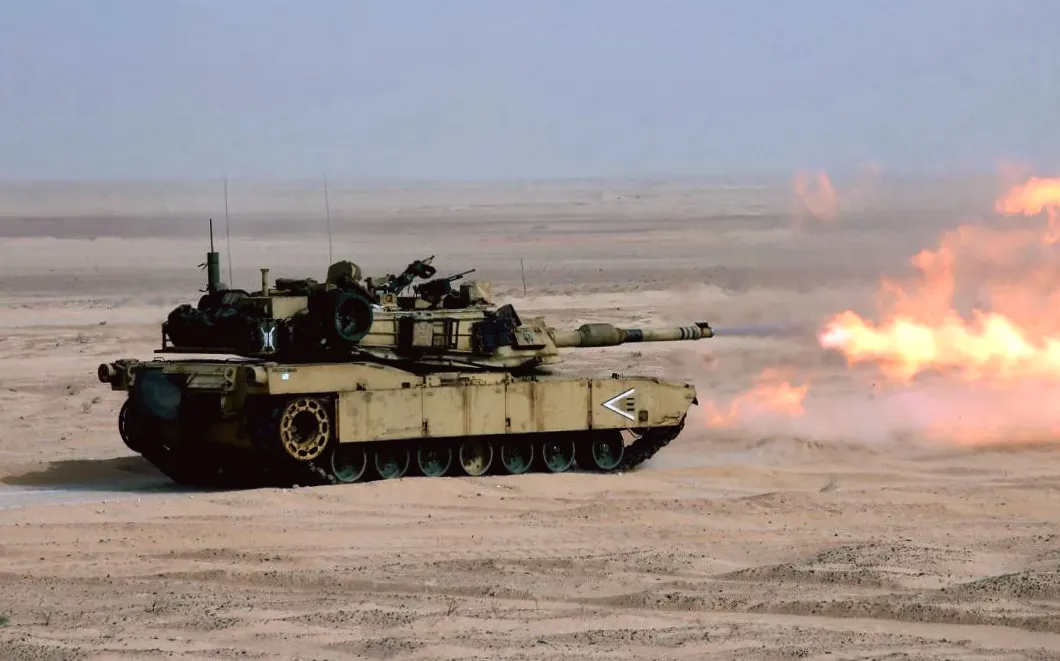
Tanks are among the most transformative machines in military history. They are not delicate or stealthy they are armored powerhouses designed to shatter enemy lines and dominate battlefields. From the plains of Kursk to the deserts of Kandahar, tanks have repeatedly altered the course of wars. Their impact isnt measured in paper statistics alone, but in the heat of battle, under fire, where toughness and resilience are tested.
Some tanks became legendary for sheer firepower, capable of destroying nearly any target in their path. Others earned fame through their resilience, surviving hits that would have destroyed lesser vehicles. These are the machines that defined their eras, struck fear into opponents, and left a lasting mark on military history.
Selection Criteria
Every tank on this list proved itself in real combat. Key factors included firepower, armor, mobility, and reliability, but the most important measure was historical significance. Did it reshape battlefield tactics? Did it dominate its contemporaries? Did it leave a legacy that endures in modern military study?
The list features a diverse range: World War II workhorses, Cold War heavyweights, and modern combat vehicles still active today. Each has a story that illustrates why it became iconic.
M4 Sherman Americas Battlefield Backbone
The M4 Sherman was ubiquitous during World War II. With over 49,000 produced, its reliability and maintainability in the field made it a dependable ally despite being outgunned by German tanks. Its simplicity allowed crews to repair it quickly under combat conditions, ensuring a steady presence on battlefields from Normandy to the Pacific.
T-34 The Soviet Game-Changer
The T-34 stunned German forces during Operation Barbarossa in 1941. Its sloped armor deflected shells that destroyed Panzer III and IV tanks, while wide tracks allowed it to traverse mud and snow with ease. Field repairs were simple, and its sheer numbers overwhelmed German forces. At Kursk, T-34s played a decisive role in halting enemy advances, cementing their reputation as the backbone of Soviet armored forces.
Tiger I Fear on Tracks
The Tiger I entered combat in 1942 and instantly altered armored warfare. Its 88mm gun could eliminate targets before they could retaliate, and its heavy armor made frontal assaults extremely risky. Despite mechanical complexities and logistical challenges, the Tigers presence on the battlefield could stall multiple enemy tanks, earning it a nearly mythical status.
Centurion Post-War Benchmark
The British Centurion arrived too late for WWII but excelled in Korea and the Middle East. Its balanced design, combining armor, firepower, and mobility, set new standards for main battle tanks. Upgradable over decades, the Centurion remained effective long after many contemporaries were retired.
M48 Patton Cold War Mainstay
The M48 Patton served reliably through the Cold War, handling challenging terrain from Vietnam jungles to Middle Eastern deserts. Its adaptability and interior comfort made it a versatile platform, bridging the gap between WWII-era tanks and modern designs like the M1 Abrams.
T-55 Worldwide Combat Veteran
The Soviet T-55 became a staple in dozens of armies worldwide. Its simple, robust design allowed it to operate in extreme climates and endure prolonged conflict. Even when outgunned, it remained a formidable threat through tactics and sheer numbers.
M60 Patton Americas Long-Lived Warrior
The M60 Patton debuted during heightened Cold War tensions and proved reliable across decades of service. From Southeast Asia to the Gulf War, its upgrades extended its relevance, making it one of Americas most enduring armored vehicles.
Merkava Israels Protective Design
The Merkava was designed around crew survivability, with the engine placed in front to shield personnel. It proved effective in both open deserts and dense urban combat, emphasizing protection and operational flexibility, even transporting wounded soldiers to safety.
Challenger 1 British Precision
The Challenger 1 gained fame in the Gulf War for its long-range accuracy and resilient armor. Its 120mm gun allowed it to engage targets effectively before opponents could respond, demonstrating British engineering at its peak.
Leopard 2 European Powerhouse
The Leopard 2 combined firepower, protection, and mobility in a single package. Adopted by multiple NATO countries, it excelled in both urban and rugged terrain and remained effective through continuous upgrades, influencing modern armored warfare worldwide.
M1 Abrams Americas Modern Strike Force
The M1 Abrams set new standards upon introduction. Its heavy armor, 120mm gun, and turbine engine offered unmatched firepower and mobility. Tested in the Gulf War, it proved adaptable across various combat scenarios, maintaining relevance through consistent modernization.
T-72 Soviet Endurance
The T-72 emphasized simplicity, durability, and mass deployment. Its compact design made it a difficult target, while its widespread use across conflicts from the Middle East to Eastern Europe highlighted its continued effectiveness.
AMX-30 Frances Agile Tank
The AMX-30 prioritized speed and maneuverability over raw armor. Its lighter design allowed it to outflank heavier opponents, proving effective in rapid strikes and adaptable to various operational environments.
PT-91 Twardy Polands Upgraded Fighter
The PT-91 Twardy is a modernized T-72, featuring enhanced armor, fire control, and optics. It has proven capable in contemporary conflicts, demonstrating that thoughtful modernization can keep older designs highly competitive.
T-90 Russias Modern Backbone
The T-90 blends the durability of the T-72 with modern upgrades, including reactive armor and improved electronics. It remains central to Russias armored forces, capable of engaging advanced threats in modern combat zones.
Legacy of the Tank
These tanks reshaped battles, from World War II to present conflicts. They showcase the evolution of armored warfare, from brute steel machines to precise, high-tech instruments of combat. Despite new technologies like missiles and drones, tanks remain a symbol of battlefield strength, continuing to influence modern warfare and leave a mark on global military history.
Author: Ava Mitchell
Share

Do flies actually regurgitate on your food when they land on it?
19 minutes ago 2 min read BUSINESS

The Coca-Cola's Forgotten Soft Drink from World War II
21 minutes ago 3 min read BUSINESS
'Miraculous' escape as car crashes into pub
28 minutes ago 2 min read BUSINESS

FDA investigation of WHOOP poses difficulties for specialized wearable device manufacturers
31 minutes ago 3 min read BUSINESS

We let down Gen Z on social media – we must not let them down on AI as well
33 minutes ago 4 min read BUSINESS

Investigators from India and the US to hold meeting next week regarding Air India crash, according to Bloomberg News
34 minutes ago 1 min read BUSINESS

Thousands of Crayola Toys Recalled Nationwide Due to Safety Concerns for Children's Lives and Health
35 minutes ago 2 min read BUSINESS

Alarming Study Shows Individuals Addicted to AI Are at Higher Risk of Mental Distress
37 minutes ago 2 min read BUSINESS

Layoffs are a painful and personal reality for small businesses struggling with rising costs.
38 minutes ago 3 min read BUSINESS

Jewellery sellers fined for selling rings without hallmarks
40 minutes ago 2 min read BUSINESS