Complex Life Could Be One Billion Years Older Than Previously Believed
- Last update: 1 hours ago
- 3 min read
- 475 Views
- BUSINESS
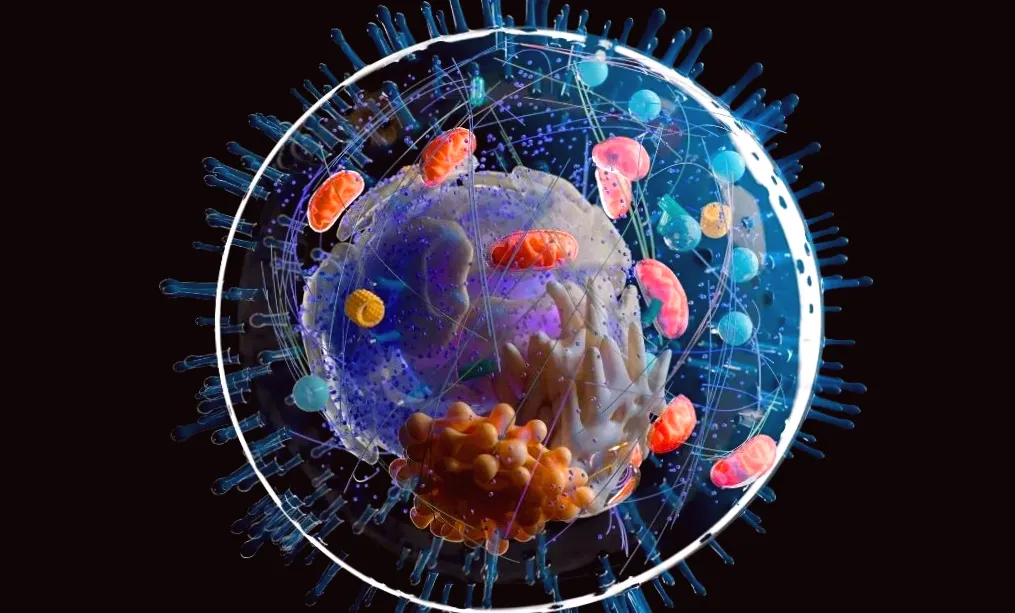
The emergence of complex cells with nucleiranging from single-celled amoebas to humansmay have begun much earlier in Earth's history than scientists once assumed. Recent research tracing the earliest steps toward cellular complexity indicates that this transformation from simpler organisms started almost 3 billion years ago, well before oxygen levels on the planet could sustain a fully developed eukaryotic ecosystem.
This timeline pushes back the origin of complex cells by nearly a billion years compared to some previous estimates, suggesting that the evolution of eukaryotes was a slow and gradual process rather than a sudden leap.
Understanding Lifes Basic Divisions
Life on Earth is often categorized into two main types: prokaryotes and eukaryotes. Prokaryotes, which include bacteria and archaea, were the planets first life forms, appearing around 4 billion years ago. These cells are relatively simple, consisting of a membrane, basic proteins, and unbound DNA. Eukaryotes, which evolved later, are more complex, featuring a nucleus, organelles, internal membranes, and structured genomes.
One of the central questions in biology has been the sequence in which eukaryotic traits evolved. A particularly debated point is the origin of mitochondria, the "powerhouses" of the cell responsible for converting glucose into ATP, the energy currency of cells. Scientists hypothesize that mitochondria originated from a free-living bacterium that entered a host cell and eventually integrated with it. Whether mitochondria drove the evolution of other eukaryotic features or joined later has been unclear.
Tracing Cellular Evolution with Molecular Clocks
To investigate this, a team led by paleobiologist Christopher Kay from the University of Bristol conducted a molecular clock analysis using genetic data from a wide range of organisms. By combining sequences from hundreds of species with fossil records, researchers constructed a time-calibrated tree of life.
This approach allowed us to estimate the timing of events within specific gene families, said Tom Williams, a computational evolutionary biologist at the University of Bath. Molecular clocks use the rate of genetic mutations to infer when species diverged or when certain traits appeared.
Focusing on the distinctions between prokaryotes and eukaryotes, the team developed a model called CALM (Complex Archaeon, Late Mitochondrion). Their analysis revealed that some of the earliest genetic markers for eukaryotic traits appeared between 2.9 and 3 billion years ago. These early steps included the formation of actin and tubulin proteins, a basic cytoskeleton, and primitive nuclear structures.
Subsequent evolutionary developments led to the formation of cytoplasmic membranes, Golgi apparatus organelles, and more sophisticated gene expression systems, such as RNA polymerases. Mitochondria, however, appeared lateraround 2.2 billion years agocoinciding with a surge in Earth's oxygen levels. This suggests that early eukaryotic life was already evolving but required environmental changes to fully flourish.
Significance of the Study
What makes this research unique is the detailed mapping of gene families and protein interactions over absolute time, said Kay. The study combines insights from paleontology, phylogenetics, and molecular biology to create a comprehensive picture of early eukaryotic evolution.
The findings have been published in Nature, offering a revised timeline for the rise of complex life on Earth and highlighting the gradual, intricate process that shaped the diversity of cells we see today.
Author: Ethan Caldwell