

Finding EV Charging Stations in One US State Could Become More Difficult
- Last update: 57 minutes ago
- 2 min read
- 705 Views
- BUSINESS
In September 2025, the federal government ended its $7,500 electric vehicle (EV) tax credit, altering a pricing model many Americans relied on and potentially reshaping the EV market long-term, even as state programs, like those in Texas, partially offset the change.
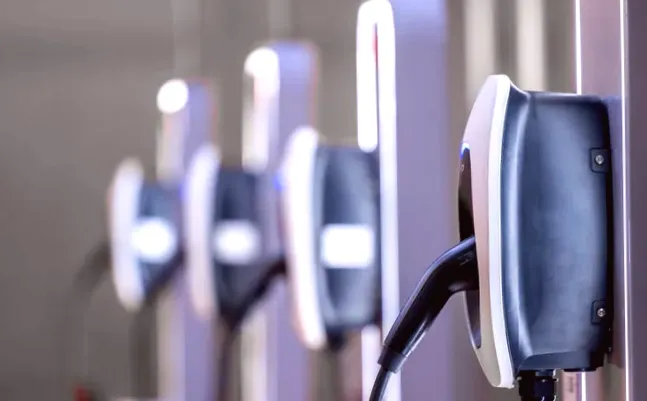
Now, Maryland may add another challenge to EV adoption. The Maryland Department of Agriculture announced a new rule requiring all commercial EV charging stations to pay a $150 registration fee per port starting January 1, 2026. Chargers that are not registered by this date will face a stop-use order.
This means that businesses planning to operate multi-port chargers next year will face several hundred dollars in fees. The fee follows recent charges of $125 and $100 for EV and plug-in hybrid registrations, respectively.
The new port fee has drawn criticism from government officials, companies, and EV drivers, who warn it could make offering charging services financially unviable. Some businesses may even remove existing chargers if the costs outweigh the benefits. This could slow the growth of Maryland's EV charging network and limit EV adoption, despite the state currently having 5,427 public chargers, which is higher than many other states.
Marylands ambitious climate goals may be affected. The state adopted the Advanced Clean Cars II Standards in 2023, aiming for all vehicles sold to be emissions-free by 2035. Maryland also targets a 60% reduction in greenhouse gas emissions by 2031 and net-zero emissions by 2045. However, as of October 2025, fewer than 150,000 EVs were registered in the state, out of more than 5 million total vehicles.
While other states also charge fees for EV ports, Maryland's $150 fee is notably higher than most, where fees typically range from $20 to $25, with Florida being the closest at $100. Companies such as Tesla and Rivian have expressed concerns about the high cost.
Maryland Agriculture Secretary Kevin Atticks explained that the fee will fund regular inspections starting in 2026, beginning with visual checks on January 1 and followed by electrical output tests in the spring. The effect of the fee on charging prices remains uncertain.
Author: Aiden Foster
Share
US Postal Service reveals impressive new acquisitions despite criticism from government: 'Expected to be cost-effective'
13 hours ago 3 min read BUSINESS

New $19K EV car launched internationally with a surprising feature — should it be brought to the U.S.?
2 days ago 3 min read BUSINESS

Georgia Continues to Charge for Expired EV Carpool Lane Access
2 days ago 3 min read BUSINESS

US Postal Service employs 2,600 electric vehicles for mail deliveries
3 days ago 1 min read BUSINESS
Unintended consequence: State raises annual fees for over 110,000 residents in 2026
3 days ago 3 min read BUSINESS