

Here's where minimum wage increases are scheduled to take effect next year
- Last update: 1 hours ago
- 2 min read
- 877 Views
- BUSINESS
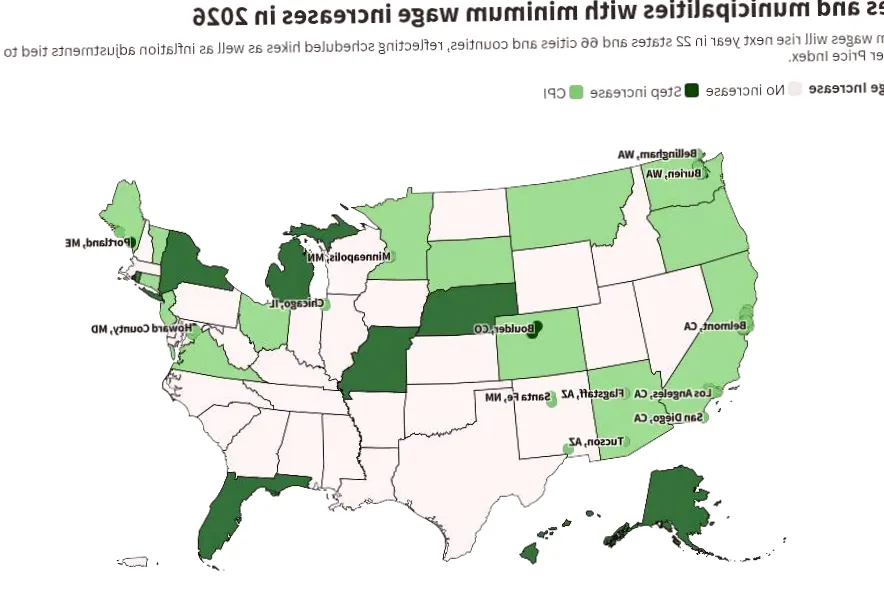
Starting in 2026, employees in multiple states and localities will see their earnings rise as new minimum wage regulations come into effect. This move aims to provide financial relief to low-income households facing growing affordability challenges.
On January 1, 2026, the minimum wage will increase in 19 states and 49 cities and counties, impacting 68 jurisdictions in total, according to a report from the National Employment Law Project (NELP). Later in the year, four more states and 22 additional localities are expected to adjust their minimum wages, offering further support to the nations lowest-paid workers.
While the federal minimum wage remains at $7.25 per hour, unchanged since 2009 under the Fair Labor Standards Act, many states and municipalities have opted to raise their own wages through legislation, ballot measures, or inflation-based adjustments to keep up with rising living costs.
The NELP report emphasizes that wage hikes have been crucial for underpaid employees, helping them cope with the ongoing affordability crisis.
Key Minimum Wage Changes for 2026
Starting January 1, at least 60 jurisdictions will ensure a minimum wage of $15 per hour. In three states and 40 localities, certain workers will see wages reach or surpass $17 per hour.
For example, New Jersey will increase the wage floor for long-term care workers to $18.92 per hour. New York City, Long Island, and Westchester County will raise their base pay to $17 per hour. In some areas, wages will vary based on employer size. In Hayward, California, larger employers must pay a minimum of $17.79 per hour, while smaller businesses pay $16.90.
Similarly, in Novato, California, the minimum wage will differ by employer size: very large employers (over 100 employees) will pay $17.73 per hour, large employers (2699 employees) will pay $17.46, and small employers (25 or fewer employees) will pay $16.90.
Cost-of-living adjustments, designed to help wages keep pace with inflation, will affect 13 states and 44 cities and counties, according to NELP. These adjustments are often indexed to inflation, ensuring wages remain aligned with living costs.
NELP researcher Tsedeye Gebreselassie noted that many of these increases stem from worker-led campaigns, including the Fight for $15 movement that began in 2012. She also highlighted the stark contrast between regions raising wages annually and those still at the $7.25 federal minimum, predominantly in southern states.
"While prices continue to rise, wages in some areas remain stagnant, making it harder for workers to meet basic needs," Gebreselassie said. "Its crucial that wage growth keeps pace with the cost of living."
Author: Lucas Grant