Namibia's attempt to lift ban on rhino horn trade fails
- Last update: 1 hours ago
- 3 min read
- 970 Views
- BUSINESS
Namibia's attempt to lift the international ban on trading black and white rhino horns was rejected during a major conservation conference. The decision, resulting from votes at the Convention on International Trade in Endangered Species of Wild Fauna and Flora (CITES), was formally confirmed on Thursday in Samarkand, Uzbekistan. Namibia also sought to overturn the ban on African savanna elephant ivory, but this proposal was similarly dismissed.
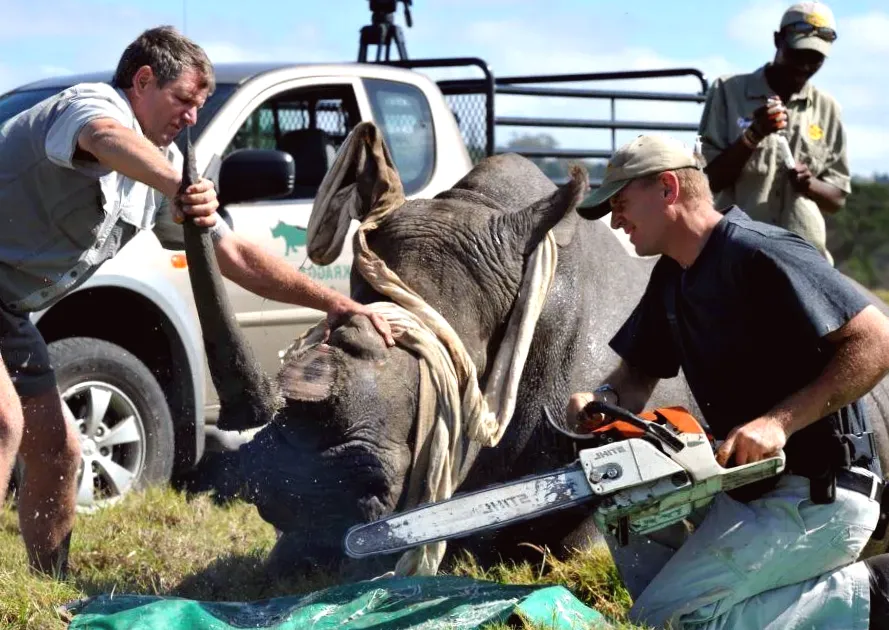
The rhino horn proposals drew attention because Namibia pioneered rhino dehorning in 1989, a method designed to reduce poaching by removing horns. Other southern African nations, including Zimbabwe, Eswatini, and South Africa, later adopted similar practices. Rhino horns are highly valued in traditional Asian medicine and as status symbols in countries like China and Vietnam.
Namibia presented two separate proposals: one for black rhinos and another for southern white rhinos. Both were overwhelmingly rejected, receiving only about 30 votes in favor out of roughly 120. CITES rules require a two-thirds majority for adoption.
Black rhinos are classified as critically endangered by the International Union for Conservation of Nature (IUCN), with just 6,421 individuals recorded in 2023a decline of over 90% since 1960. Southern white rhinos are considered near threatened, with a population of 15,752, which is down 11% since last year and at its lowest since the rhino poaching crisis began nearly two decades ago.
CITES banned the trade in rhino parts in 1977, yet poaching has persisted, with over 8,000 rhinos lost in the past ten years. Namibia recorded its highest poaching rate in 2022, with 87 rhinos killedalmost double the previous year.
Although this was Namibias first time formally submitting these proposals, the country has previously supported similar initiatives by South Africa, Eswatini, and Zimbabwe. Experts note that the push to lift the ban is largely driven by the vast rhino horn stockpiles accumulated over the years. Namibia alone holds an estimated 6.45 tonnes of white rhino horn and 4.6 tonnes of black rhino horn, while South Africa has at least four times that amount.
The accumulation of horns is linked to the dehorning program. Removing horns is painless, as it is done above the growth plate, but it requires repeated cutting as the horns regrow, which has resulted in growing stockpiles. Some governments, like Kenya, destroy their horn reserves, while others retain them, anticipating possible future profits if international trade is legalized.
Supporters of legal rhino horn trade argue it could generate funds for conservation, especially helping private rhino owners cover anti-poaching costs. Opponents warn that legalizing the trade could boost demand and exacerbate poaching. Historically, domestic and international markets in countries like China and Vietnam were major contributors to the poaching crises of the 1970s and 1980s.
Rhino populations remain under threat from illegal trade. Between 2021 and 2023, over 150 rhino horn seizures took place worldwide, totaling roughly 1.8 tonnesthe equivalent of 716 whole horns. South Africa accounted for 66% of the seizures, with large shipments destined for Malaysia and Vietnam.
Author: Maya Henderson