

Supercomputer Generates Highly Realistic Virtual Brain
- Last update: 1 hours ago
- 3 min read
- 780 Views
- BUSINESS
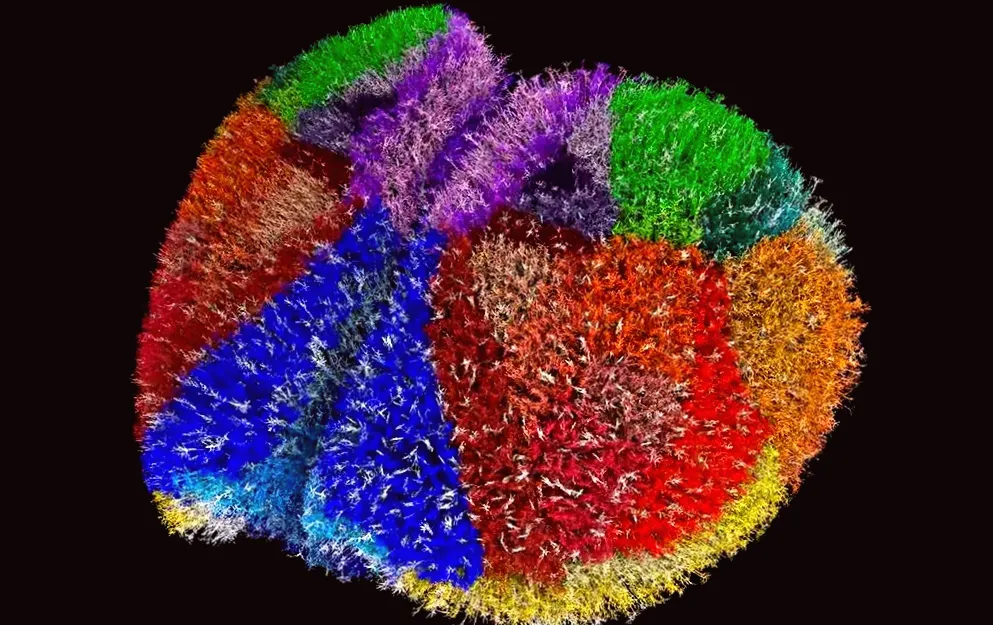
Understanding the workings of the brain is notoriously difficult, as examining a living brain directly is highly challenging. Researchers now have access to an advanced simulation of a mouse brain, one of the most detailed virtual models created to date.
The project was spearheaded by teams from the Allen Institute in the United States and the University of Electro-Communications in Japan. The simulation could help scientists study neurological disorders, including Alzheimer's disease, with far greater precision.
This virtual model represents an entire mouse cortex. While the human brain is far larger and more complex, containing billions of neurons, the similarities between rodent and human brains make this simulation a valuable research tool.
The virtual brain is composed of 9 million neurons and 26 billion synapses connecting them. It features 86 interconnected brain regions and can perform quadrillions of calculations per second. For comparison, a real mouse brain contains about 70 million neurons within a volume roughly the size of an almond.
"This demonstrates that we can effectively run these simulations with sufficient computing power," said Anton Arkhipov, a computational neuroscientist at the Allen Institute. "It is a technical achievement that shows larger, more detailed models are feasible and can be executed with accuracy."
The simulation allows scientists to observe the activity of individual neurons in real time. Its complexity enables the study of cognition, consciousness, and the progression of diseases through the brain, visualized as a dynamic 3D map of neurons firing and forming connections.
Potential applications include testing hypotheses on how seizures propagate or how brain waves affect attention, without invasive procedures. The Fugaku supercomputer in Japan provided the computing power, integrating existing cellular databases and charts to build the model. The team also created specialized software to optimize calculations and reduce unnecessary processing.
Tadashi Yamazaki, a computer scientist from the University of Electro-Communications, explained: "Fugaku is used across many computational science fields, such as astronomy, meteorology, and drug discovery. In this project, we applied it to simulate neural circuits."
Studying virtual brain structures is essential for understanding how the brain maintains physical and mental health and how it deteriorates with age. Researchers are already using the model to explore brain wave synchronization and interactions between the two hemispheres of the mouse brain.
The ultimate ambition is to create a full-scale human brain model in a virtual environment. Arkhipov stated: "Our long-term goal is to develop whole-brain models, including human brains, using all the biological insights we are uncovering. We are progressing from simulating single brain regions to the complete mouse brain."
The findings were presented at the SC25 supercomputing conference and are accessible online.
Author: Grace Ellison
Share

How our brains undergo five complete rewirings throughout our lives
4 days ago 2 min read SCIENCE

Revitalizing Aging Brain Cells in Mice by Boosting a Single Protein, Study Reveals
4 days ago 3 min read SCIENCE

Five additional stages of brain development have been discovered, including an extended period of adolescence lasting from age 9 to 32
5 days ago 3 min read SCIENCE
Effects of Aging on Brain Proteins – and How Diet Can Help Reverse Them
5 days ago 2 min read HEALTH