

The largest defense contractors in America are competing for their role in the future of drone warfare.
- Last update: 10 hours ago
- 4 min read
- 632 Views
- BUSINESS
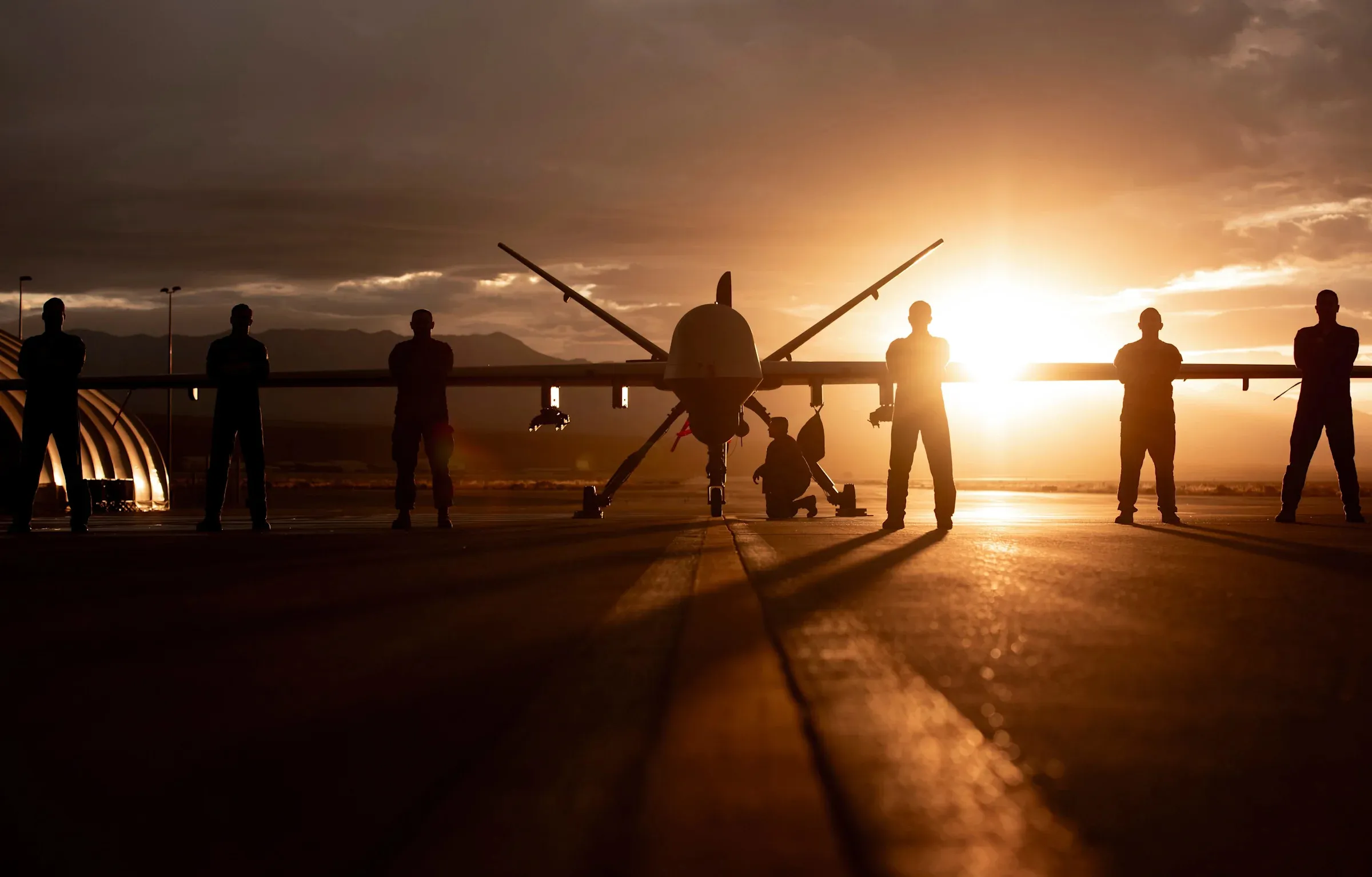
The Pentagon is signaling a strong appetite for all forms of drones and autonomous systems. While smaller startups are thriving in the compact drone sector, major defense contractors are focusing on advanced, high-performance platforms. Companies like General Atomics are upgrading their battle-tested drones, while Silicon Valley innovators and traditional defense giants clash over the future of unmanned combat.
Agile startups such as Performance Drone Works and Anduril are challenging established contractors like Lockheed Martin, Boeing, and General Atomics to develop new classes of drones, considered essential for modern warfare. Billions of dollars are at stake, with the Pentagon planning to spend $9.4 billion on aerial combat drones in fiscal year 2026, as part of a $13.4 billion investment in autonomous systems. The Air Force alone is requesting $789.4 million to advance autonomous "loyal wingman" drones capable of supporting crewed aircraft or performing solo missions. The Department of Defense is also allocating $3.1 billion toward counter-drone technologies.
Officials are increasingly favoring startups, arguing that traditional contractors cannot deliver new weapons fast or affordably enough to match the pace of global threats or produce large quantities of inexpensive drones, as seen in Ukraine. Startups embrace rapid development cycles, putting prototypes into the field quickly, while the slower pace of traditional contractors carries the risk of obsolescence.
However, large defense firms maintain advantages in scale, military integration, and decades of expertise, making them the preferred builders for complex, high-risk drones. Meanwhile, startups dominate smaller, cost-effective reconnaissance and attack drones built from commercial technology. According to defense investor Chip Walter, these established companies have a deep understanding of military needs and can still deliver impactful battlefield capabilities.
Modernizing Legacy Drone Platforms
Major defense firms are upgrading drones that defined post-9/11 conflicts. During operations in Afghanistan and Iraq, U.S. forces focused heavily on counterterrorism drones. Today, General Atomics is enhancing its MQ-1C Gray Eagle and MQ-9A Reaper drones with electronic warfare systems, AI upgrades, improved sensors, and stronger cybersecurity to ensure they remain relevant in high-end combat scenarios. The Reaper now features an electronic warfare pod capable of evading enemy radar.
Other contractors are also updating their fleets: Northrop Grumman is improving the MQ-4C Triton for Navy intelligence missions, and Boeings Insitu division is enhancing MQ-27 ScanEagle drones. RTX is developing sensors and counter-drone systems, including the Coyote, to complement the evolving drone battlefield. The effectiveness of these upgrades will depend on future conflicts, which may demand different drone capabilities than those tested in Ukraine.
Competing for Future Drone Dominance
Traditional defense companies are focusing on advanced, high-value drones rather than expendable small systems. Projects include General Atomics "loyal wingman" drones, designed to operate alongside frontline fighters, and Andurils innovative airframes that compete directly with the big primes. Lockheed Martin has introduced Vectis, a stealthy, low-cost drone, and its Sikorsky subsidiary unveiled the autonomous U-Hawk helicopter, aligning with the Army's vision for a largely drone-operated helicopter fleet. Boeing, Northrop Grumman, General Atomics, and Anduril are developing carrier-based wingman drone concepts, while Lockheed works on unified control systems for multiple drone types. RTX and Shield AI are providing AI systems for future "loyal wingman" operations.
The Pentagon is emphasizing speed and mass production. Secretary of Defense Pete Hegseth highlighted the potential of smaller, cheaper drones in a July memo, noting that these systems could outmatch traditional, larger designs in volume. Army Secretary Dan Driscoll also praised a Silicon Valley approach combining venture capital with startup agility, signaling a willingness to challenge the dominance of traditional contractors.
Some established companies acknowledge the need for collaboration and competition. Lockheed Martin CEO Jim Taiclet emphasized working together to harness national talent and deliver superior deterrent capabilities. Meanwhile, startups are bypassing conventional procurement cycles, directly offering commercially developed drones to the military, a strategy that carries both high risk and high reward. Andurils leadership explained that while this approach could lead to financial losses if decisions fail, successful bets provide a significant head start in the market. Walter noted that larger contractors could adopt similar strategies if they adjust their processes.
Author: Ava Mitchell
Share

DOT announces winner in air traffic control system overhaul.
13 hours ago 3 min read BUSINESS

CENTCOM deploys new 'suicide drone' attack team in Middle East
1 days ago 2 min read POLITICS

Pentagon aims to quickly deploy more than 300,000 small drones
1 days ago 2 min read WORLD

U.S. military deploys kamikaze attack drone force to Middle East
1 days ago 2 min read WORLD

US establishes single-directional assault drone squadron in the Middle East following the reverse engineering of an Iranian drone.
1 days ago 3 min read POLITICS

The US is ramping up efforts on affordable, one-way attack drones with a new presence in the Middle East
2 days ago 2 min read WORLD
Pentagon Initiates $1B Program for Swift Purchase of Hundreds of Thousands of Kamikaze Drones
2 days ago 3 min read POLITICS

Space Force Awards Contracts for Golden Domes Ahead of Schedule
3 days ago 3 min read USA
Poland welcomes US tech firms with defense funding
4 days ago 3 min read ECONOMICS

Report reveals world's largest arms manufacturers saw a 5.9% increase in revenue last year, reaching a record high
4 days ago 2 min read ECONOMICS