Mystery Surrounds the Prehistoric Bird Found Choked to Death on 800 Rocks
- HOME
- ENTERTAINMENT
- Mystery Surrounds the Prehistoric Bird Found Choked to Death on 800 Rocks
- Last update: 57 minutes ago
- 3 min read
- 350 Views
- ENTERTAINMENT
A bird that lived 120 million years ago has left scientists with a perplexing puzzle. Researchers discovered that this sparrow-sized creature perished with more than 800 small stones lodged in its throat, likely causing its death. The reason behind the bird swallowing such a massive number of stones remains unknown.
This extraordinary find sheds light on the diet, behavior, and anatomy of prehistoric birds. The mass of stones found in the esophagus of the newly identified Chromeornis funkyi is unlike anything observed in modern avian species.
"It's rare to determine the exact cause of death for an individual in the fossil record," says paleontologist Jingmai O'Connor of the Field Museum in Chicago. "While we can't say why this bird ingested so many stones, the blockage almost certainly led to choking and death."
Chromeornis is remarkable not only for its unusual death but also for its well-preserved fossil, which caught O'Connors attention at the Shandong Tianyu Museum in China. It was fossilized in a Lagersttte, a type of deposit that preserves organisms with extraordinary detail, including soft tissues.
The fossil retains delicate features such as skin outlines around the neck, wings, and legs; feather impressions; traces of eye pigment; and even hints of muscle structure. Harder parts, like bones and the beak, were also preserved. These features allowed scientists to place Chromeornis within the Longipterygidae family, tiny toothed birds with long, pointed beaks, closely related to the genus Longipteryx. The bird weighed roughly 33 grams (1.16 ounces).
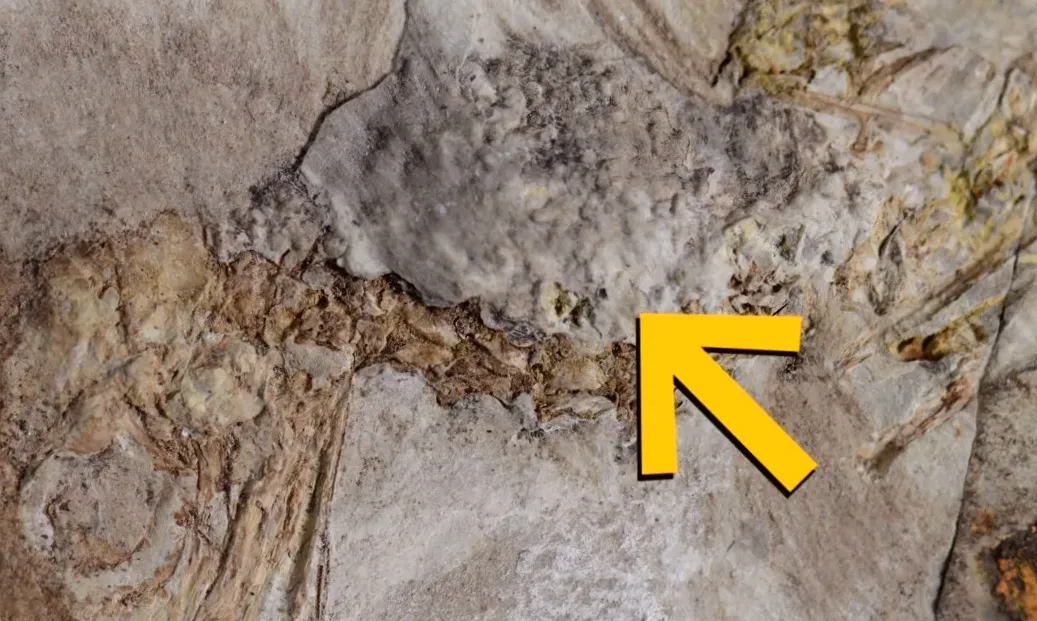
Closer examination revealed the unusual accumulation of stones in its throat. "The stones were right up against the neck bones, which is very unusual," O'Connor explains. "No other fossil I've studied has a mass like this inside the throat."
Analysis showed that the stones differed in mineral composition from both the surrounding sediment and from each other. This indicates the bird swallowed them during life, rather than the stones being deposited after death. Some modern birds use stones, known as gastroliths, to aid digestion in the gizzard, but Chromeornis and its relatives lacked the necessary gastric mill. Additionally, the quantity and size of the stones were far too great for its size.
"There were over 800 stonesmore than expected for a bird with a gizzard," O'Connor says. "Some were so small and smooth that they resembled tiny clay balls rather than natural stones. Clearly, these were not swallowed to grind food."
One possibility is that the bird was ill. Certain living birds swallow stones to combat parasites or address nutrient deficiencies. "Sick birds sometimes display unusual behaviors," O'Connor notes. "We hypothesize that this bird may have been unwell, ingested too many stones, and attempted to regurgitate them, but the mass became stuck."
Like many species of its time, Chromeornis and its family went extinct during the Cretaceous-Paleogene mass extinction 66 million years ago. This fossil offers a rare glimpse into the lifeand unusual deathof a small prehistoric bird, potentially providing insight into vulnerabilities that contributed to its extinction.
"Studying extinct birds like Chromeornis may even help inform conservation strategies today," O'Connor adds. The findings were published in Palaeontologica Electronica.
Author: Ethan Caldwell