
After Supreme Court Case Tie, More States Embrace Religious Charter Schools Trend
- Last update: 1 hours ago
- 4 min read
- 466 Views
- POLITICS
Earlier this year, the U.S. Supreme Court reached a deadlock in a case addressing whether charter schools may operate with religious affiliations. Experts anticipated that the issue would soon resurface in other legal challengesand their prediction is coming true.
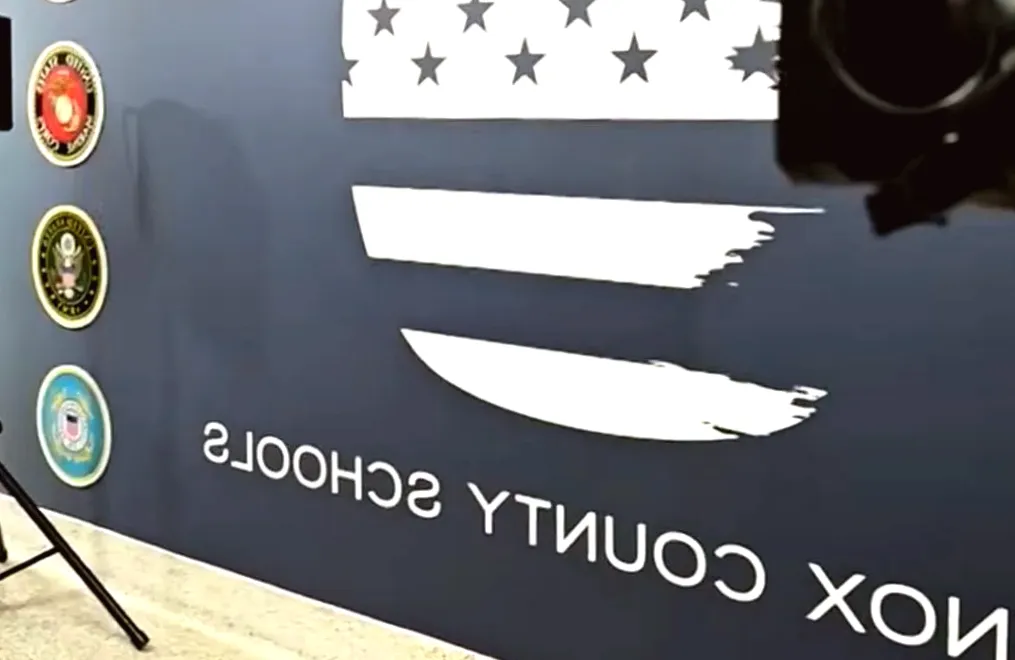
In Tennessee, the nonprofit Wilberforce Academy has filed a federal lawsuit against Knox County Schools, after the district denied permission for a Christian charter school. Tennessee Attorney General Jonathan Skrmetti supports the school, issuing an opinion last month suggesting that the states prohibition of religious charter schools likely infringes upon the First Amendment.
Public charter schools in Tennessee are not government entities for constitutional purposes and can exercise free religious rights, Skrmetti wrote in response to a request from Rep. Michele Carringer, a Republican from Knoxville.
The legal action in Tennessee coincides with plans by a Florida-based charter network to apply to the Oklahoma Charter School Board for a virtual Jewish high school. Peter Deutsch, founder of the Ben Gamla charter schools, had been developing the initiative well before the St. Isidore of Seville Catholic Virtual School case went to court. An Oklahoma Supreme Court ruling continues to block the school from receiving state funding.
The National Ben Gamla Jewish Charter School Foundation, which operates Hebrew-language charter schools in Florida, now seeks to establish a virtual religious charter school in Oklahoma. Eric Baxter, vice president and senior counsel at the Becket Fund for Religious Liberty, which represents the foundation, said, This prior decision highlights an unresolved question. We hope the federal courts will address it correctly, without needing another Supreme Court ruling.
Earlier this year, Idaho also faced a similar situation. Brabeion Academy, the states first charter school, initially proposed a Christian curriculum but received approval as a nonreligious school and will open under that designation next fall.
Supporters of faith-based charter schools, including Deutsch and Skrmetti, cite past Supreme Court rulings permitting public funds for religious schools. They argue that barring religious organizations from operating charter schools is discriminatory. Critics, however, caution that labeling charter schools as private entities could jeopardize funding and civil rights protections for millions of students nationwide.
Until the Supreme Court rules otherwise, all charter schools should follow their state laws carefully, said Starlee Coleman, president of the National Alliance for Public Charter Schools.
Deutsch has emphasized the historic opportunity to provide Jewish education to children through the St. Isidore case. Oklahoma Attorney General Gentner Drummond, however, has pledged to resist any measures that might challenge current legal interpretations.
Americans United for Separation of Church and State has voiced concern over the proposed Oklahoma school, warning against taxpayer funding of religious programs. Rachel Laser, the groups president, stated, Religious extremists are once again trying to undermine our countrys church-state separation. Not on our watch.
The legal debate over religious charter schools began in 2023, following a contentious vote by the Oklahoma Virtual Charter School Board to approve St. Isidores charter. Jewish and nonreligious organizations challenged the approval as unconstitutional. Members of the original board are no longer part of the current Oklahoma Charter School Board, but Brett Farley, involved with Ben Gamlas application, has prior experience with the St. Isidore filing.
Farley collaborated with Notre Dame law professor Nicole Stelle Garnett, whose work supports the notion that nonprofit charter operators are akin to private contractors and cannot be excluded solely for being religious. Garnett is also a friend of Justice Amy Coney Barrett, who recused herself from the St. Isidore case. Analysts speculate that Chief Justice John Roberts sided with the courts liberal justices, resulting in the 4-4 tie.
The proposed virtual Jewish school plans to enroll about 40 students, emphasizing college readiness and Jewish education within a supportive environment.
Interestingly, Deutsch is not pursuing the Jewish charter in Florida, despite a larger Jewish population there. The Oklahoma process, allowing direct state-level applications, is more streamlined than Floridas local district system.
Religious school efforts extend beyond charters. In Colorado, Riverstone Academy bills itself as the states first public Christian school, operating under a contract model where districts partner with private organizations to provide education. The state warned that the schools per-student funding could be at risk due to its religious nature, but administrators insist funding denial would be unconstitutional and discriminatory.
Education law experts note that Riverstones situation resembles the 1982 Rendell-Baker v. Kohn case, which affirmed that privately run, publicly funded schools are not considered state actors. Many expect that the Supreme Court will eventually revisit religious charter school cases, potentially with Justice Barrett participating and different outcomes than before. Advocates believe persistence could ultimately secure judicial approval for publicly funded religious education programs.
Author: Gavin Porter