
The Supreme Court has restored a Texas redistricting plan expected to grant Republicans five more seats in the US House. The move came Thursday evening after a lower federal court invalidated the map. The justices appeared to divide along party lines, with the Courts three Democratic members in dissent.
The ruling in Abbott v. League of United Latin American Citizens marks a significant win for the Republican Party and sets the stage for steep obstacles in future federal challenges to similar maps. Although the order is brief, it places such extensive demands on plaintiffs that few will be able to move forward successfully.
The decision is so restrictive that many civil rights advocates may abandon attempts to contest maps they believe violate the law, concluding that the likelihood of winning in court has become negligible.
Challenges to Gerrymandering Were Already Difficult
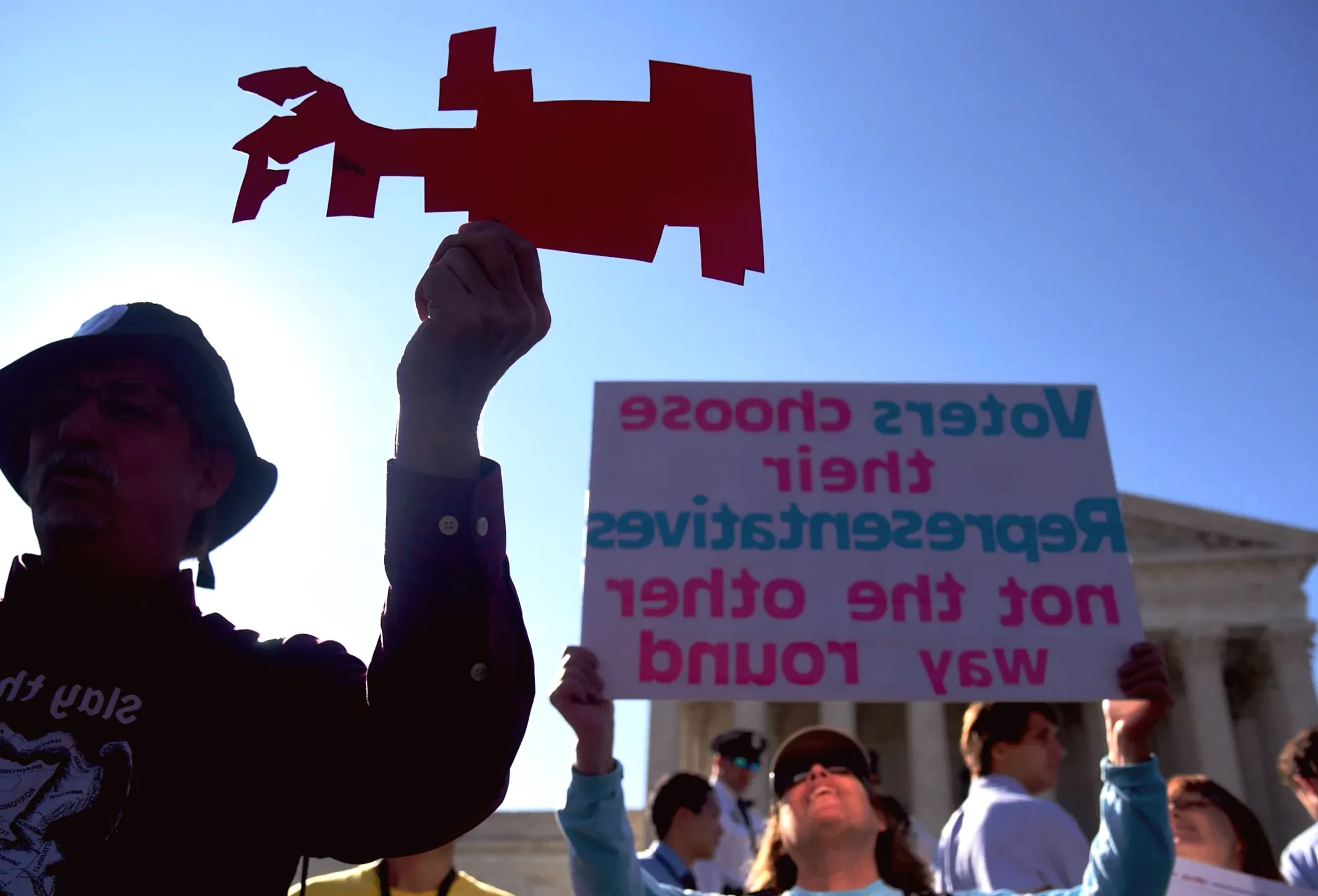
Understanding this ruling requires reviewing the distinction between two categories of gerrymanders. Legislatures often draw boundaries that benefit the party in power, known as partisan gerrymanders. Other maps adjust district lines to alter racial composition in ways that advantage white voters, known as racial gerrymanders.
The difference between the two is often blurred. For instance, Black voters tend to support Democrats by large margins, meaning a plan designed to benefit Republicans often mirrors one that reduces Black representation.
In Rucho v. Common Cause (2019), the Courts conservative majority determined that federal courts cannot review partisan gerrymanders. Claims targeting maps drawn solely for partisan reasons are therefore guaranteed to fail. The Court has also weakened protections against racial gerrymanders and is expected to dismantle additional safeguards under the Voting Rights Act later this term.
Before the current case, however, plaintiffs still had a narrow path to victory in racial gerrymandering suits. As the Court held in Alexander v. South Carolina NAACP (2024), maps created with race as the dominant factor must undergo the most demanding level of constitutional review.
This mattered because, before Texas enacted the map now at issue, the Trump administrations Justice Department pressured the state to redraw its districts, incorrectly asserting that states may not maintain districts in which white voters are not the largest racial group. Texas faced the threat of litigation unless it reshaped districts to meet that demand.
The lower court found substantial evidence that Texas redesigned its map to satisfy this directive. The Supreme Courts order does not directly dispute this finding but instead criticizes the lower court for failing to apply a strong presumption that lawmakers acted without racial motives.
How the Court Raised the Standard for Plaintiffs
The Courts conservative majority has previously stated, including in Abbott v. Perez (2018), that legislatures benefit from a presumption of good faith. In this case, both sides presented evidence that the map was drawn either for partisan advantage or due to racial considerations. The Court appears to conclude that when evidence supports both interpretations, courts must defer to the states explanation.
This means plaintiffs may only prevail when racial intent is unmistakable, a standard met in very few circumstances. The result all but eliminates the viability of cases challenging maps that dilute Black voting power. Because such maps often resemble partisan plans, states can present a partisan rationale that courts are now required to accept.
The Court also faulted the plaintiffs for not submitting an alternative map capable of achieving Texass stated partisan goals without relying on race. This effectively mandates that any challenger present a map equally beneficial to the ruling party. Although the Court mentioned a similar principle in Alexander, it now treats this requirement as close to determinative.
In practice, this means racial gerrymanders will be vulnerable only when an equally partisan map can be drawn without dividing racial groups. If maximizing Republican strength requires weakening Black or Latino communities, the Courts standard permits Texas to proceed.
A Misleading Statement on Timing
The order also criticizes the lower court for changing election rules on the brink of an election. This claim is demonstrably inaccurate. The ruling was issued on November 18, 2025, almost a year before the 2026 midterms.
A Path Toward Near Total Immunity for Gerrymandered Maps
The LULAC ruling adds yet another barrier to an already challenging legal landscape shaped by cases such as Rucho, Perez, and Alexander. These precedents already made it extremely difficult to contest any gerrymander. The new decision compounds those burdens, making successful lawsuits exceedingly unlikely.
The Courts conservative majority appears ready to remove itself entirely from overseeing gerrymandering disputes and is signaling to states that they may proceed without fear of judicial intervention.