Top 10: Лучшие итальянские самолеты Второй мировой войны
- Last update: 5 hours ago
- 4 min read
- 352 Views
- TRAVEL
10. Fiat G.50 Freccia (Arrow)
Italys first monoplane fighter, the Fiat G.50, introduced features that were modern for its time, including retractable landing gear and an enclosed cockpitthough the canopy was soon abandoned because it could not be safely opened in flight. Despite modest success in Italian service, the G.50 achieved an exceptional 33:1 kill ratio in Finnish hands, where 33 aircraft served from the end of the Winter War until 1944. Finnish pilots downed 99 Soviet aircraft while losing only three G.50s, though the open cockpit proved ill-suited to harsh Nordic winters.
9. Savoia-Marchetti SM.79 Sparviero (Sparrowhawk)
First flown in 1934, the SM.79 evolved from a record-breaking trimotor into one of the most effective bombers of the Spanish Civil War. Its robust structure and excellent reliability enabled it to serve throughout WWII, eventually becoming the Axis most successful torpedo bomber. In combat, SM.79s inflicted heavy losses on Allied shipping, including damaging the battleship HMS Nelson. In 1941 alone, its torpedo units conducted 87 attacks, sinking nine ships totaling over 42,000 tons and damaging a dozen more.
8. Fiat CR.42 Falco (Falcon)
Though a biplane in the era of rapidly advancing monoplanes, the CR.42 proved surprisingly capable. Over North Africa, Malta, and Greece it held its ownparticularly due to exceptional maneuverability that forced RAF pilots to devise special tactics. More than 1,800 were built, making it the most-produced Italian aircraft of the war and one of the last effective frontline biplane fighters in military aviation.
7. Macchi MC.200 Saetta (Lightning)
The MC.200, born from Macchis long line of racing aircraft, paired a reliable radial engine with responsive handling. Entering service in 1939, it was among the worlds best fighters at that moment. The Saetta flew more combat sorties than any other Italian fighter and performed well in North Africa, able to out-turn both Hurricanes and P-40s. On the Eastern Front, it achieved an 88-to-15 kill ratio against Soviet aircraft.
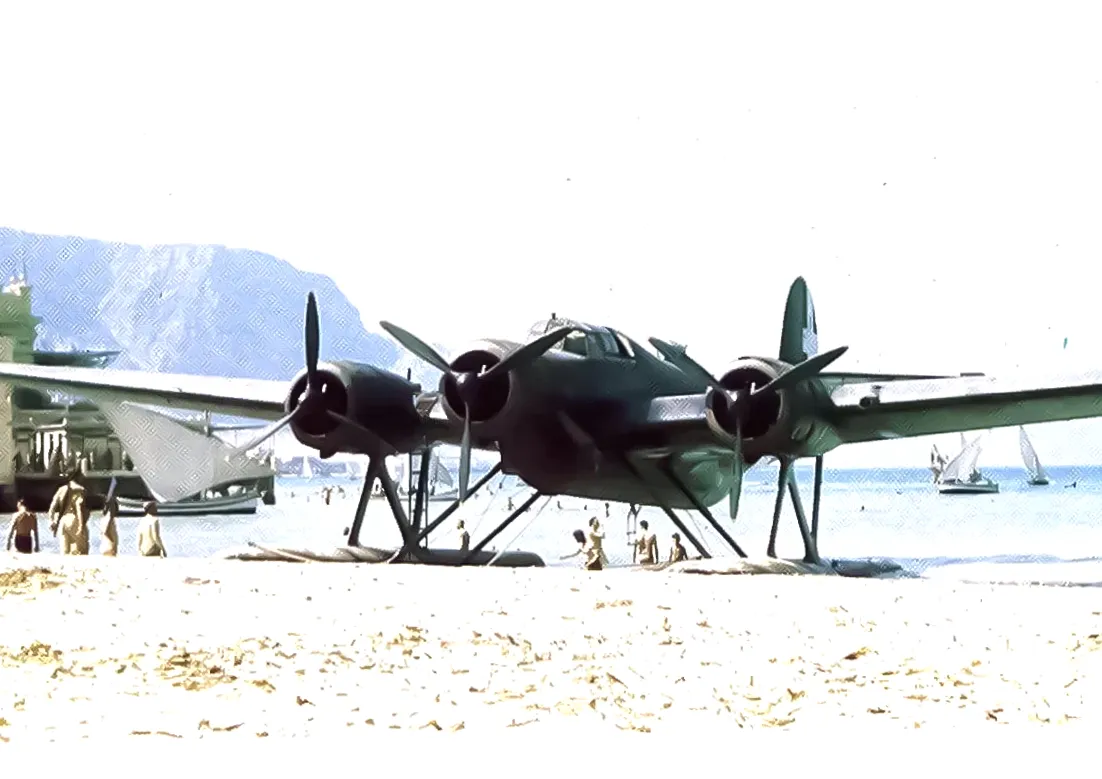
6. CANT Z.506B Airone (Heron)
Originally designed as a civilian floatplane, the Z.506B transitioned into a versatile military platform capable of maritime patrol, torpedo attacks, reconnaissance, and transport. Its wooden construction belied impressive performance in rough seas. The type also gained notoriety in 1942 when British airmen, rescued after ditching their bomber, overpowered their Italian crew and flew the Z.506B to Malta.
5. Macchi MC.205V Veltro (Greyhound)
An evolution of the MC.202, the Veltro married Italys superb handling characteristics with a powerful licensed-built Daimler-Benz DB.605 engine. It was also the first Italian fighter with a consistently strong armament: two 20 mm cannon and two 12.7 mm machine guns. Praised by Allied test pilotsincluding Britains Eric Brownthe MC.205V was regarded as fully competitive with top Allied fighters. Leading Italian aces Luigi Gorrini and Adriano Visconti scored many of their victories in the Veltro.
4. Piaggio P.108
One of the Axis few true heavy bombers, the P.108 compared favorably with Allied aircraft such as the Lancaster and B-17, offering comparable range and speed. Its advanced defensive system included remotely operated wing-mounted gun turrets. Though only produced in small numbers, its strong, heavily engineered structure provided high crew confidence during long-range missions.
3. Reggiane Re.2005 Sagittario (Archer)
Considered one of the most elegant and high-performing Italian fighters, the Re.2005 was a refined development of earlier Reggiane designs and powered by a DB.605 engine. Despite superb capabilitiesenough to challenge Spitfires over SicilyItalys limited industrial capacity allowed only 54 to be built. RAF Wing Commander Wilfrid Duncan Smith regarded it as a highly formidable opponent and believed it could have complicated Allied operations had it been fielded in larger numbers.
2. Fiat G.55 Centauro (Centaur)
Considered by many German evaluators to be the best Axis fighter of the war, the G.55 combined superb performance with a heavy armament of three 20 mm cannon and two machine guns. Its main drawback was production time: it took roughly triple the hours required to build a Bf 109. Nevertheless, 274 were completed, equipping several Italian units and earning high praise from pilots who often preferred it over the German fighter that replaced it.
1. Savoia-Marchetti SM.82 Kanguru (Kangaroo)
Regarded as the most effective Axis transport aircraft built in significant numbers, the SM.82 served Italy, Germany, and later the Allies after 1943. Despite an outwardly modern appearance, it relied on traditional mixed construction of steel tubing, metal skin, wood, and fabric. Highly versatile, it could carry up to 4,000 kg of bombs when needed. Early in the war, SM.82s sustained Italian forces in East and North Africa and even carried entire CR.42 fighters as cargo. Its most daring mission was a long-range strike on British-controlled refineries in Bahrain. Departing from Rhodes, the aircraft bombed their targets and continued to Italian-held Eritreacompleting a flight lasting over 15 hours.
Author: Jackson Miller