

Arab press voices on Trump's categorization of the Muslim Brotherhood
- Last update: 1 hours ago
- 3 min read
- 758 Views
- WORLD
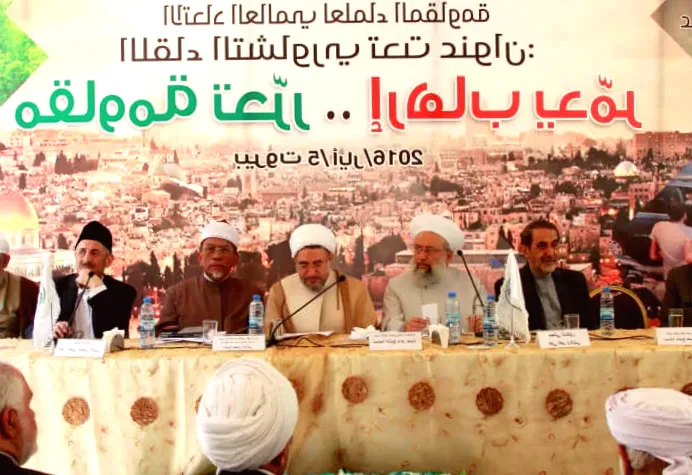
A selection of commentary from Arab media highlights mounting tensions across the Middle East, with Lebanon positioned at a critical geopolitical juncture and the United States shifting toward a more aggressive stance against the Muslim Brotherhood.
Lebanon on the Brink
Diplomatic sources report that Egypts latest mediation effort represents one of the final attempts to prevent a full-scale confrontation along Lebanons southern border. Cairo is pursuing two parallel tracks: containing Israels military momentum and encouraging Lebanese factions to adopt a pragmatic, temporary framework that could prevent escalation.
Officials in Beirut indicate that Israel now operates at peak preparedness for a major military campaign, convinced that Lebanons fractured institutions can no longer assert authority over security matters. Given the paralysis of state structures, Israel views any internal consensus in Lebanon as increasingly unattainable.
This assessment is further strengthened by regional dynamics: Irans weakened influence due to setbacks affecting its proxy forces, and a US strategy seeking to recalibrate regional power without direct military entanglement. Under these conditions, even minor incidents risk spiraling into open conflict.
Iran, however, remains firm in its position. Senior figures insist that Hezbollahs arsenal is an essential deterrent, regardless of the dangers this posture may impose on the group or Lebanons broader population. With the Lebanese state effectively sidelined, the nation stands exposed to a volatile regional shift.
Trumps Executive Order and the Muslim Brotherhood
US President Donald Trump has signed an executive order initiating steps to classify certain Muslim Brotherhood branches as foreign terrorist organizations. The decision cites involvement in violent actions and support for destabilizing activities that threaten American interests.
The move signifies a decisive turn in Washingtons policy, moving beyond years of political debate toward direct action targeting Brotherhood-linked factions tied to militant operations. Despite the group lacking an official US branch, its ideological influence emerged in the 1960s through student movements and later through major Islamic institutions.
Organizations such as the Muslim Students Association and the Islamic Society of North America grew from early advocacy networks, while others, including CAIR, have faced recurring scrutiny over alleged ideological ties despite rejecting formal affiliation. After 9/11, investigations revealed no evidence that would justify officially branding the Brotherhood as a terrorist organization, yet the debate continued to dominate US political discourse.
Recent developments, including Texas Governor Greg Abbotts classification of the Brotherhood and CAIR as terrorist entities, have reignited public attention. Still, Washington has so far limited designations to smaller militant factions linked to Brotherhood individuals rather than the group as a whole.
Calls for Comprehensive Designation
Commentary from London argues that extremist ideology across al-Qaeda, the Islamic State, and other militant movements stems directly from the Brotherhoods intellectual framework. Evidence cited from research institutions claims that its strategy relies on exploiting democratic systems and legal protections to expand influence while avoiding overt acts that would provoke security responses.
Analysts maintain that the partial approach adopted by Western governments has allowed Brotherhood-aligned structures to embed themselves in civic, political, and charitable spaces, complicating attempts at prosecution and enabling continued ideological expansion.
Advocates for full designation argue that US and European hesitations have contributed to a long-term security threat, and that the organizations global networks represent more than religious outreach, framing them instead as a coordinated ideological campaign.
Conclusion
As tensions heighten on multiple fronts, the intersection of escalating regional conflict, shifting American policy, and enduring ideological battles places Lebanon and the broader Middle East at a decisive turning point. The debate over the Muslim Brotherhoods classification is poised to remain central to US policy discussions, shaping diplomatic and security strategies in the years ahead.
Author: Connor Blake
Share

Lebanon informs UN team of need for backup force after peacekeepers' term ends
2 hours ago 2 min read WORLD

Lebanon's President Declares Country's Desire to Avoid War with Israel
2 hours ago 3 min read WORLD

Hezbollah's Qassem views sending civilian delegate to ceasefire talks as concession to Israel
3 hours ago 2 min read WORLD
Lebanon says ceasefire talks focus on stopping Israel's aggression
4 hours ago 2 min read WORLD
Israel launches air attack on southern Lebanon following historic direct talks
7 hours ago 2 min read WORLD

UNSC delegation meets with Lebanon's Aoun and visits south during Israeli escalation
8 hours ago 3 min read WORLD
Israel targets several villages in southern Lebanon as assaults escalate
1 days ago 3 min read WORLD
Iran requests meeting with Lebanon’s foreign minister amid escalating tensions with Hezbollah
1 days ago 1 min read WORLD
Israel initiates new attacks on southern Lebanon following warnings
1 days ago 2 min read WORLD
Lebanon's Prime Minister Says Diplomatic Normalization and Economic Relations with Israel Are Not on the Horizon
2 days ago 2 min read WORLD