
Astronomers warn of threat to space telescopes from surge in satellites
- Last update: 1 days ago
- 3 min read
- 910 Views
- WORLD
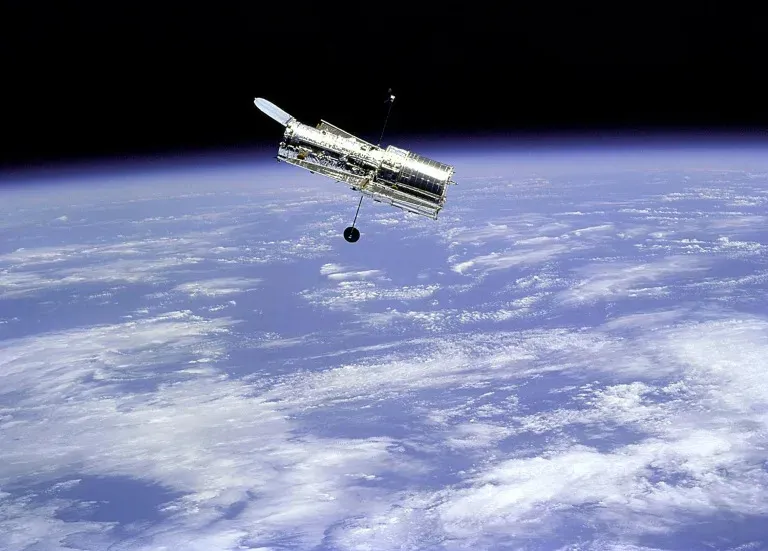
Scientists are warning that the light reflected from hundreds of thousands of future satellites may interfere with nearly every image captured by space-based observatories.
For several years, astronomers have raised concerns about how growing numbers of satellites are brightening the night sky and damaging ground-based observations. Now, a new scientific analysis looks beyond Earths surface and examines how massive satellite constellations could also disrupt instruments in space that are trying to study the universe.
Since 2019, the number of active satellites orbiting close to Earth has climbed from around 2,000 to about 15,000. A significant portion belongs to large communication networks designed to deliver global internet coverage. However, this figure could soon seem small. According to the study, if all planned missions by governments and private companies go ahead, as many as 560,000 satellites could be circling Earth before the end of the 2030s.
Researchers describe this scenario as an extremely serious risk for space telescopes. To understand the scale of the problem, simulations were conducted to see how reflected sunlight from hundreds of thousands of satellites would affect four different orbital observatories.
The results were alarming. Nearly all images taken by several current and upcoming space telescopes would be compromised by streaks or glare from satellites passing through their field of view. Even the iconic Hubble Space Telescope, which observes only a narrow section of the sky at a time, could have about one out of every three images affected.
This interference could undermine critical research. Objects such as fast-moving asteroids may become more difficult to detect or track because their appearance can closely resemble that of a satellite crossing an image. Distinguishing between potential hazards and harmless spacecraft may become increasingly challenging.
Some observatories, including the powerful James Webb Space Telescope, remain largely protected from this issue because they operate far from Earth, at a stable gravitational point more than a million kilometres away. Still, most other space telescopes do not have this advantage.
Lowering the orbital height of future satellites has been proposed as a possible solution, but such a move comes with its own environmental concerns, including potential harm to the ozone layer. The simplest option would be to limit the number of satellites being launched, yet intense competition between companies and growing demand for high-speed data, driven in part by artificial intelligence, makes this an unlikely outcome.
Another complication is the increasing physical size of new satellites. Objects with a surface area of around 100 square metres can already appear as bright as the most luminous stars visible from Earth. Plans are now being discussed for structures up to 3,000 square metres in size, which could shine with the brightness of a planet when viewed from a distance.
In the meantime, scientists suggest that satellite operators could reduce the damage by sharing detailed information about the position, movement, shape, and reflective properties of their spacecraft. This data could help telescope teams better predict and remove unwanted traces from their observations.
Author: Natalie Monroe
Share

Telescopes in Space Under Threat from Satellite Megaconstellations
1 days ago 3 min read WORLD
Satellites continue to disrupt Hubble telescope images, with increasing frequency
1 days ago 3 min read WORLD
NASA launches new billion-dollar satellite to monitor alarming threat on Earth: 'Crucial for enhancing public safety'
3 days ago 2 min read SCIENCE
Elon Musk Proposes AI Satellites to Dim the Sun Through Small Changes in Solar Energy and Warns of Earth's Past Climate Shifts
5 days ago 2 min read SCIENCE