

China-Japan dispute escalates at UN over Taiwan remarks described as 'biggest challenge' to relations
- Last update: 4 days ago
- 3 min read
- 37 Views
- WORLD
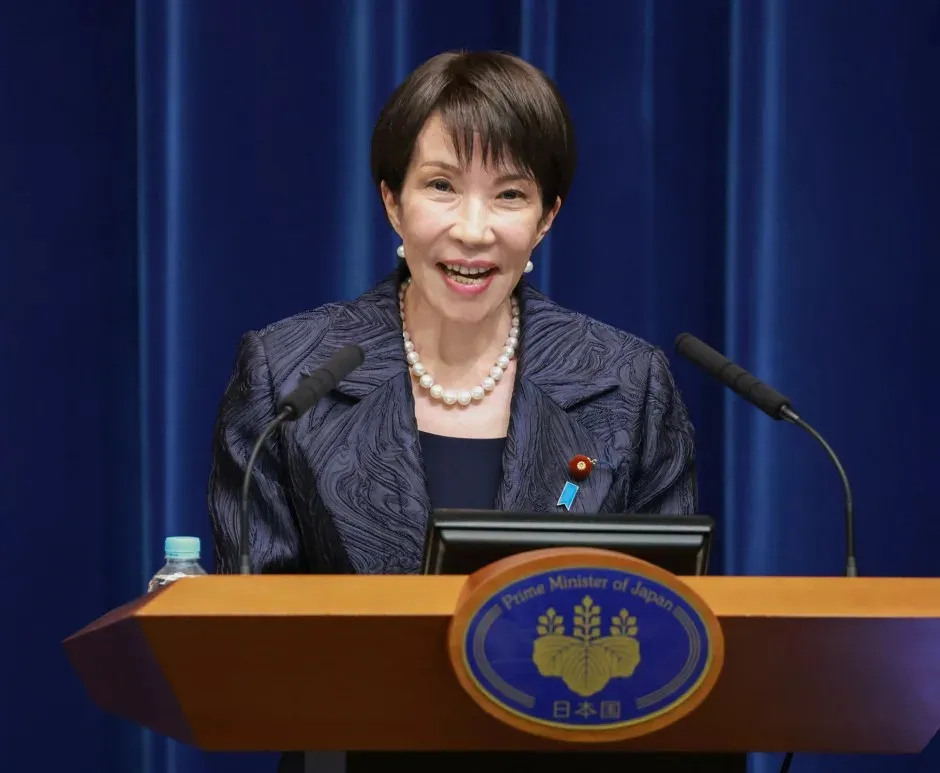
A diplomatic dispute between China and Japan is intensifying at the United Nations following statements made by Japanese Prime Minister Sanae Takaichi. Chinese Ambassador Fu Cong has submitted a second letter to UN Secretary-General Antonio Guterres, calling Takaichis remarks on Taiwan the "most serious challenge" to bilateral relations and demanding their withdrawal.
Fus correspondence follows a letter from Japanese Ambassador Kazuyuki Yamazaki, who accused Beijing of "hindering" bilateral exchanges. Yamazaki argued that the prime ministers statements did not exceed Japans post-World War II defensive stance.
In his letter, Fu emphasized that Takaichis comments have "gravely damaged mutual trust between China and Japan and weakened the political foundation of bilateral relations." He called on Tokyo to reaffirm the one-China principle, retract the statements, and take concrete actions to honor commitments to China, warning that Japan would face consequences otherwise.
This second UN letter comes amid Beijings continued firm position after Takaichis November 7 parliamentary statement that an attack on Taiwan could be considered a "survival-threatening situation" for Japan, potentially justifying military cooperation with U.S. forces. Takaichi has refused to retract her comments despite ongoing boycotts by Beijing.
China regards Taiwan as part of its territory and has not ruled out forceful reunification. While most nations, including Japan and the U.S., do not formally recognize Taiwan as independent, Washington continues to provide it with defense equipment. Tokyo has maintained that its China policy remains unchanged, but Beijing has rejected this as insufficient.
Fu criticized the "survival-threatening situation" phrase, saying it exceeds Japans declared "passive defense strategy." He referenced historical precedents where Japanese militarists used similar rhetoric to justify military expansion under the guise of self-defense, and urged the international community to stay alert to Japans military ambitions.
Yamazakis November 24 letter defended Takaichis remarks as consistent with Japans defense-only strategy. He also subtly criticized Beijings actions regarding Taiwan, noting that some countries have expanded military capabilities non-transparently and attempted to alter the status quo by force. Yamazaki added that China has obstructed people-to-people and economic exchanges and displayed a negative stance toward political dialogue with Japan.
China has delayed two major meetings with Japan and South Korea, including a trilateral leaders summit in January and a ministerial meeting scheduled last week. The diplomatic freeze has also affected cultural exchanges, with China canceling Japanese films, concerts, and other events nationwide.
Japanese lawmakers from the Japan-China Friendship Parliamentarians Union recently met Chinese Ambassador Wu Jianghao to discuss sending a delegation to China. Similarly, Yoshinobu Tsutsui, chairman of the Japan Business Federation, expressed willingness to send a business delegation.
A recent Beijing Daily commentary criticized Japan for failing to confront its wartime history, following a social media post of Japanese footballer Kaoru Mitoma holding a card of World War II soldier Hiroo Onoda. Mitomas club, Brighton & Hove Albion, apologized for any offense caused.
This report was originally published by the South China Morning Post.
Author: Sophia Brooks
Share

Qatar and Egypt Mediators Urge Further Action for Gaza Ceasefire
2 minutes ago 3 min read WORLD

11 people die in a mass shooting at a bar in South Africa
2 minutes ago 2 min read WORLD

Last Full Moon of 2025: Best Time to View Cold Supermoon at its Height
5 minutes ago 2 min read WORLD

Archaeologists Discover Ancient Artifacts Dating Back 6,000 Years Beneath One of England's Most Revered Structures
5 minutes ago 2 min read WORLD

Yemen's Houthi rebels release mariners held since July attack on ship Eternity C in the Red Sea to Oman
16 minutes ago 1 min read WORLD

Venezuela's Machado to be awarded peace prize by Nobel Institute in Oslo
17 minutes ago 2 min read WORLD
Lebanese army detains six individuals following armed assault on UN peacekeepers in the south
17 minutes ago 2 min read WORLD

Police are investigating a death with no clear explanation
18 minutes ago 1 min read WORLD
Experts warn about alarming spread of genetically diverse West Nile virus
18 minutes ago 2 min read WORLD
87-year-old woman dies and three others seriously injured in crash
19 minutes ago 1 min read WORLD