
Endangered Sumatran Tigers' Selfies Reveal Strong Population
- Last update: 1 hours ago
- 2 min read
- 173 Views
- WORLD
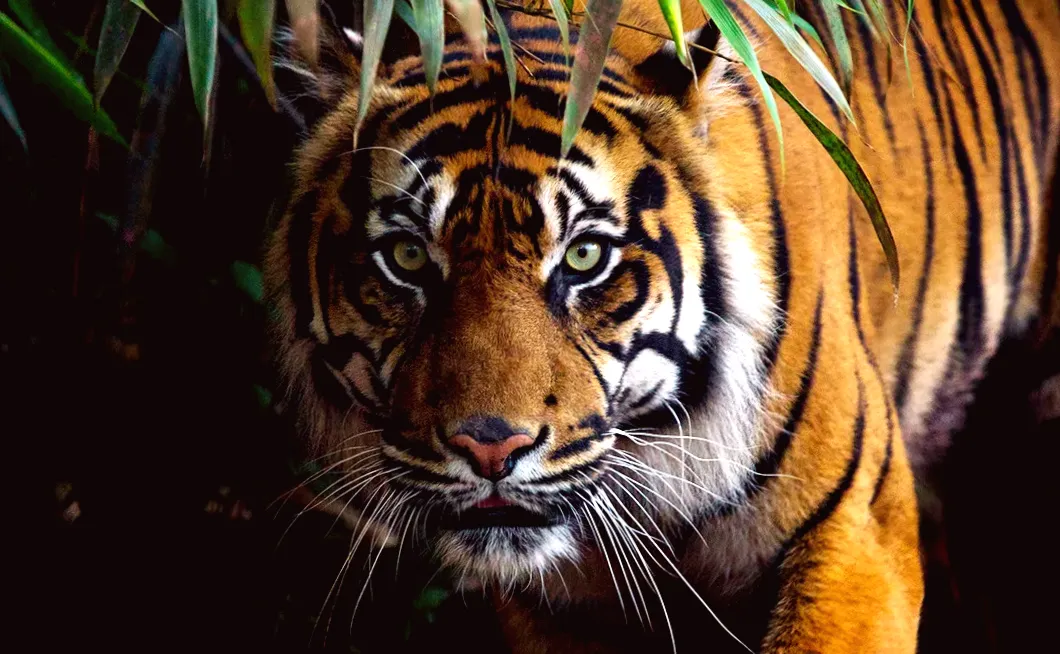
Observing a wild tiger (Panthera tigris) is extremely rare. Due to deforestation, declining prey numbers, and illegal hunting, tigers have vanished from over 90% of their historic habitats, including the forests of Vietnam, Cambodia, and Laos. While some populations persist on the island of Sumatra, tracking this critically endangered subspecies has been challenging because of its elusive behavior and low numbers.
New evidence from camera traps on Sumatra indicates that the tigers there may be doing better than expected. A recent study published in Frontiers in Conservation Science details findings from the Leuser Ecosystem, the largest remaining continuous habitat for Sumatran tigers (P. t. sumatrae).
Previous surveys in Gunung Leuser National Park, located within the ecosystem, captured only five tigers on infrared cameras, which was insufficient to estimate population density reliably. For the current research, scientists expanded their monitoring efforts, deploying more cameras over longer periods.
Over roughly 18 months, 34 pairs of infrared cameras were placed in protected forests outside the national park for intervals of 90 and 180 days. Each camera pair photographed from different angles, helping to distinguish individual tigers. This effort produced 282 images, allowing researchers to identify 27 adult tigers and three groups of cubs over a six-month period.
Long-term camera trap monitoring is essential to measure key tiger population metrics such as survival, recruitment, territory tenure, and growth rate, said co-author Joe Figel of the Indonesian conservation group Hutan Harimau.
By analyzing repeated sightings of the same individuals, the researchers estimated tiger densities between 1.42 and 2.35 per 38.6 square miles, more than twice the density reported from earlier studies in Gunung Leuser National Park. According to Figel, Leuser contains vital patches of lowland and hill forests where prey densities are highest in Sumatra.
The findings indicate that some of the islands best tiger habitats exist outside the national park, in areas safeguarded by Aceh province authorities. The study underscores the value of deploying numerous camera traps for extended periods to obtain accurate population estimates for secretive apex predators with large home ranges.
Author: Logan Reeves