

German populist party BSW rebrands, appoints new leaders, aims for collaborative direction
- Last update: 5 hours ago
- 2 min read
- 552 Views
- WORLD
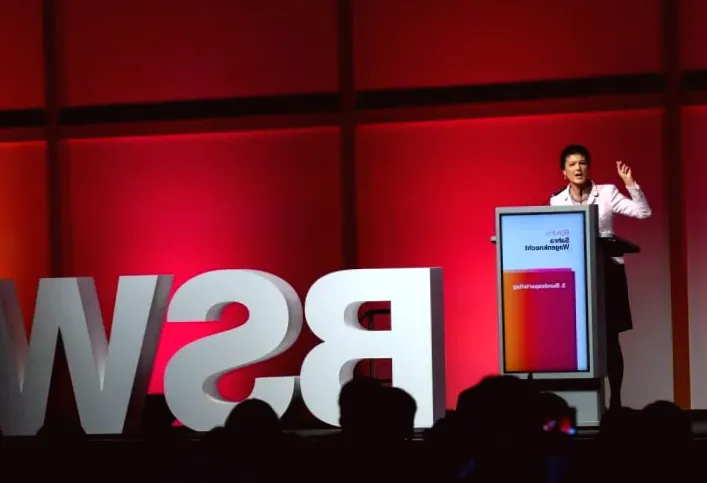
The name change reflects a desire to expand beyond its association with Wagenknecht, who launched the party in early 2024 following her departure from The Left party. BSW has combined left-leaning economic policies with nationalist and anti-immigration stances, along with pro-Russia positions, presenting itself as a populist alternative to Germanys established political parties.
As part of the transition, Wagenknecht is stepping down from leadership. The conference elected Amira Mohamed Ali and European parliamentarian Fabio De Masi as co-chairs. Around 660 delegates gathered to define a shared political strategy and discussed the partys potential future participation in government.
BSW previously achieved notable results in the 2024 European elections and in state contests in Thuringia, Brandenburg, and Saxony, and is part of coalitions in Brandenburg and Thuringia. However, it narrowly missed the 5% threshold in the 2025 federal elections, despite calling for a recount.
In a keynote address, Wagenknecht acknowledged the party is facing its most challenging period, but emphasized its crucial role in German politics. She declared that BSW uniquely opposes the mainstream political trajectory and would remain a persistent force on the national stage.
She reaffirmed the partys core positions: opposition to conscription and higher military spending, advocacy for negotiations with Moscow, promoting Russian energy imports, and proposing a pension system modeled after Austria's. Wagenknecht also criticized Chancellor Friedrich Merz and parliamentarians supporting the Left Party and Greens, warning against a drift toward authoritarianism and the erosion of the welfare state.
Key topics at the conference included Germanys approach to peace, NATO, and energy policies, which will influence the partys future orientation.
Author: Olivia Parker
Share

German parliament committee rejects BSW challenge to election result
1 days ago 2 min read WORLD

German parliament committee rejects BSW challenge to election outcome
1 days ago 2 min read WORLD

German parliament makes decision on controversial pension changes
1 days ago 2 min read WORLD

Germany considers ending subsidies for heat pumps due to backlash against net zero goals
2 days ago 2 min read WORLD

German parliament to decide on controversial pension legislation on Friday
3 days ago 2 min read WORLD