

The Military's Radar Plane Replacement Plan Continues to Fail
- Last update: 1 hours ago
- 2 min read
- 569 Views
- WORLD
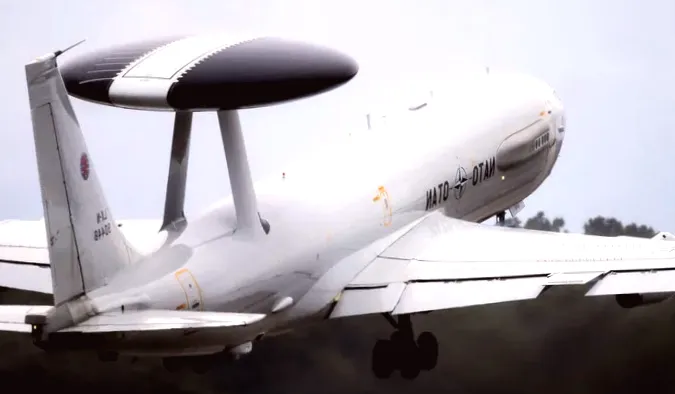
For nearly half a century, the Boeing E-3 AWACS has served as the sky's command center, detecting enemy aircraft and missiles while guiding friendly forces. Its distinctive rotating radar dome makes it one of the most recognizable military aircraft ever built. However, the E-3 is aging and is slated for retirement by 2035.
Efforts to replace it have repeatedly stalled. The main challenges are its outdated Boeing 707 airframe, which is increasingly difficult to maintain, and an aging radar system. Boeing's proposed replacement, the E-7 Wedgetail, addresses both issues. Built on the modern 737 platform, it uses an advanced electronically scanned radar instead of the older rotating disc. Several allied nations, including Australia, Turkey, and South Korea, already operate the E-7 successfully.
Despite the apparent simplicity of the upgrade, the U.S. Department of Defense has repeatedly vacillated. In June, it canceled its E-7 orders, citing budget overruns and concerns over survivability in modern conflicts. Instead, the Pentagon opted to purchase additional E-2D Hawkeye aircraft and emphasized future reliance on satellites and the Space Force for detection and battle management.
However, advocates argue that the E-2 is far less capable than the AWACS and cannot handle large-scale operations. The Air & Space Forces Association, with backing from former Air Force Chiefs of Staff, urged Congress to continue with the E-7 program, highlighting its superior capabilities and the immediate need for a modern replacement.
Congress has continued to support the program financially. Despite the DoD's cancellation, the House Appropriations Committee funded U.S. E-7 development, and subsequent federal bills allocated $200 million for continued prototyping.
Meanwhile, international interest is also faltering. South Korea canceled future E-7 orders in favor of alternatives from L3Harris, and the Netherlands, on behalf of NATO, withdrew its potential orders. NATO appears to be shifting toward European options like the Saab GlobalEye, built on the Bombardier Global 6000/6500 platform.
Currently, the E-7 remains a proven aircraft with dwindling support, even as the need for advanced airborne radar grows. While allies adopt alternative systems, the U.S. replacement plan remains uncertain, leaving the future of airborne radar in a state of limbo.
Author: Noah Whitman
Share
Muslim burial space shortage reaches critical level
4 minutes ago 2 min read WORLD

California health officials issue urgent warning to mushroom hunters after deadly poisoning outbreak
5 minutes ago 2 min read WORLD

Some Ukrainians fleeing war-torn Donbas suggest it is time for a deal
10 minutes ago 3 min read WORLD
Researchers develop plastic that can self-destruct when instructed: Introducing 'Built-in end-of-life' technology.
12 minutes ago 2 min read WORLD

Debunked: AI Videos Of Iranian Bases Hit By Israeli Missiles Are NOT Real CCTV Footage
15 minutes ago 2 min read WORLD

What is the reason behind Trump's threat to Maduro in Venezuela?
24 minutes ago 3 min read WORLD

Hong Kong to hold election as city grieves tragic fire
27 minutes ago 3 min read WORLD

Russia attacks Ukraine with drones and missiles during peace negotiations
31 minutes ago 1 min read WORLD

Venezuela's Nicolas Maduro dances amid escalating tensions with US
37 minutes ago 2 min read WORLD
Controversial video from inside cruise ship sparks online debate: 'This is awful'
37 minutes ago 2 min read WORLD