

Court appears skeptical of billion-dollar decision in copyright infringement case
- Last update: 2 days ago
- 3 min read
- 19 Views
- BUSINESS
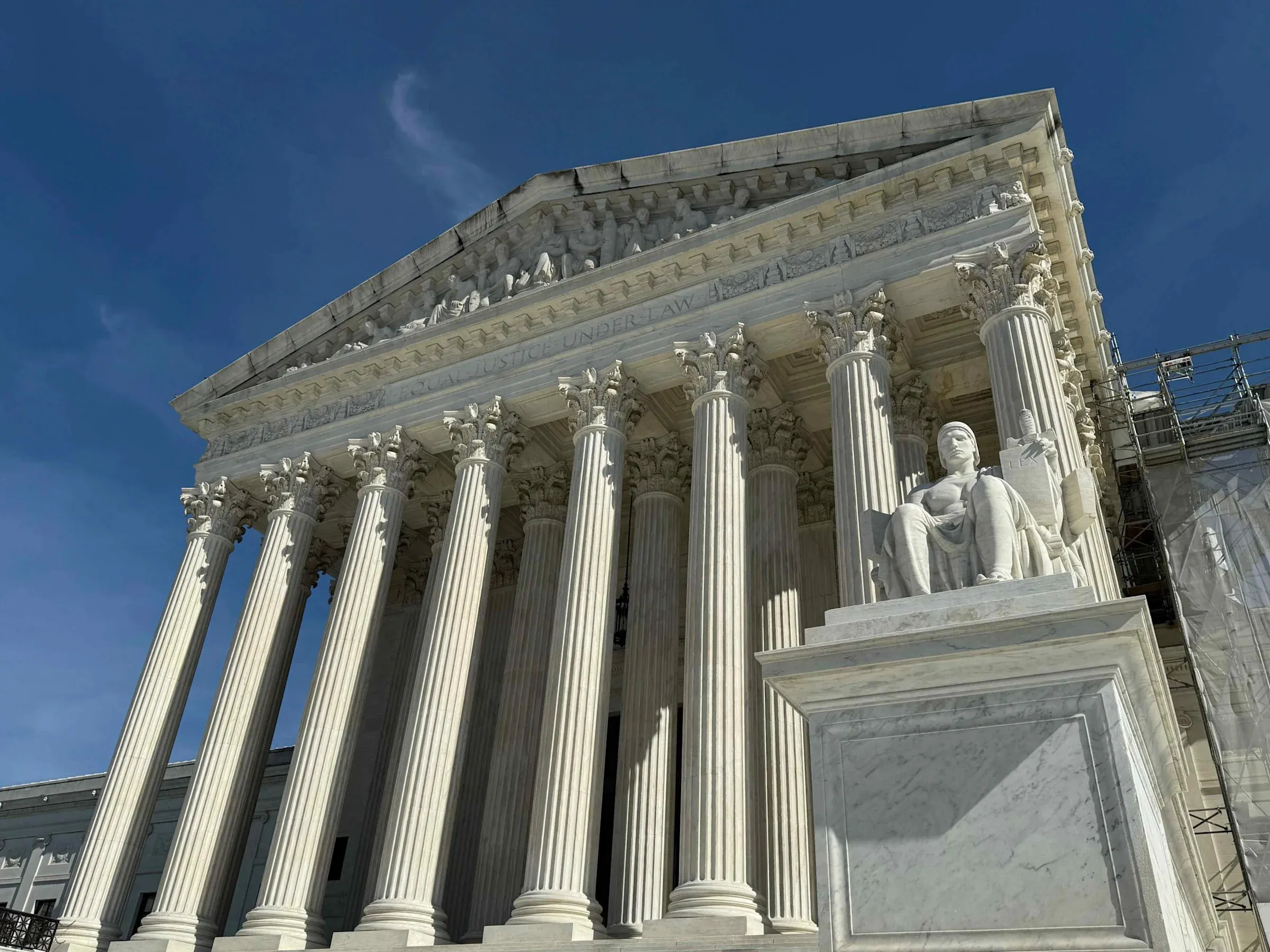
During yesterday's session, Dec. 1, in the case of Cox Communications v. Sony Entertainment, the Supreme Court tackled a core issue of modern internet usage: the persistent tendency of users to access copyrighted mediamovies, music, and other contentwithout authorization. Lower courts had previously ruled that Cox was responsible for its customers infringements, resulting in damages exceeding a billion dollars. However, yesterdays arguments suggest the justices may be reluctant to uphold that decision.
Both parties presented compelling arguments. Sony asserted that Cox received millions of infringement notices and still continued providing service to users who repeatedly violated copyrights. While law provides a safe harbor for internet providers that take reasonable steps to address repeat infringers, the lower courts determined Cox fell short due to infrequent account terminations.
Cox argued that it never encouraged copyright violations and that practically, the only way to stop infringement would be to terminate service. They contended that cutting off accounts, particularly in high-use environments like universities, hospitals, and military bases, is not a reasonable response.
The justices posed challenging questions to both sides. Some suggested that if Coxs viewthat ISPs cannot be liable without deliberate wrongdoingwere accepted, it would render the safe harbor meaningless. The majority appeared skeptical of Sonys argument, with Justice Samuel Alito particularly questioning its feasibility in contexts like large universities. Alito asked how an ISP should manage accounts serving tens of thousands of users engaged in infringing activity. When Sonys lawyer suggested discussions with institutions, Alito illustrated the impracticality, highlighting the continuous cycle of new infringers.
Paul Clement, representing Sony, referenced hotels limiting internet speed to discourage piracy, but Alito doubted such measures would be suitable for universities. Clement responded that service could still function for normal purposes while restricting peer-to-peer file sharing, though this approach is unlikely to please large institutions or public facilities.
Justice Elena Kagan summarized existing precedent, identifying three key principles: liability requires active facilitation of infringement, a clear distinction exists between inaction and wrongful action, and providers must not selectively assist infringing users. Kagan suggested that Sonys position fails on all three points.
Another concern was the extensive liability Sony seeks to impose, which lacks clear congressional authorization. Justices Neil Gorsuch, Brett Kavanaugh, and Clarence Thomas expressed hesitation about creating new aiding-and-abetting liability in intellectual property, noting parallels with securities law where the Court avoids expanding liability absent statutory direction.
Overall, the justices seemed unlikely to accept Coxs broadest defense of immunity, yet Sonys approach also appeared unacceptable. The likely outcome is a rejection of the lower courts ruling against Cox, though a formal decision is not expected soon.
Author: Sophia Brooks
Share

Elon Musk's X fined €120m for 'misleading' blue checkmarks
1 minutes ago 2 min read BUSINESS

New plans may increase fees for Mersey Tunnel drivers
2 minutes ago 2 min read BUSINESS
Blue Origin, owned by Jeff Bezos, seeks approval to discharge 500,000 gallons of wastewater daily into protected lagoon amid survival struggles.
3 minutes ago 2 min read BUSINESS

Political support grows for new blood tests detecting multiple types of cancer
3 minutes ago 3 min read BUSINESS

Cloudflare investigates outage affecting sites like Zoom and LinkedIn
4 minutes ago 1 min read BUSINESS
Elon Musk's Satellites Declared Major Threat to Crucial Space Mission, Experts Raise Alarm: 'I Couldn't be More Concerned'
5 minutes ago 2 min read BUSINESS

BiblioFlex to track flexible plastic packaging and recycling in Canada
5 minutes ago 2 min read BUSINESS

FDA approves enhancements to Insulet's Omnipod 5 algorithm
6 minutes ago 2 min read BUSINESS
US official launches probe into Shein for potential severe violations of law: 'Could endanger millions of American consumers'
6 minutes ago 3 min read BUSINESS

New MS NOW Direct-To-Consumer Service Provides 24/7 Access To Linear Channel, But Is Not Your Average Streaming Platform
8 minutes ago 2 min read BUSINESS