

Europe's deadly Black Death plague possibly caused by volcanic eruption
- Last update: 1 days ago
- 2 min read
- 866 Views
- BUSINESS
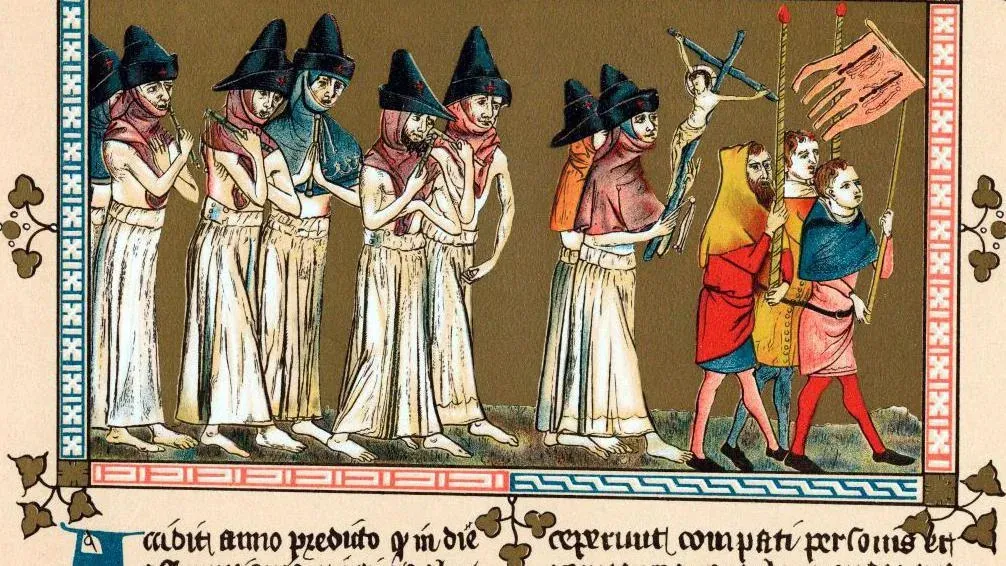
Scientists suggest that a volcanic eruption around 1345 may have initiated a series of events culminating in the deadliest pandemic in European history: the Black Death. Analysis of tree rings indicates that the eruption triggered a severe climate disturbance, setting off a chain reaction that brought the plague to medieval Europe.
The eruption released ash and gases into the atmosphere, causing a sharp drop in temperatures and resulting in widespread crop failures. To prevent famine, densely populated Italian city-states imported grain from regions around the Black Sea, inadvertently introducing plague-infected fleas to Europe.
This convergence of climate shock, famine, and trade created what researchers describe as a "perfect storm," highlighting how environmental and human factors can combine to spread disease in interconnected and warming societies. Dr. Ulf Bntgen of the University of Cambridge noted that while such coincidences were rare in the past, the risk of zoonotic diseases emerging under climate change and spreading in a globalized world is rising, especially in light of experiences with recent pandemics.
Evidence from tree rings in the Spanish Pyrenees points to unusually cold summers in 1345, 1346, and 1347. The Black Death then ravaged Europe between 1348 and 1349, killing an estimated half of the population. The disease was caused by the bacterium Yersinia pestis, transmitted by wild rodents like rats and the fleas they carried, likely originating in Central Asia and spreading via trade networks.
Researchers from the University of Cambridge and the Leibniz Institute for the History and Culture of Eastern Europe (GWZO) in Leipzig analyzed tree rings and ice cores to reconstruct the climatic conditions during this period. Their findings indicate that volcanic emissions blocked sunlight, leading to consecutive years of lower temperatures and poor harvests across the Mediterranean.
Italian city-states relied on long-distance trade to secure grain from the Black Sea, unknowingly facilitating the entry of the plague into Europe. Dr. Martin Bauch, an expert in medieval climate and epidemiology at GWZO, described this interaction between environmental change and food security as a "perfect storm," where well-established trade networks meant to prevent famine ended up triggering a much larger catastrophe.
The study is published in the journal Communications Earth & Environment.
Author: Gavin Porter
Share

Study suggests that a volcanic eruption may have triggered the arrival of the plague in Europe
1 days ago 3 min read WORLD

Europe's deadly Black Death plague possibly caused by volcanic eruption
1 days ago 2 min read BUSINESS

Volcanic eruptions could have facilitated the spread of the Black Death
1 days ago 3 min read ENTERTAINMENT

Volcanic Eruption Half a World Away Linked to Black Death's Devastation
1 days ago 2 min read US

Spain’s African swine fever outbreak possibly initiated by wild boar consuming a sandwich
3 days ago 3 min read HEALTH