

FMCSA Violations for Lack of English Proficiency and Reasons Carriers Remain Operational
- Last update: 2 days ago
- 3 min read
- 815 Views
- BUSINESS
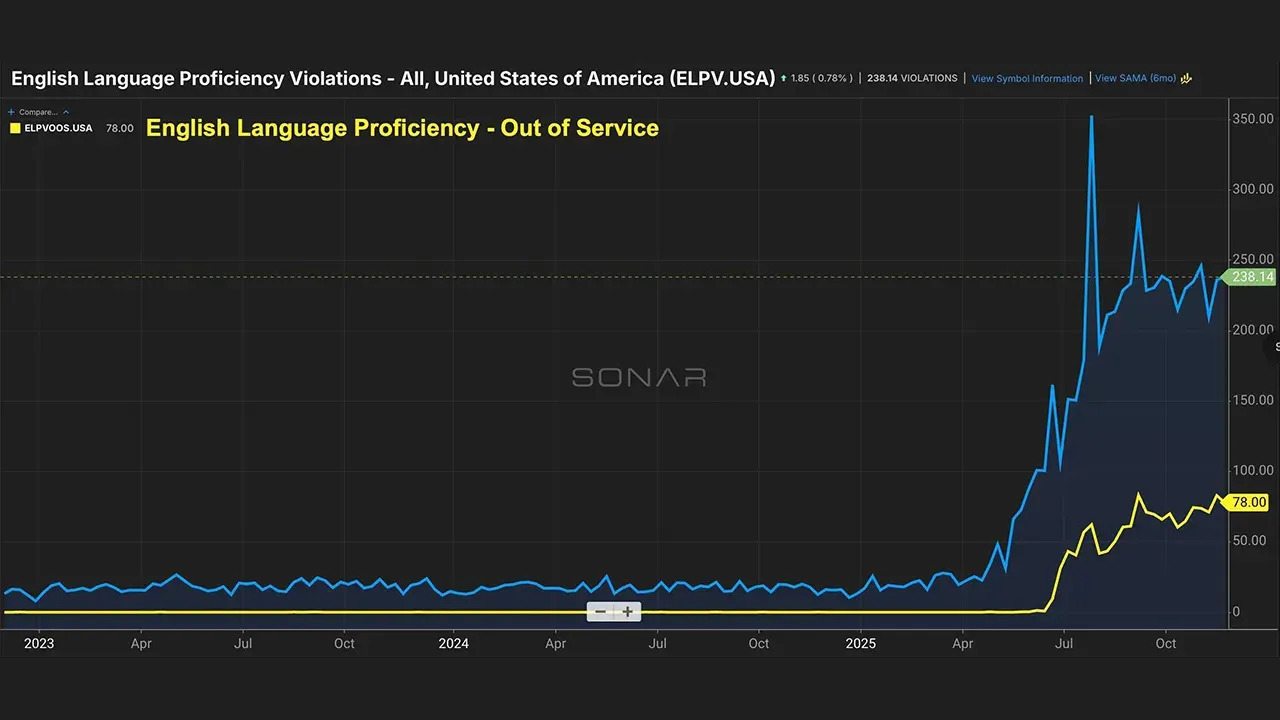
As of October 2025, federal inspectors overseeing motor carrier safety have logged 6,455 English language proficiency (ELP) violations, yet only 1,816 drivers were removed from service for these breaches. Industry analysts interpret this gap as the result of legitimate exemptions rather than lax enforcement. Data from SONAR, compiled from DoT and FMCSA sources, indicates a sharp jump in violations starting June 2025, when cases rose from 1,399 in May to 3,925. Corresponding out-of-service actions increased more slowly, climbing from 4 in May to 328 in June and peaking at 2,155 in September.
This surge represents a major reversal after nearly a decade of minimal enforcement. A 2015 memorandum during the Obama era had effectively suspended active oversight of English proficiency, a policy that continued through subsequent administrations. In early 2025, however, a new executive directive reactivated full enforcement responsibilities for FMCSA, prompting the Commercial Vehicle Safety Alliance (CVSA) to revise out-of-service guidelines. These updates defined clear thresholds for evaluating a drivers language skills, standardizing assessment practices across state and federal inspections.
The June spike in violations coincided with inspectors completing training on the new CVSA criteria. Federal regulations require drivers to communicate in English effectively enough to interact with the public, interpret road signage, respond to official inquiries, and maintain proper records. However, several exemptions clarify why violations do not always result in a shutdown. Notably, drivers operating within U.S.-Mexico and U.S.-Canada commercial zonestypically within 20 to 25 miles of border crossingsmay have limited English proficiency yet remain legally on the road. Texas, with 7,090 violations through October, along with New Mexico (1,112) and Oklahoma (751), exemplifies this border-zone effect.
Other protected groups include hearing-impaired drivers holding FMCSA-issued exemptions under the Americans with Disabilities Act. Inspectors record violations but allow these drivers to continue operating. Additional scenarios include borderline English proficiency, presence of translators, or delayed verification of valid exemption documents.
Federal inspections have captured 15,193 ELP-related enforcement actions to date, covering Levels I through VI inspections across agencies under FMCSA oversight. Following the initial spike, violations fell from 7,140 in September to 6,455 in October, with out-of-service orders dropping from 2,155 to 1,816. Despite the reduction, figures remain higher than early 2025 levels, where monthly violations stayed below 800 and out-of-service orders were minimal.
The trend indicates inspectors are increasingly skilled at distinguishing drivers who genuinely pose a safety risk from those covered by exemptions. Fleets near international borders or employing drivers with documented exemptions should keep proper paperwork readily accessible during inspections to avoid unnecessary delays. The continuing gap between recorded violations and actual shutdowns reflects FMCSAs recognition of regulatory exemptions. Carriers operating within legal parameters can expect documentation reviews without automatic service removal.
No new FMCSA guidance for 2026 has been released, but the current enforcement emphasis on English proficiency appears set to continue.
Author: Ethan Caldwell
Share

Trump Administration Cracks Down on Trucking License Mills in DOT Enforcement Action
1 days ago 3 min read POLITICS

Exploring DOT's Recent ELD Approval Changes: What's Different and Why It's Important
3 days ago 4 min read ECONOMICS

DHS initiates comprehensive I-9 audits on truck fleets in California
4 days ago 3 min read US