

Musk unveils new X feature revealing Iranian regime's 'VIP internet'
- Last update: 1 days ago
- 2 min read
- 743 Views
- BUSINESS
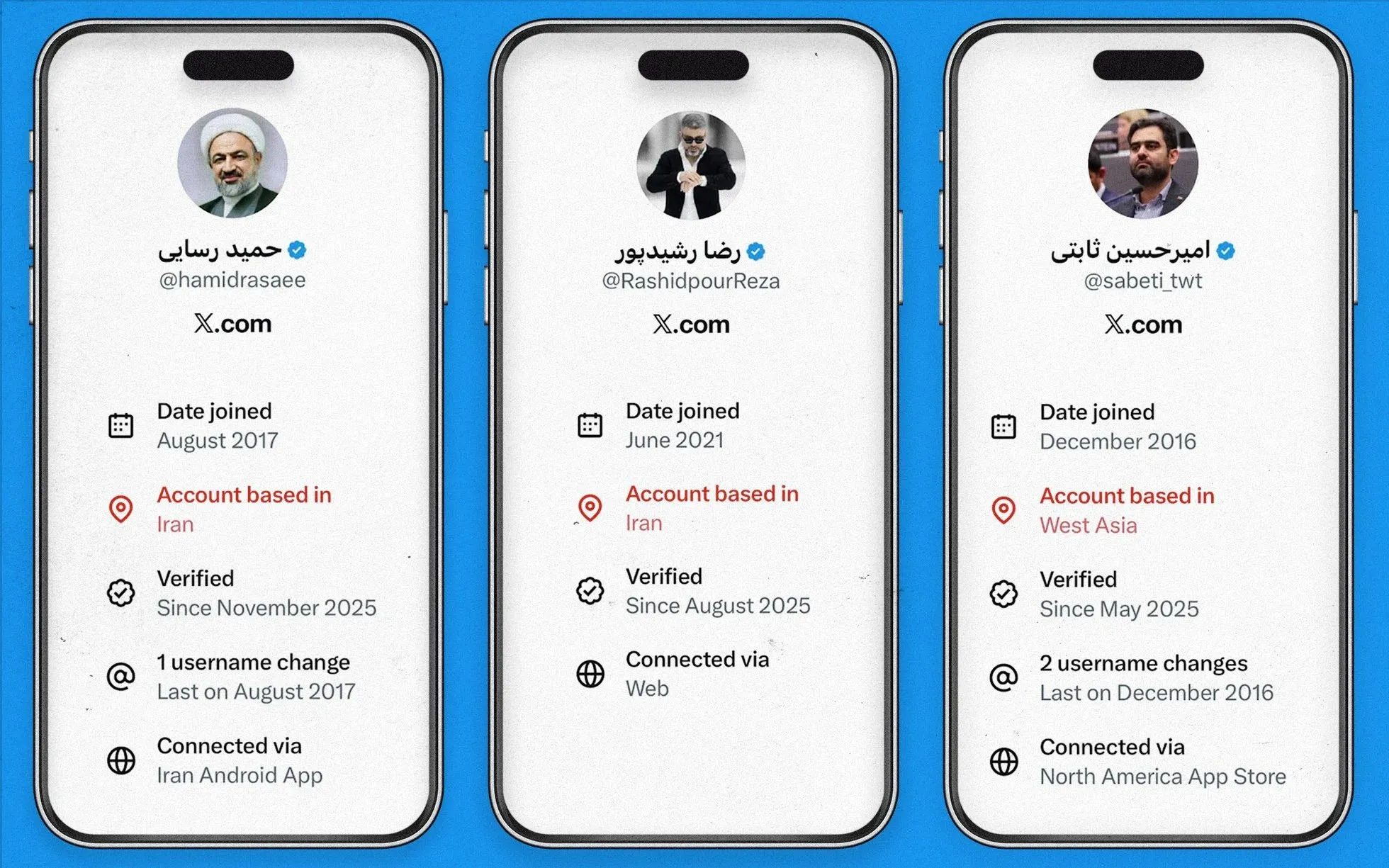
While ordinary Iranians risk harsh penalties, including prison or execution, for posting content critical of the government on X, a recent feature update has uncovered that top officials and regime supporters freely access the platform, which is officially banned in Iran.
Elon Musks X introduced a location-tracking feature intended to identify fake accounts. Instead, it exposed a hidden network of government ministers, state media figures, political operatives, and pro-regime users operating from within Iran using special white SIM cards that bypass internet restrictions.
Critics have labeled this divide a form of digital apartheid, highlighting the stark contrast between ordinary citizens, who must rely on VPNs to conceal their location, and elites who enjoy unrestricted access. Posts from average Iranians that are critical of the state or supportive of Israel can lead to imprisonment or execution, while regime insiders navigate the platform freely using white SIMs.
Ahmad Bakhshayesh Ardestani, a member of Irans national security commission, criticized the practice, suggesting that VPN use by the general public fuels a lucrative black-market controlled by a mafia. VPNs show users server locations instead of their actual positions, allowing ordinary citizens some measure of online access without detection.
Other blocked platforms in Iran include Facebook, YouTube, and Telegram. One citizen commented on the evident inequality: This is obvious discrimination in public rights and against the explicit text of the constitution. Another added, When you yourself use white SIM cards, how can you understand the pain of filtering or fight to remove it?
The location feature revealed high-profile figures accessing X, including Communications Minister Sattar Hashemi, former Foreign Minister Javad Zarif, government spokesperson Fatemeh Mohajerani, and numerous state-affiliated journalists. The list also included pro-government eulogists and accounts posing as opposition voices, some of which had government approval, suggesting efforts to control dissenting narratives.
The exposure embarrassed officials who had previously denied privileged internet access. Mohajerani claimed to use VPNs like regular citizens, stating that Class-based internet has neither legal basis nor will it ever be on the governments agenda. Communications Deputy Mahdi Tabatabaei criticized the system, saying, Making society white and black is playing on the enemys field. From the presidents perspective, all 90 million Iranians are white.
Journalist Yashar Soltani compared the situation to George Orwells Animal Farm, emphasizing that rationed freedom amounts to structural discrimination rather than true liberty.
Author: Gavin Porter
Share

Russian media reports Roblox banned in the country
1 days ago 2 min read WORLD

Russia prohibits the use of Roblox due to safety and extremist content concerns
1 days ago 2 min read BUSINESS

Meta begins removing underage users from social media in Australia
1 days ago 2 min read BUSINESS

Russia restricts access to American children's gaming platform Roblox
1 days ago 2 min read WORLD

YouTube warns that children will be less protected under Australia's social media ban.
2 days ago 3 min read BUSINESS

Mayor of Bat Yam alerts residents to Iranian intelligence agents recruiting Israeli spies
2 days ago 2 min read WORLD

Russians remain sceptical about state-backed messenger, saying 'I don't trust it'
4 days ago 2 min read WORLD