

Thursday marks the final supermoon visible to Georgians for quite a while
- Last update: 2 days ago
- 2 min read
- 707 Views
- BUSINESS
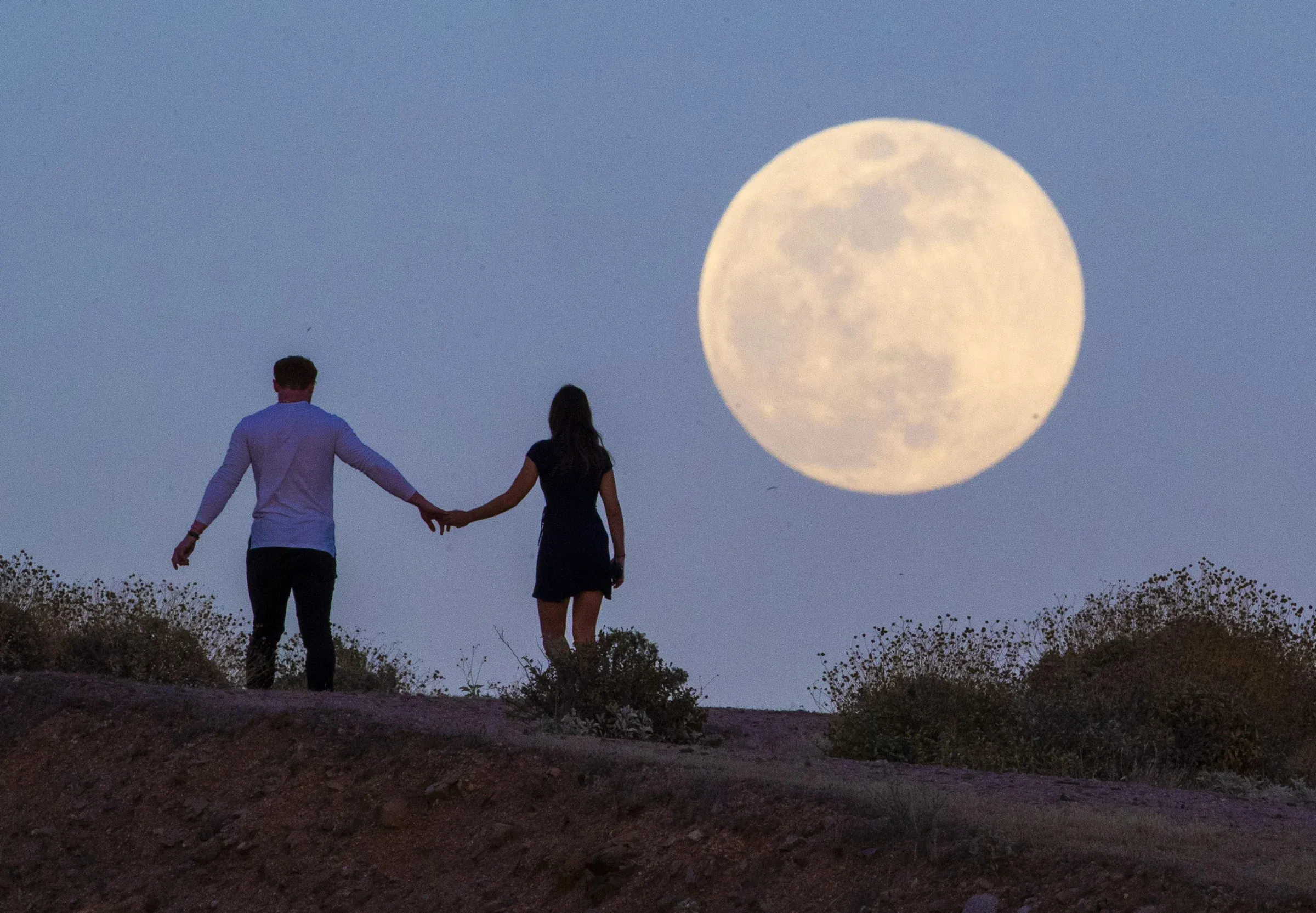
Even though temperatures are dropping, stargazing enthusiasts might want to wrap up warmly and step outside tomorrow evening. Georgia will witness this months full moon at its brightest, marking the final supermoon until spring 2026.
The Cold Moon is expected to reach its peak brightness on Thursday, December 4. Residents of Georgia should be able to spot it starting at 6:14 p.m. The lunar phases over the next month will follow a regular cycle leading up to this event.
Weather could affect visibility. Long-range forecasts from The Weather Channel suggest that parts of Georgia may experience cloudy or mostly cloudy skies on the night of December 4, with a small chance of rain.
The December full moon is traditionally called the Cold Moon, reflecting the seasons chilly conditions. In Europe, it has also been known as the Moon Before Yule, honoring the Yuletide festival that celebrates the suns return. Various cultures have their own names for this lunar event.
Another supermoon will rise on December 4. The super designation refers mainly to the moons closeness to Earth rather than its visual size. Supermoons can appear up to 14% larger and 30% brighter than the faintest full moons of the year. While the visual difference may be subtle, the gravitational effects on Earth are noticeable, producing higher tides.
Decembers supermoon will be slightly farther from Earth than Novembers. The previous supermoon was 221,816 miles away, while this one will be at 221,965 miles. This variation occurs because the moons orbit around Earth is elliptical, influenced by the gravitational pull of the Earth, moon, and sun, ranging between roughly 221,457 and 252,712 miles.
Following December, the next supermoon will occur on May 16, starting as a new moon.
The moon can sometimes appear red or orange during certain lunar events. During a partial lunar eclipse, only part of the moon passes through Earths shadow, causing it to darken. The red hue happens because sunlight is filtered and bent by Earths atmosphere. Shorter wavelengths, like blue and violet, scatter more, while longer wavelengths, such as red and orange, dominate. Dust or clouds in the atmosphere can intensify this effect.
For further coverage, Miguel Legoas reports for the Deep South Connect Team at Gannett/USA Today. He can be found on Instagram @miguelegoas or reached via email at mlegoas@gannett.com.
Author: Connor Blake
Share

Insider Debunks Gwen Stefani's Subtle Breakup Speculations
1 minutes ago 3 min read BUSINESS

US gas prices fall below $3 on average, except in these states
1 minutes ago 2 min read BUSINESS

Google's Year In Search: What were the top searched terms in 2025?
2 minutes ago 3 min read BUSINESS

EU imposes $140 million fine on Elon Musk's X for 'deceptive' use of blue checkmarks
2 minutes ago 1 min read BUSINESS
Trump's commutation of a convicted fraudster deteriorates
3 minutes ago 2 min read BUSINESS

Gavin Newsom's Peculiar Sitting Position Leaves Internet Wondering 'How?!'
4 minutes ago 2 min read BUSINESS

EU fines social media X €120 million
8 minutes ago 2 min read BUSINESS

Gavin Newsom's Sitting Position Horrifies Internet: 'Difficult To Watch'
12 minutes ago 2 min read BUSINESS

Poll: Majority of Germans in favor of hosting Olympics in the country
12 minutes ago 2 min read BUSINESS

Warnings about care home fraudster were raised years before forged will
14 minutes ago 3 min read BUSINESS