

Australia's ban on social media offers a test on harm caused by online platforms
- Last update: 5 days ago
- 3 min read
- 13 Views
- POLITICS
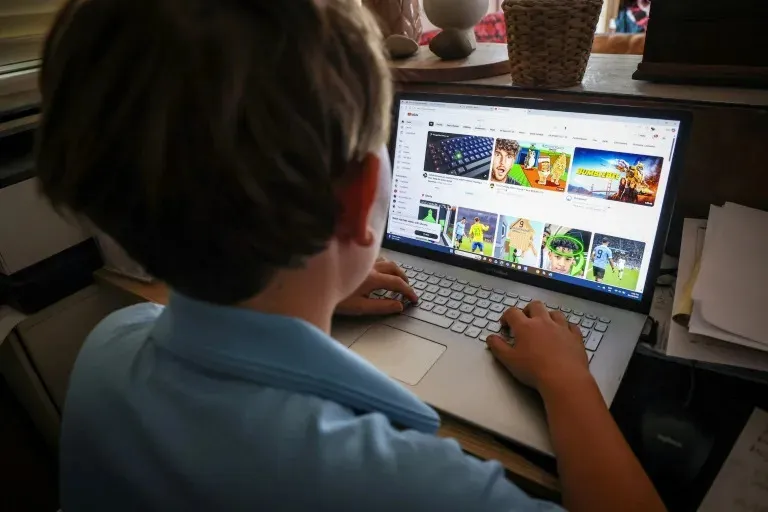
Australia is set to implement a pioneering ban on social media use for children under 16, creating a real-world case study on how technology affects young people, according to experts. Proponents of the December 10 ban cite an increasing number of studies linking extensive online activity to negative impacts on adolescent wellbeing. Opponents, however, claim that the scientific evidence is not conclusive enough to justify the law and warn it could have unintended consequences.
Psychologist Amy Orben, who leads a digital mental health initiative at the University of Cambridge, explained that adolescent brains continue to develop into the early 20s. She noted that a substantial body of observational research, mostly survey-based, has shown correlations between heavy technology use and poorer mental health outcomes. Yet, she cautioned, establishing definitive causation is challenging since mobile devices are deeply integrated into daily life, and some teens may use social media precisely because they are experiencing difficulties.
The rapid evolution of technology means the evidence will always be somewhat uncertain, Orben said. Experimental studies or natural experiments are what could truly reveal the impact, so monitoring the Australian ban offers a unique insight into potential effects.
To examine the ban's influence, Australian researchers have launched the Connected Minds Study, enrolling 13- to 16-year-olds to track how their mental health and wellbeing are affected.
According to a World Health Organization survey last year, 11% of adolescents reported struggling to regulate their social media use. Other studies link excessive online engagement to poor sleep, body image concerns, academic difficulties, and emotional stress. A 2019 U.S. study in JAMA Psychiatry suggested that teens spending more than three hours daily on social media may face increased mental health risks.
Some specialists believe immediate action is necessary. This is more a values decision than a purely scientific one, said Christian Heim, an Australian psychiatrist. He emphasized concerns such as cyberbullying, suicide risk, and exposure to harmful content related to anorexia and self-harm. Heim cited a 2018 study by neuroscientist Christian Montag linking addiction to WeChat with reduced grey matter in certain brain regions. We cannot wait for stronger proof, he added.
Scott Griffiths of the Melbourne School of Psychological Sciences noted that a definitive smoking gun study proving social media harms is unlikely to appear soon. He expressed hope that the legislation would push social media companies to take young peoples mental health more seriously.
Polls indicated that over 75% of Australian adults supported the ban before it became law. Nonetheless, an open letter from more than 140 academics and advocates warned that the policy might be overly blunt. Axel Bruns, a digital media professor at Queensland University of Technology, argued that anxiety in children could stem from broader issues, such as pandemic disruptions and global conflicts, rather than social media alone. He also cautioned that the ban could drive some teens to fringe platforms while isolating marginalized youth.
Noelle Martin, an activist against online image-based abuse, questioned the effectiveness of the ban given Australias track record in enforcing similar regulations. I dont believe it will significantly prevent or address the problem, she said.
Despite differing opinions, the government has committed to the ban. Social media is causing social harm to our children, Prime Minister Anthony Albanese stated. Australian kids are being negatively affected by online platforms, and its time to take action.
Author: Sophia Brooks
Share

Ilhan Omar Responds to Trump's Repeated Attacks with 2 Direct Sentences
2 hours ago 2 min read POLITICS

Opinion - A Path to Affordable Health Insurance
2 hours ago 3 min read POLITICS

Trump Criticizes Kaitlan Collins from CNN with Harsh Name-Calling
3 hours ago 2 min read POLITICS
Trump's policy document warns of Europe facing 'civilizational erasure' and seeks to prevent endless wars in the Middle East.
3 hours ago 3 min read POLITICS
Trump's NASA nominee to emphasize the need for urgency in the moon race during second Senate hearing
3 hours ago 2 min read POLITICS
Rand Paul Accuses Pete Hegseth of Either Deceiving Us or Being Incompetent
3 hours ago 2 min read POLITICS

CNN's Jake Tapper defends Trump for potentially sleeping at cabinet meeting: 'This is not unusual' for a 79-year-old
3 hours ago 2 min read POLITICS

NATO leader anticipates allies will contribute billions more for US weapons
3 hours ago 2 min read POLITICS
Congress intensifies scrutiny of Pete Hegseth over boat collisions
3 hours ago 4 min read POLITICS

CNN’s Kaitlan Collins Confronts Trump Directly About New ‘Peace Prize’ — Standing Beside the Presenter
3 hours ago 3 min read POLITICS