

Kagan strongly disagrees in Texas redistricting case
- Last update: 3 hours ago
- 2 min read
- 972 Views
- POLITICS
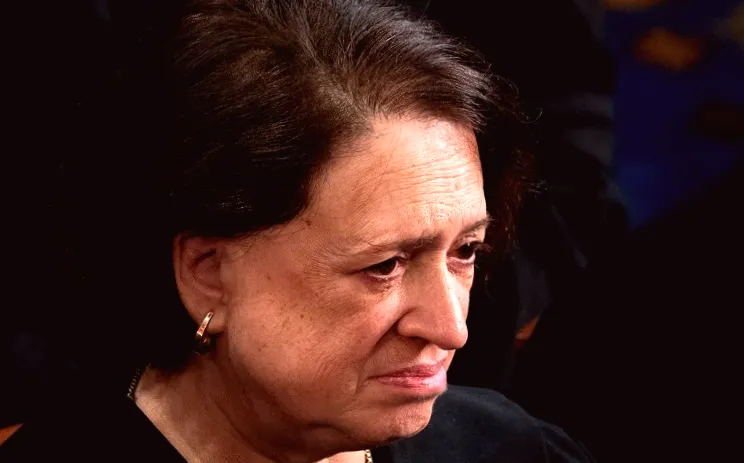
Supreme Court Justice Elena Kagan expressed strong opposition on Thursday to the Courts approval of Texass new congressional boundaries, warning that the decision could infringe on voters constitutional rights. Writing alongside Justices Sonia Sotomayor and Ketanji Brown Jackson, Kagan criticized the Court for intervening after reviewing a cold paper record over a holiday weekend.
A Texas three-judge District Court had previously found that the revised congressional map primarily separated citizens by race to create a pro-Republican House plan, violating the Fourteenth and Fifteenth Amendments, according to Kagan.
This ruling disregards the careful work of the District Court, which focused solely on accurately resolving the matter, Kagan wrote. It undermines the millions of Texans who were reassigned to districts based on race.
Kagan noted that Texas denied any racial gerrymandering in its map but acknowledged that partisan advantage alone cannot justify such a map. She sharply criticized the majority, suggesting that overturning the lower courts decision for partisan purposes reflects a loss of judicial restraint.
The majority claims superior knowledge today, yet offers no clear rationale, Kagan concluded in her dissent.
The new congressional map is designed to enhance Republican electoral prospects in Texas, potentially shifting five districts in the GOPs favor. This effort parallels actions in California, where voters recently approved a map likely to benefit Democrats. Several other states are also reviewing redistricting plans.
Conservative justices disagreed with Kagan, with Justice Samuel Alito noting that the push to redraw maps in both Texas and California was motivated purely by partisan advantage.
The majority opinion argued that the lower court improperly intervened in an ongoing primary, creating confusion and disturbing the federal-state balance in elections.
Texass map became a focal point in national politics after former President Trump encouraged Republican-led states to redraw congressional boundaries to retain control of the House in upcoming elections. Though the map was approved by Texas Republicans and Governor Greg Abbott, six groups of plaintiffs challenged it in court. After a nine-day federal hearing, judges ruled that the map likely constituted racial gerrymandering, prompting the case to reach the Supreme Court.
Author: Harper Simmons
Share

Lloyd Doggett will not run for reelection due to Supreme Court's ruling on Texas redistricting
15 minutes ago 2 min read POLITICS

Contributor: The Supreme Court's 3 flawed justifications for upholding Texas' racially biased map
1 hours ago 3 min read POLITICS

Kagan strongly disagrees in Texas redistricting case
3 hours ago 2 min read POLITICS

US Supreme Court gives green light to new Texas congressional maps
9 hours ago 1 min read POLITICS
Supreme Court supports Texas in case against discriminatory congressional map
14 hours ago 2 min read POLITICS

Supreme Court approves Texas' use of congressional map supported by Trump
14 hours ago 3 min read POLITICS

Texas allowed to use Trump-supported congressional map in upcoming midterms after Supreme Court decision
15 hours ago 1 min read POLITICS

Supreme Court permits Texas GOP to temporarily use newly redistricted map
15 hours ago 1 min read POLITICS

"We may be a higher court, but not a superior one": Kagan expresses anger at SCOTUS decision to allow Texas maps
15 hours ago 2 min read POLITICS

US Supreme Court gives green light to updated Texas congressional maps
15 hours ago 1 min read POLITICS