

The major GOP initiative to reform U.S. AI regulations is facing obstacles
- Last update: 2 hours ago
- 2 min read
- 241 Views
- POLITICS
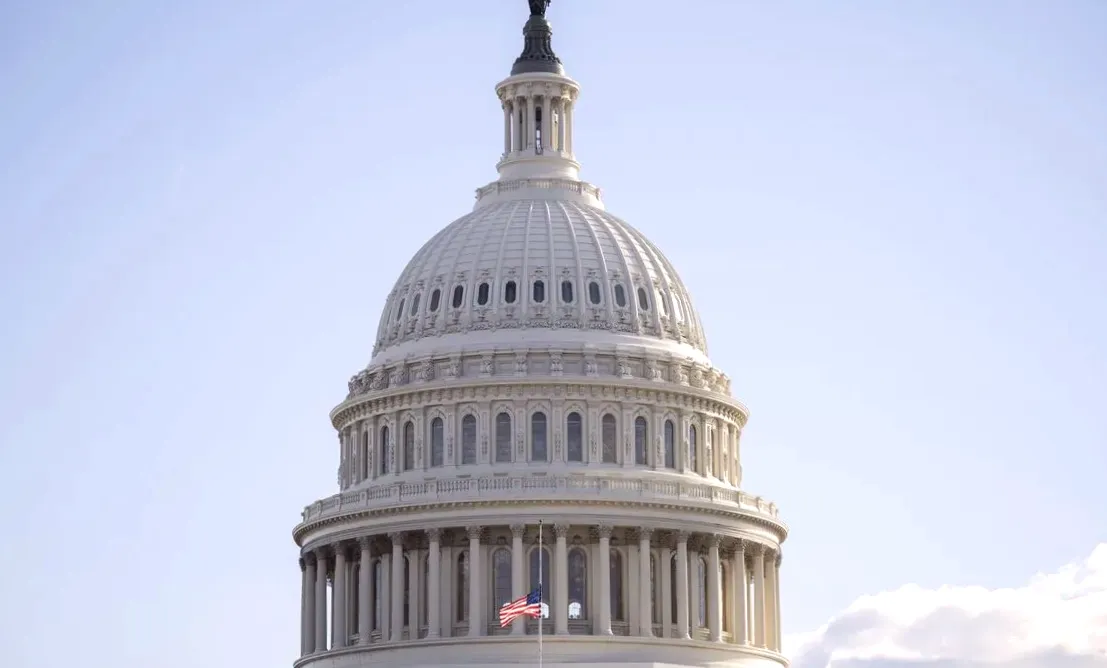
The Republican initiative in Congress to prevent states from imposing their own AI regulations is encountering significant obstacles. Last month, former President Donald Trump renewed efforts to establish a nationwide pause on state-level AI rules, emphasizing on social media that "We MUST have one Federal Standard instead of a patchwork of 50 State Regulatory Regimes."
However, there is little indication that Republican lawmakers are ready to unite around including this measure in the National Defense Authorization Act (NDAA), the crucial annual defense spending legislation.
Previous attempts to insert a state-level AI regulation ban into the GOP's so-called "Big Beautiful Bill" were abandoned after backlash from both conservative hardliners and AI companies, including Anthropic. The Republican-led Senate had voted overwhelmingly to remove it from the larger tax-and-spending bill, which eventually became law on July 4.
This time, the ban did not even pass through the House of Representatives. House Majority Leader Steve Scalise told reporters that the NDAA "wasn't the best place for this to fit," while noting, "We're still looking at other places, because there's still an interest."
Opponents of the proposal welcomed the news. Senator Josh Hawley of Missouri commented on X, "Good. This is a terrible provision and should remain OUT." Other critics included GOP Representative Marjorie Taylor Greene of Georgia, who stressed the importance of maintaining state authority. "States must retain the right to regulate and make laws on AI and anything else for the benefit of their state," she posted on social media on November 20.
The White House continues to support AI advancement and may reconsider a state-level moratorium in 2026, reflecting strong interest from Trump and major AI companies such as OpenAI. Last month, Trump also signed an executive order aimed at enabling Department of Energy labs to collaborate with tech firms on AI-driven medical research.
Author: Maya Henderson
Share
Trump stands by controversial new hepatitis B vaccine recommendations for infants
1 minutes ago 2 min read POLITICS
If the Trump administration seems confusing, just think of it as a royal family.
6 minutes ago 4 min read POLITICS

After the push for artificial intelligence, the Trump administration is now exploring the use of robots.
10 minutes ago 3 min read POLITICS
Stefanik claims Johnson is being dishonest about provision in defense bill
11 minutes ago 2 min read POLITICS

Trump versus Slaughter: An explanation
11 minutes ago 4 min read POLITICS
Trump's pardon of Honduras' ex-president exposes the truth
16 minutes ago 2 min read POLITICS
Republicans begin to turn against Pete Hegseth amidst allegations
18 minutes ago 2 min read POLITICS
Trump's derogatory comments about Somalians denounced as racism by Minnesota officials
20 minutes ago 2 min read POLITICS

Departure from State Department Legal Office May Increase Risk of Trump Administration Violating the Law
31 minutes ago 3 min read POLITICS
Trump prepares to recover millions in legal fees from Georgia case
32 minutes ago 2 min read POLITICS