

Increase in Dual Enrollment in New York State Leads to Cost Savings for Families
- Last update: 1 hours ago
- 3 min read
- 338 Views
- US
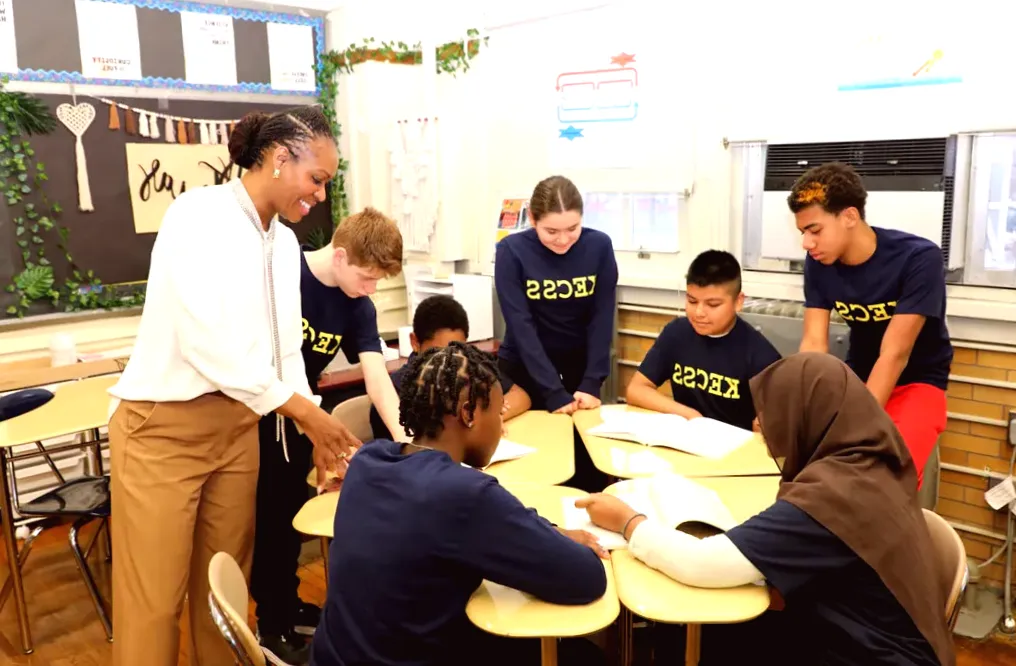
At Kingsborough Early College Secondary School, around 100 seniors begin each day taking classes at CUNY Kingsborough Community College. In the afternoons, they return to their high school campus on Lafayette Avenue, about 15 minutes away, via school bus. Juniors follow the reverse schedule, attending Lafayette in the morning and the community college in the afternoon.
By graduation, most students have already earned associate degrees from CUNY Kingsborough. A recent study by a New York coalition of education advocates found that 57% of CUNY Kingsborough students are still in high school, highlighting the growing impact of dual enrollment programs. Kingsborough is one of six community colleges in New York where high school students make up the majority of the student body.
Dual enrollment, where high school students take college courses and earn credit, is expanding as community college enrollment nationwide declines. The New York State Education Department is prioritizing these programs, proposing new reporting rules to track partnerships, enrollment, and student outcomes. This aims to ensure greater access for students underrepresented in higher education.
The stakes are significant: a 2024 Georgetown University report predicts that by 2031, 66% of quality jobs will require a bachelors degree, defined as paying at least $43,000 annually for adults aged 2544. New state policies, expected early next year, will provide consistent guidance for dual enrollment programs, alongside a $9.1 million College in High School Opportunity Fund to support low-income students.
Research shows that students in dual enrollment are more likely to attend school consistently, avoid suspension, graduate high school, and earn a college degree within six years. At Kingsborough, many graduates return to work at the school; 16 of the 80 staff members are alumni. Students also save significantly on tuition, with early college programs averaging $13,000 in savings per student.
Across New York, dual enrollment participation increased 15% year-over-year, now ranking third nationally with over 176,000 students, after California and Texas. In New York City, most participate in College Now, taking free college-level courses alongside high school classes. However, interest is rising in full early college programs that integrate college coursework into the curriculum. Around 3,500 NYC students follow this model, offered at about 45 high schools.
The early college approach dates back to Middle College High School, established in 1974 at LaGuardia Community College. Other models include P-TECH schools, which allow students to earn associate degrees in STEM fields over six years, and selective programs like Bard Early College and HBCU Early College Prep, which admit students based on GPA, essays, and interviews.
Kingsborough Early College, which started in 2006, targets students underserved in higher education, admitting sixth graders through a lottery. Many enter reading below grade level, and the school provides intensive preparation to handle college-level coursework. Freshmen begin with a year-long Spanish course, fulfilling a college requirement without prerequisites. CUNY professors teach afternoon classes at the Lafayette campus, supported by an extended school day.
Balancing high school and college-level coursework is challenging, but low teacher turnover and strong student-teacher relationships help. Students often take college classes together to maintain community and support one another. Principal Tracee Murren emphasizes that students demonstrate remarkable tenacity when given the opportunity.
Historically, dual enrollment focused on accelerating top-performing students. Today, research and programs aim to make college accessible to more students. The key is ensuring families know that free college opportunities exist, helping promote participation and long-term success.
Author: Chloe Ramirez
