Attracted by high-paying job opportunities, Kenyans demand the return of their sons sent to fight for Russia.
- Last update: 58 minutes ago
- 6 min read
- 845 Views
- WORLD
David Kulobas mother had cautioned him against traveling to Russia after he accepted a security guard job offer from a recruitment agency in Kenya. Initially, the family, living in the informal settlement of Kibera in Nairobi, was excited when David, 22, mentioned he had found work abroad. The prospect of a stable job seemed like a rare opportunity. David had previously done casual labor, from selling groundnuts to working in construction, and had long hoped for employment in the Gulf region.
But when his mother inquired about the country he was traveling to, his response left her shocked. "He showed me his phone and said: 'Look, its Russia,'" Susan Kuloba recalled in an interview with BBCs Newsday program. "I warned him: 'Dont you see what they show on TV about Russia? It's never good,'" she added. Despite her concerns, David insisted the job offer was genuine, and promised he would earn more than $7,000 upon arrivala life-changing sum for a young man without a steady income. Against his mothers wishes, David left for Russia in August, without sharing his departure date.
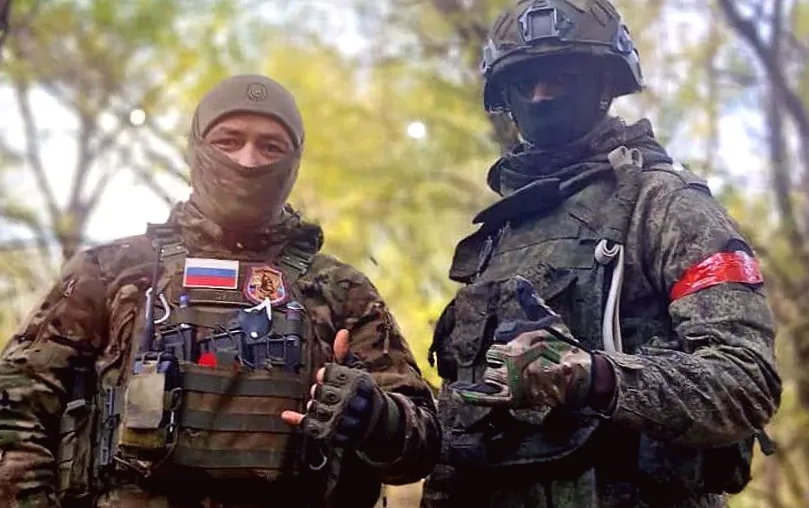
When David later contacted her, she was shocked to receive a photo of him in military combat gear. "He told me: 'Mum, the job we were told we came to do has changed, but even this one isnt bad,'" she said. David explained that he and other Kenyans had received just two weeks of combat training, and were now heading to the war zone in Ukraine, which Russia had invaded in 2022.
Days later, he reported that he and others were ambushed in a Russian-controlled area. Susan immediately urged him to return home. "I begged him: 'David, please leave that place.' He replied: 'How can I leave? I signed a contract. Give me at least one year,'" she recalled.
On October 4, Susan received a voice message from David, informing her he was about to enter battle. In case he didnt survive, he shared his Russian military ID and contract details, urging her to contact the Russian embassy if anything happened to him. That was the last time she heard from her son.
In the days that followed, Susan reached out to Davids friend, who informed her that he had heard of Davids death. When she inquired further, the friend gave her the contact number of the agent who had received them in Russia. Susan messaged the number and, after a few responses in Russian, the agent confirmed in English that David was missing and feared dead. "Im sorry to tell you this about your son," the agent told her.
She requested proof, such as a photo of Davids body or confirmation from a morgue, but received no response. The agent mentioned that she could travel to Russia herself or send a relative to verify the situation, though the family could not afford such a trip. Later, the same agent claimed that Susan was "entitled to compensation" for her son's death but provided no official documentation.
Despite visiting the Russian embassy in Nairobi, Susan has been unable to obtain any official information about her son. The embassy informed her that they did not "associate with the army." She is still uncertain about what steps to take next, saying: "How do we start? Because we dont know anything. He was my first-born. I depended on him."
Another Kenyan father shared his own ordeal. His son had been recruited under the belief that he would be working as a driver, not as a soldier. The young man was later wounded in Ukraine and has been too traumatized to speak since returning home. The father only discovered his sons travel to Russia after he was injured. "I discouraged him from going," the father said, explaining that he had followed the war closely and was uncomfortable with the situation. The recruitment agents had promised $1,500 per month, which seemed like a good offer for a qualified driver in Kenya. However, like David, the young man received only two weeks of combat training before being sent to fight in the war.
After being injured, the young man struggled for five days to find medical treatment, relying on painkillers. Eventually, he was transported to St. Petersburg after receiving basic first aid. He described seeing numerous dead bodies on the battlefield and revealed that many recruits, including himself, had signed one-year contracts without fully understanding the terms.
In response to these reports, Kenya's foreign minister confirmed that around 200 Kenyans were fighting for Russia and acknowledged that recruitment networks were still active. The government has since launched investigations into several recruitment agencies, some of which have already been suspended. Sylvanus Osoro, the parliamentary majority chief whip, explained that some agencies were luring young people with promises of high-paying jobs. The government is tracking these agencies involved in fraudulent activities, with several recruitment firms under investigation.
Out of about 130 registered recruitment agencies in Kenya, five have been flagged, with three already suspended and two others under investigation. Osoro added that the parliamentary Defence and Foreign Relations Committee had summoned agencies to explain how they recruited young people and the terms of the contracts they offered.
Families of those fighting for Russia have criticized the slow response from the government, expressing their frustration and helplessness. When questioned about efforts to bring the recruits home, Osoro said the process must follow diplomatic channels. "A contract is signed willingly, even if they were not aware," he stated. "It can only be handled diplomatically." He also confirmed that all known cases had been "mapped," with ongoing verification of how contracts were signed. However, he declined to comment on the number of deaths.
Osoro also mentioned that new legislation was being drafted to tighten regulations on recruitment agencies, ensuring stricter scrutiny before licenses are issued and clearer job categorization.
The issue has gained international attention, with reports emerging from various African countries of young people being approached with lucrative job offers in Russia, which ultimately led to military recruitment. In South Africa, this has become a major scandal, with allegations that a daughter of former President Jacob Zuma was involved in recruitment activities, although she has denied any wrongdoing.
Ukrainian officials have repeatedly warned that anyone fighting for Russia will be treated as an enemy combatant, with surrender being the only way to avoid prosecution and be treated as a prisoner of war.
As for Susan Kuloba, she is still awaiting confirmation of her sons fate. She hopes that, if he has passed away, his body will be repatriated. "I just feel heartbroken," she said. "He wanted to help us. He thought he was going for a better job."
Author: Connor Blake