
Challenges of living in beloved locations
- Last update: 1 days ago
- 3 min read
- 630 Views
- WORLD
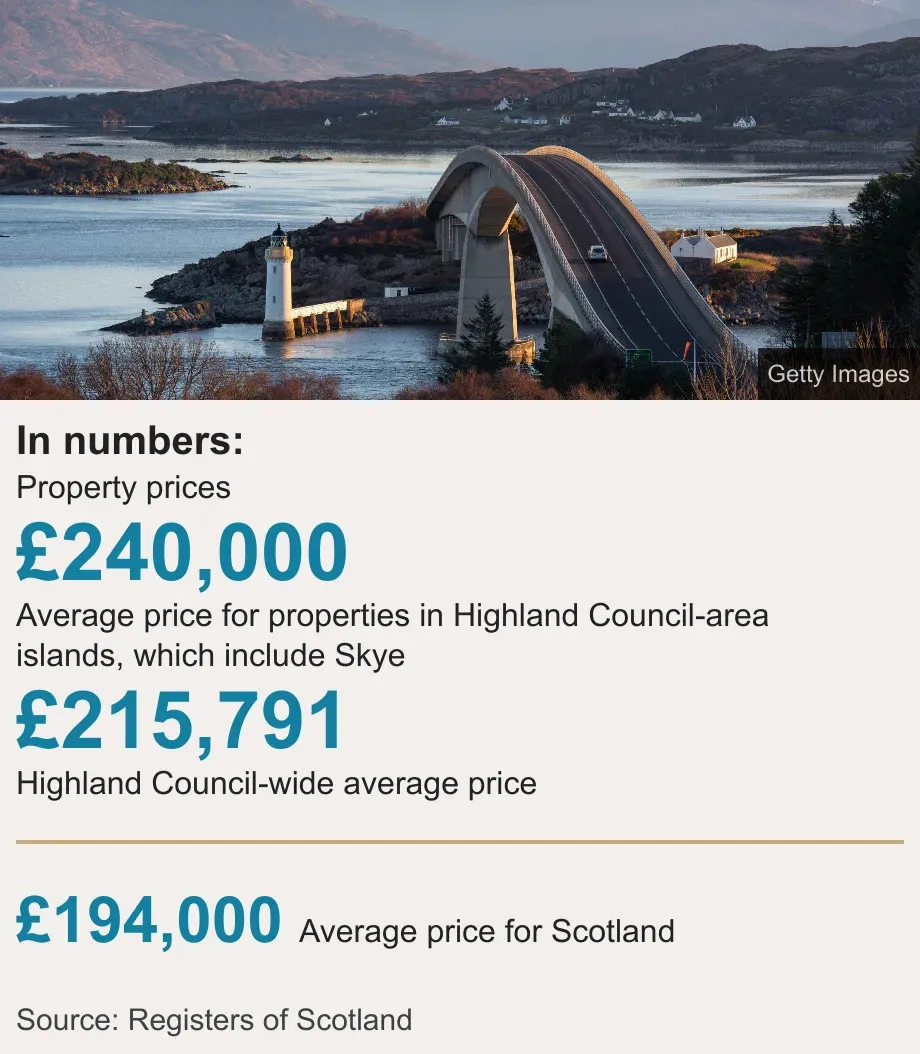
After spending time on the mainland for work and university, Martin Munsie returned to his native Skye to pursue his career. However, finding an affordable home for himself and his partner proved difficult. Property prices on islands in the Highland Council area, including Skye, are higher than the Scottish average. Additionally, more than 15% of new homes built in Skye and nearby Raasay over the past five years have been converted into short-term rentalsover three times the average for the Highlands as a whole.
Mr. Munsie explained: "The homes within our budget typically needed significant repairs or long-term investment. They simply weren't viable."
Property Prices
- 240,000 Average price for properties in Highland Council-area islands, including Skye
- 215,791 Highland Council-wide average price
- 194,000 Average price across Scotland
By chance, the couple discovered a scheme in Kilbeg, Skye's first new village in over a century. Seventeen homes have been built so far, about half by Highland Council and the remainder by the Communities Housing Trust. Through this program, Mr. Munsie was able to purchase a two-bedroom home at a discounted price, with the trust having first right to buy it back if he ever sells.
"Without this opportunity, moving back would have been nearly impossible," said Mr. Munsie, a business software consultant. "It was luck and timing, but we are incredibly grateful to have a place to call home. The community has been wonderful."
He acknowledged why younger people might stay on the mainland, where housing and job opportunities are more plentiful.
Similarly, Steven MacDonald and his family experienced difficulties in finding affordable housing in the Highlands and Islands. After living in Uist, he was made redundant and moved to Gairloch, Wester Ross, for a new engineering job. They were offered temporary accommodation while house hunting, which ended up lasting over two years due to high property costs. They eventually bought a home that required major heating upgrades.
"Homes do appear on the market, but they are either too expensive or require extensive work, or are inconveniently located relative to work and transport," said Mr. MacDonald.
Scottish Land and Estates (SLE), representing landowners, stated that limited housing, jobs, and services hinder rural community growth. SLE suggested adopting strategies used in countries like Ireland, Canada, and Norway, including repopulation priority areas, employer incentives to create rural jobs, and relocating some civil service teams from cities.
Cameron Gillies, SLEs head of external affairs, said: "Rural depopulation is reshaping Scotland. Schools are closing, services withdrawn, and employers struggle to fill roles. Without change, many communities may not survive."
The Scottish government emphasized its Addressing Depopulation Plan, recognizing the complexity of challenges across regions. It is working with local partners to find sustainable solutions and is funding seven local authorities in depopulating areas to trial innovative measures. Additionally, its islands plan aims to deliver 110,000 affordable homes by 2032, with at least 10% in rural and island communities.
Author: Riley Thompson