

Deadly Asian Floods Are Not a Coincidence; They're Becoming the Norm
- Last update: 2 hours ago
- 3 min read
- 624 Views
- WORLD
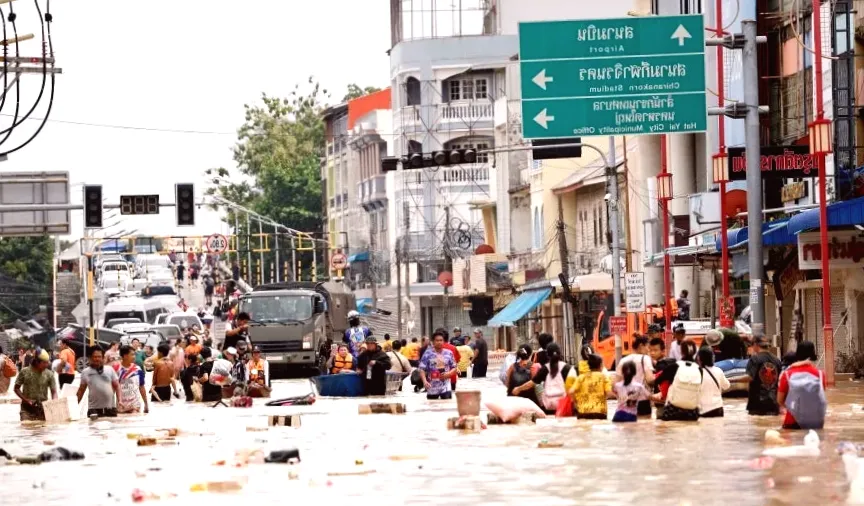
This year, Southeast Asia is experiencing devastating floods, triggered by late-arriving storms and persistent heavy rainfall that have caught many regions off guard. Over 1,400 lives have been lost across Indonesia, Sri Lanka, and Thailand, with more than 1,000 people still missing due to flooding and landslides.
In Indonesia, several villages remain isolated after roads and bridges were destroyed. In Sri Lanka, thousands lack access to safe drinking water, while Thailand's prime minister admitted gaps in the government's disaster response. Malaysia continues to recover from one of its worst flood events, which claimed three lives and displaced thousands. Meanwhile, Vietnam and the Philippines have endured repeated storms and floods, leaving hundreds dead.
Experts emphasize that these extreme events are exactly what climate scientists predict: a new normal of intense storms and flooding. Jemilah Mahmood of the Sunway Centre for Planetary Health in Kuala Lumpur warned that Southeast Asia should expect worsening extreme weather in 2026 and beyond.
Asia Faces the Harsh Reality of Climate Change
Last years climate patterns laid the groundwork for 2025s severe weather. Atmospheric carbon dioxide levels surged to record highs in 2024, intensifying extreme weather globally. Southeast Asia is warming nearly twice as fast as the global average, resulting in more frequent and severe storms.
Warmer ocean temperatures fuel stronger, wetter storms, while rising sea levels amplify storm surges, explains Benjamin Horton, a professor at the City University of Hong Kong. Climate change is also delaying the end of storm seasons, as systems like El Nio keep oceans warmer longer, increasing the likelihood of prolonged typhoon activity. Storms now form more rapidly, with heightened intensity and unpredictability.
Governments Struggle to Respond
Recent extreme weather has overwhelmed regional governments. Aslam Perwaiz from the Asian Disaster Preparedness Center notes that officials often focus on reaction rather than preparation, leaving communities vulnerable. Future disasters are expected to provide even less warning time.
In Sri Lanka, flood-affected areas resemble the aftermath of the 2004 Indian Ocean tsunami. Marginalized communities, including tea plantation workers in landslide-prone regions, are particularly hard hit. Unchecked development that harms ecosystems has worsened flood impacts, emphasizing the need for climate-conscious urban planning.
Deforestation has also intensified flooding in Indonesia. Since 2000, Aceh, North Sumatra, and West Sumatra have lost nearly 19,600 square kilometers of forest, an area larger than New Jersey, according to Global Forest Watch. Authorities attribute fallen logs to old trees rather than illegal logging.
Economic Costs and the Climate Finance Gap
Southeast Asian nations are losing billions annually due to climate disasters. Vietnam reports losses exceeding $3 billion in the first 11 months of this year from floods and storms. In Thailand, November floods alone caused around $781 million in damages, affecting GDP. Indonesias average annual disaster losses reach $1.37 billion. Sri Lanka, despite minimal carbon emissions, bears disproportionate impacts while servicing foreign debt.
At the COP30 climate conference in Brazil, countries pledged to triple climate adaptation funding and aim for $1.3 trillion annually by 2035. Yet these amounts remain far below what developing nations have requested, with uncertainty over delivery.
A Crucial Moment for Climate Action
Southeast Asia stands at a pivotal point in confronting the climate crisis. While renewable energy adoption is increasing, fossil fuel dependency persists. Experts warn that the regions recent disasters are a stark reminder of the escalating consequences of climate change.
Author: Ava Mitchell
Share

Opposing protests happening regarding asylum plans at Inverness barracks
32 seconds ago 2 min read WORLD

How will Canada, US, and Mexico perform in their World Cup groups?
1 minutes ago 3 min read WORLD

German hairy snails vanishing from River Thames in London
2 minutes ago 2 min read WORLD

Evacuated residents express joy at being back home
3 minutes ago 2 min read WORLD
CCTV footage requested following theft of £2k from elderly man
4 minutes ago 1 min read WORLD
Federal government files lawsuit against real estate developer for mishandling protected land: '3,000 artifacts lost or destroyed'
6 minutes ago 2 min read WORLD

Philippines reports China fired flares at its patrol plane in the contested South China Sea
8 minutes ago 2 min read WORLD

Experts say Florida Crunch Fitness may be the cause of a Legionnaires 'outbreak'
9 minutes ago 2 min read WORLD

Waymo autonomous taxi drives passengers into apparent police standoff
10 minutes ago 1 min read WORLD

Arizona congresswoman claims she was pepper-sprayed at ICE protest.
11 minutes ago 2 min read WORLD