

DRC locals forced to flee after peace accord signed
- Last update: 1 hours ago
- 2 min read
- 303 Views
- WORLD
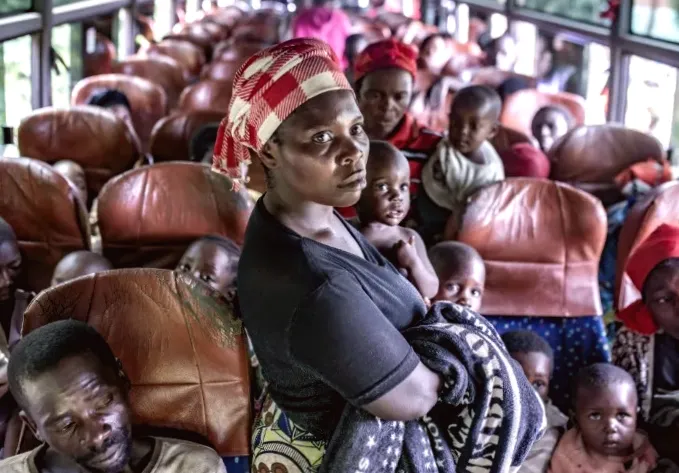
Just one day after a peace agreement intended to end the ongoing conflict in the Democratic Republic of Congo was signed, renewed clashes in the eastern region on Friday forced hundreds of residents to seek refuge across the border in Rwanda, according to AFP reporters on site.
The accord, reached on Saturday, aimed to bring stability to eastern DRC, an area rich in minerals but affected by decades of unrest. Earlier this year, the M23 rebel group, supported by Kigali and its military, launched an offensive capturing the key cities of Goma in North Kivu and Bukavu in South Kivu.
On Thursday in Washington, Congolese President Felix Tshisekedi and Rwandan President Paul Kagame signed the agreement, described by their host, US President Donald Trump, as a miracle. However, the pact has yet to produce noticeable changes on the ground.
Friday saw intense clashes in South Kivu between M23 fighters and the Congolese army, which is supported by thousands of Burundian troops. Both forces are contesting control over Kamanyola, a strategic border town where DRC, Rwanda, and Burundi converge. Currently, the town remains under M23 control.
AFP journalists reported that heavy explosions near Kamanyola shook buildings in Bugarama, a Rwandan border post roughly two kilometers (1.3 miles) away. Early in the morning, long lines of civilians fleeing the fighting crossed into Rwanda under the watch of local police.
The bombs were going off over the houses, said Immaculee Antoinette, a resident of Ruhumba near Kamanyola. We were told to stay inside, but it was impossible. Schools, hospitals, and homes were all under fire, added Hassan Shabani, an administrative official in M23-held Kamanyola.
The M23 claimed that Burundian forces fired continuously into DRC territory on Friday. Meanwhile, Rwandan locals observed armed groups on nearby hills, with women and children taking shelter whenever gunfire intensified, according to Farizi Bizimana, a border resident.
Author: Caleb Jennings
Share
Violence erupts in DR Congo shortly after Trump's peace deal ceremony
3 hours ago 2 min read WORLD
Conflict persists between Congo and Rwanda despite promises of peace
3 hours ago 2 min read POLITICS

Agreeing to peace in DR Congo is one step, but implementation is another
5 hours ago 2 min read WORLD

Live broadcast: Trump oversees signing of peace deal between Rwanda and Congo
7 hours ago 1 min read POLITICS
New clashes in eastern Congo put at risk 'historic' peace agreement mediated by Trump
7 hours ago 2 min read WORLD

Breaking News: Trump Signs Peace Deal Between Rwanda and Congo; Lawmakers Receive Update from Admiral on Boat Collisions
10 hours ago 2 min read POLITICS
Trump botches names of African leaders, makes inappropriate jokes about violence
10 hours ago 2 min read WORLD

What is the reason behind the conflict in DR Congo?
11 hours ago 4 min read WORLD

Trump praises 'historic day for the world' as DRC and Rwanda complete peace agreement
12 hours ago 3 min read WORLD

Donald Trump's War and Peace
14 hours ago 3 min read POLITICS