

Experts say Venezuelan boat strike on survivors is a 'textbook example' of an illegal order
- Last update: 1 days ago
- 3 min read
- 584 Views
- WORLD
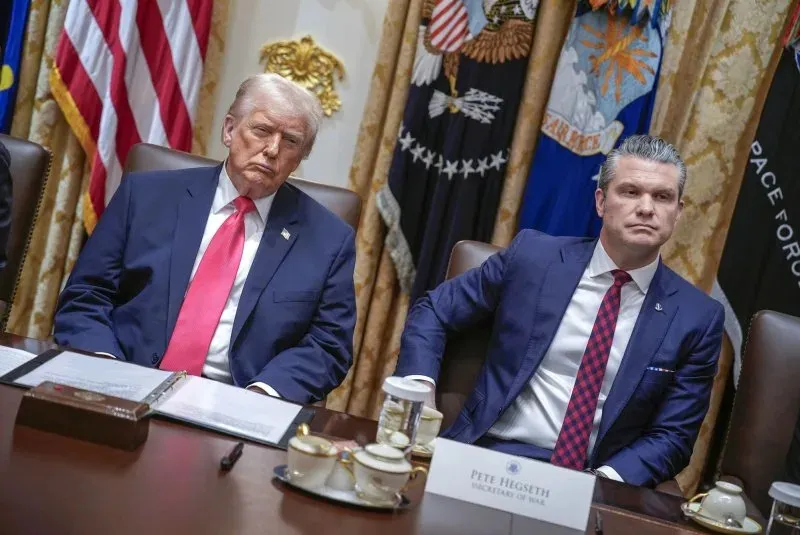
Dec. 4 A deadly U.S. military strike on a Venezuelan vessel this past fall has drawn attention over the legality of issued commands. Military law experts warn that recent policies have complicated the ability of service members to refuse unlawful orders.
The Department of Defense conducted strikes against Venezuelan ships suspected of drug trafficking. In one controversial incident on Sept. 2, U.S. forces allegedly targeted survivors clinging to debris following an initial attack. Secretary of Defense Pete Hegseth denies issuing a command to "kill everybody" during the first assault on the vessel.
Scott Anderson, a governance studies fellow at the Brookings Institution, described the attack on survivors as a "textbook" example of an illegal order. According to the Department of Defense's Law of War Manual, targeting civilians or combatants who are incapacitated and no longer pose a threat violates international law.
An investigation has been launched into Sen. Mark Kelly, a retired U.S. Navy combat pilot, after his appearance in a November video alongside other former military and intelligence personnel. In the video, they emphasized that service members must refuse unlawful orders.
"Even in a wartime scenario, uniformed soldiers who are unable to fight should not be attacked," Anderson said. "The fact that this could be carried out is deeply concerning."
Under the U.S. Manual for Courts-Martial, troops are entitled to refuse manifestly illegal orders. Such orders are defined as those clearly violating constitutional or international law. Military officers receive training on constitutional law and the Law of Armed Conflict, but interpreting what is obviously illegal can be challenging.
Eugene Fidell, a military justice scholar at Yale Law School, noted that service members risk prosecution if they refuse an order later deemed lawful. "If the legality is debatable, a soldier could make a costly mistake," he said. U.S. courts traditionally assume orders are lawful, and disobedience carries potential penalties.
Anderson highlighted the alarming implication of this incident: an apparently illegal order was executed. "It raises serious concerns about the current military environment and the pressures placed on service members," he said.
The Trump administration has faced criticism for its handling of military legal oversight, including the dismissal of top Judge Advocates General and reassignment of military lawyers to nontraditional roles. Critics argue that this, combined with rhetoric emphasizing "maximum lethality" over strict rules of engagement, weakens safeguards for lawful conduct.
In a Sept. 30 speech at Marine Corps Base Quantico, Hegseth emphasized eliminating restrictive rules of engagement to enhance combat effectiveness, stressing authority and lethality for U.S. forces. Fidell stated that these changes reflect a broader pattern of undermining the military's adherence to the rule of law, which he called essential to mission success and upholding American values.
Author: Benjamin Carter
Share
Facts About Admiral Frank Bradley - Facing Criticism for Second Attack on Survivors
22 hours ago 2 min read POLITICS
Admiral Mitch Bradley to update Senate committee on boat collisions
1 days ago 2 min read POLITICS

Outrage sparked by killing of survivors amidst shaky legality of entire US 'drug boat' war
1 days ago 3 min read POLITICS

3 important questions about the US boat collision that claimed survivors' lives
1 days ago 3 min read POLITICS

US official reports military targeted drug boat in Caribbean in 4 separate strikes in September attack.
1 days ago 2 min read POLITICS

Trump and Hegseth's comments following the Sept. 2 attack on a suspected drug-smuggling vessel
2 days ago 3 min read WORLD

Understanding the Conflict Between the U.S. and Venezuela
3 days ago 2 min read WORLD
Breaking News: Trump Calls Top Officials to Oval Office to Discuss 'Next Steps' on Venezuela
3 days ago 2 min read POLITICS

Karoline Leavitt Rejects Accusation of Hegseth Ordering Second Drug Boat Strike — And Identifies the Real Culprit
3 days ago 2 min read POLITICS

Evolution of Trump Administration's Explanation of Boat Collision
3 days ago 4 min read POLITICS