

Evolution of Trump Administration's Explanation of Boat Collision
- Last update: 3 days ago
- 4 min read
- 17 Views
- POLITICS
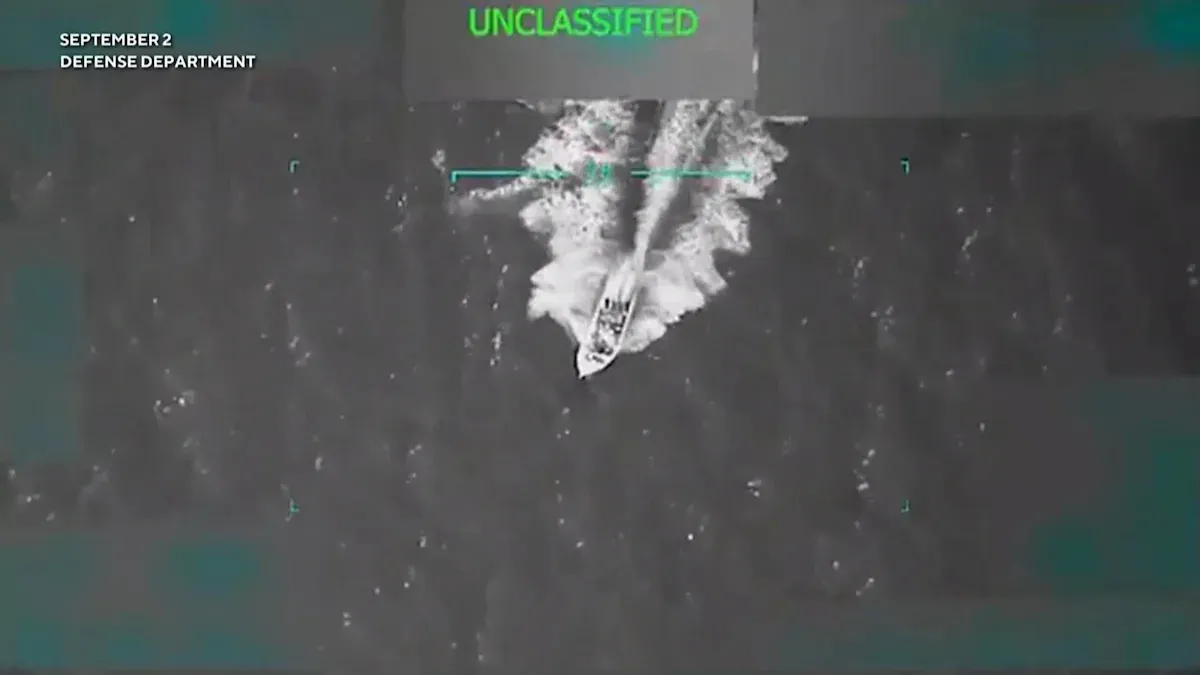
The U.S. militarys early September operation targeting a Venezuelan vessel suspected of drug trafficking the initial action in a months-long campaign has come under renewed examination. The White House recently confirmed that the boat was struck twice, following reporting by The Washington Post which indicated that the second strike killed two survivors. This revelation has raised questions in Congress about whether the follow-up attack might constitute a war crime. Pentagon guidance on the law of war specifies that combatants who are "wounded, sick, or shipwrecked" should not be attacked.
The Trump administration has defended the series of boat strikes as necessary to curb the flow of narcotics from South America, though U.S. officials have not publicly shared definitive proof that the vessels were transporting drugs or posed a threat to the United States. Lawmakers from both parties have expressed concern over the strikes' legality.
Timeline of Key Events
September 2: Initial Strike Announced
President Trump told reporters that the U.S. military had "literally shot out a boat" from Venezuela alleged to be carrying drugs. Later posts on social media by Trump and Secretary of State Marco Rubio described the strike, referring to it as a single event. Trump stated that 11 alleged members of the Venezuelan gang Tren de Aragua, labeled a terrorist group by his administration, were killed. A video posted by Trump showed one strike on the vessel. While Trump claimed the boat was headed to the U.S., Rubio later said the drugs were likely destined for another Caribbean nation, though he also noted it was ultimately heading toward the U.S.
September 3: Defense Secretary Confirms Observation
Defense Secretary Pete Hegseth rejected claims from Venezuelan officials suggesting the video of the strike might be fake, stating on "Fox and Friends" that he observed the operation live and knew the identities and actions of those on the boat.
September 4: Legal Justification
When asked about legal authority, Hegseth said the Pentagon had "absolute and complete authority" to conduct the strike, describing drug importation to the U.S. as an "assault on the American people." The White House informed Congress that the strike aligned with the presidents responsibility to protect Americans and U.S. interests abroad.
September 11: Boat Attempted to Turn Around
Reports suggested the boat was trying to turn around when struck. White House spokesperson Anna Kelly asserted that the president acted within the laws of armed conflict. Trump announced another strike in the Caribbean, killing three alleged drug traffickers, whom the administration labeled "unlawful combatants" within a "non-international armed conflict" with drug cartels.
October 16: Key Command Changes
Hegseth announced that Adm. Alvin Holsey would retire as commander of U.S. Southern Command. CBS News reported two survivors from a strike in the Caribbean that were later repatriated to Ecuador and Colombia.
November 28: Follow-Up Strike Controversy
The Washington Post reported that two survivors from the September 2 strike were killed in a subsequent attack, allegedly ordered by Hegseth. Hegseth denied the report, defending the strikes as targeting narcoterrorists in accordance with the law. Senate and House Armed Services leaders pledged thorough oversight.
November 30: War Crime Concerns
Senator Tim Kaine stated that a follow-up strike could constitute a war crime under domestic and international law. Representative Mike Turner echoed concerns. President Trump said he would not have wanted a second strike and affirmed his trust in Hegseth, while White House Press Secretary Karoline Leavitt clarified the strike was authorized legally under Hegseths direction through Admiral Mitch Bradley.
December 1: Congressional Oversight
Senate Armed Services Committee Chair Roger Wicker said he plans to review all audio and video from the strikes, noting that Hegseth confirmed a second attack. Wicker indicated that information on any survivors would be obtained during this review.
Between early September and mid-November, the U.S. reportedly targeted over 20 boats, resulting in more than 80 fatalities.
Author: Sophia Brooks
Share

Angry Trump Supporter Condemns Trump for Racist Comments: ‘My Children Deserve Respect!’
1 minutes ago 2 min read POLITICS
Trump's national security strategy emphasizes 'fostering opposition' in Europe and reshaping US' role in the Western Hemisphere.
8 minutes ago 3 min read POLITICS
Video Shows Hegseth Lied About Crucial Detail in Boat Bombing
8 minutes ago 1 min read POLITICS
Trump, 79, Is Concerned About Reports That He's an Exhausted Elderly Man
8 minutes ago 2 min read POLITICS
Trump Warns of 'Complete and Total OBLITERATION' if Democrats Take Power
9 minutes ago 2 min read POLITICS
Bongino admits he was paid for his opinions on past pipe bomb cover-up claim
16 minutes ago 2 min read POLITICS
Lessons for Democrats from Tennessee: Aftyn Behn and Rahm Emanuel on Whole Hog Politics
19 minutes ago 3 min read POLITICS
Understanding the who and what of presidential power
20 minutes ago 3 min read POLITICS
Trump selects new architect for $300 million White House renovation project
22 minutes ago 2 min read POLITICS

Hamas officials establish new security protocols due to concerns about Israeli assassination plot
22 minutes ago 2 min read POLITICS