

Scientists say Deadly Asian floods are not a coincidence, but a warning of climate change.
- Last update: 3 days ago
- 4 min read
- 879 Views
- WORLD
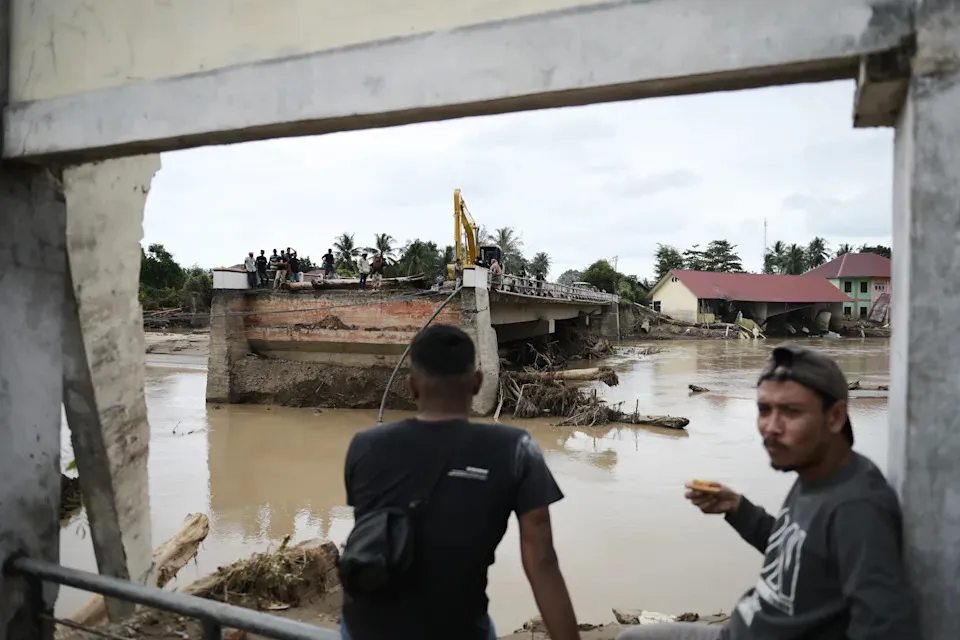
Southeast Asia is facing unusually destructive flooding this year as delayed storms and persistent rainfall cause widespread chaos across the region. More than 1,200 people have died in Indonesia, Sri Lanka, and Thailand, while over 800 remain missing amid powerful floods and landslides.
Entire communities in Indonesia remain isolated after roads and bridges were washed away. In Sri Lanka, thousands lack access to clean water, and Thailands prime minister has publicly acknowledged failures in the national emergency response. Malaysia continues to deal with the aftermath of one of its worst flood episodes, which left three dead and displaced thousands of residents. Vietnam and the Philippines have also endured a relentless year of storms and flooding that collectively claimed hundreds of lives.
The scale of destruction, though shocking, aligns with scientific projections. Experts warn that the region is entering an era of increasingly severe storms and recurrent disasters. Southeast Asia should be prepared for continued and potentially escalating extreme weather in 2026 and in the years that follow, said Jemilah Mahmood, head of the Sunway Centre for Planetary Health in Kuala Lumpur.
Climate Trends Intensifying Regional Disasters
Climate conditions from the previous year laid the groundwork for 2025s extreme events. Global atmospheric CO levels recorded their largest-ever annual increase in 2024, accelerating climate change and fuelling extreme weather, according to the World Meteorological Organization.
Asia is warming almost twice as fast as the global average. Scientists note that warmer oceans energize storms, making them stronger and wetter, while rising sea levels intensify storm surges. Even if the total number of storms doesnt rise dramatically, their strength and unpredictability will, said Benjamin Horton of the City University of Hong Kong.
Climate change is also shifting weather patterns, causing storms to form later in the year and in rapid succession. Systems such as El Nio are keeping ocean temperatures elevated for longer periods, which extends typhoon seasons and speeds up storm development.
Governments Overwhelmed by Rapidly Shifting Weather
Aslam Perwaiz of the Asian Disaster Preparedness Center in Bangkok warned that governments across Southeast Asia are struggling with the growing frequency and intensity of disasters in part because many systems emphasize reaction over prevention. Future events will leave even less time to prepare, he said.
In Sri Lanka, human-rights researcher Sarala Emmanuel said little has changed in vulnerable communities since the deadly 2004 Indian Ocean tsunami. Poor and marginalized groups, including tea plantation workers in landslide-prone regions, remain the most at risk.
Environmental degradation is compounding the crisis. Unregulated development in Sri Lanka has worsened flood impacts, according to Sandun Thudugala of the Law and Society Trust. In Indonesia, footage of timber drifting through flooded waterways has raised concerns about deforestation. Provinces such as Aceh, North Sumatra, and West Sumatra have lost more than 19,600 square kilometers of forest since 2000, according to Global Forest Watch.
Economic Losses Mount as Climate Financing Lags
Financial losses across the region are staggering. Vietnam estimates over $3 billion in damage from storms, floods, and landslides in the first 11 months of the year. Thailands agriculture ministry reports more than $47 million in crop losses since August, while economists estimate the November floods in southern Thailand alone caused approximately $781 million in damage.
Indonesia routinely incurs around $1.37 billion in disaster-related losses annually. Sri Lanka, already burdened by heavy foreign debt, faces severe financial strain despite contributing only a tiny share of global emissions. Countries like ours urgently need compensation for the losses we face due to global warming, Thudugala said.
Rohan Wickramarachchi, who owns a commercial building in Peradeniya, Sri Lanka, said his property flooded up to the second floor, leaving him and dozens of families he knows with nothing. We need support to rebuild what weve lost, he said.
Efforts Toward Climate Action Still Fall Short
Responding to global pressure, nations at the COP30 climate summit in Brazil pledged to triple funding for climate adaptation and mobilize $1.3 trillion annually by 2035. However, these commitments fall far short of the needs expressed by developing countries, and questions remain about whether the promised money will materialize.
The dramatic events unfolding across Southeast Asia are a stark reminder of the consequences of the climate crisis, said Thomas Houlie of the research organization Climate Analytics. The region is expanding renewable energy use but continues to rely heavily on fossil fuels, leaving it at a critical crossroads.
Author: Sophia Brooks
Share

I stayed in a 2-story, 100-square-foot tiny home in Germany for 2 nights. It was smaller than any I've seen in the US.
23 seconds ago 3 min read WORLD

Negotiators from the US and Ukraine stress importance of Russia for achieving 'real progress' towards peace
1 minutes ago 2 min read WORLD

The most crowded streets in Northern Kentucky | List
3 minutes ago 1 min read WORLD

Ukraine and US to hold third day of talks, acknowledge 'real progress' hinges on Russia
5 minutes ago 3 min read WORLD

Cosmic rays from another galaxy can impact air travel, as shown by NJ plane incident: planetary defense expert
7 minutes ago 2 min read WORLD
Researchers raise alarm as disease-carrying threat spreads throughout US region, surviving an additional 100 days
8 minutes ago 2 min read WORLD
Afghan and Pakistani troops engage in intense firefight amid escalating tensions
13 minutes ago 2 min read WORLD

Canadian official detained for asserting that menacing voicemail was created by AI
14 minutes ago 2 min read WORLD

Canada removes Syria from list of countries labeled as supporters of 'terrorism'
15 minutes ago 2 min read WORLD

A Universe Speed Camera
16 minutes ago 2 min read WORLD