

Scientists say Deadly Asian floods are not a coincidence. They are a warning of climate change.
- Last update: 3 days ago
- 3 min read
- 934 Views
- WORLD
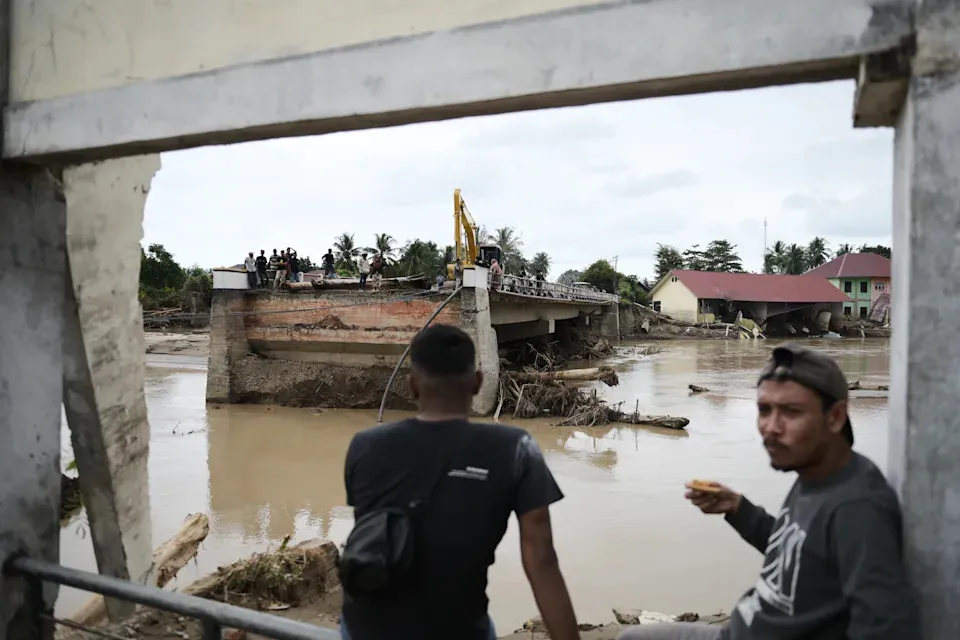
Southeast Asia is grappling with exceptionally severe floods this year as late-season storms and continuous heavy rains have caused widespread disruption. Across Indonesia, Sri Lanka, and Thailand, more than 1,200 lives have been lost, with over 800 people still missing due to floods and landslides.
In Indonesia, numerous villages remain isolated after rivers swept away bridges and roads. Thousands in Sri Lanka are without safe drinking water, and Thailands prime minister has admitted deficiencies in the governments disaster response. Malaysia continues to recover from one of its worst flooding events, which killed three people and displaced thousands. Meanwhile, Vietnam and the Philippines have endured repeated storms and floods, resulting in hundreds of fatalities.
Experts say this escalating pattern aligns with climate predictions. Jemilah Mahmood of the Sunway Centre for Planetary Health in Malaysia warns that extreme weather events are likely to persist and may intensify in 2026 and beyond.
Climate Crisis Hits Asia Hard
Last years climate patterns contributed to the severe weather in 2025. Carbon dioxide levels surged to record highs in 2024, fueling more intense storms, according to the United Nations World Meteorological Organization. Asia is warming almost twice as quickly as the global average, intensifying weather extremes.
Scientists note that warmer oceans provide more energy for storms, leading to stronger rainfall, while rising sea levels worsen storm surges. Storms are now arriving later in the year, influenced by changes in ocean currents and atmospheric patterns like El Nio, which prolongs typhoon seasons and increases rainfall intensity.
Benjamin Horton, an earth science professor at the City University of Hong Kong, explains that while storm frequency may not increase dramatically, their strength and unpredictability will. Governments in Southeast Asia are struggling to cope, often prioritizing emergency response over proactive disaster preparation, according to Aslam Perwaiz of the Asian Disaster Preparedness Center.
Impact on Vulnerable Communities
In Sri Lanka, marginalized populations are among the hardest hit, particularly in flood- and landslide-prone areas. Unregulated construction and ecosystem damage have worsened flooding, highlighting the need for more resilient urban planning. Deforestation in Indonesia may have exacerbated flooding, with tens of thousands of square kilometers of forest lost since 2000.
Economic Losses and Climate Finance
The financial toll is immense. Vietnam estimates over $3 billion lost in 11 months due to floods, landslides, and storms. Southern Thailand suffered nearly $781 million in November alone. Indonesia averages $1.37 billion in annual disaster losses. Sri Lanka, despite minimal carbon emissions, faces heavy costs while repaying foreign debt and calls for international compensation for climate-related losses.
At the recent COP30 conference, countries pledged to triple climate adaptation funding and aim for $1.3 trillion annually by 2035. However, this falls short of what developing nations have requested, and actual disbursement remains uncertain.
Looking Ahead
Southeast Asia stands at a critical juncture for climate action. While renewable energy adoption is increasing, fossil fuel dependency persists. Experts stress that the ongoing disasters are a stark illustration of the tangible consequences of the climate crisis.
Reporting contributed by journalists across Southeast Asia. The Associated Press independently manages all content and climate reporting support.
Author: Sophia Brooks
Share

I stayed in a 2-story, 100-square-foot tiny home in Germany for 2 nights. It was smaller than any I've seen in the US.
1 minutes ago 3 min read WORLD

Negotiators from the US and Ukraine stress importance of Russia for achieving 'real progress' towards peace
2 minutes ago 2 min read WORLD

The most crowded streets in Northern Kentucky | List
4 minutes ago 1 min read WORLD

Ukraine and US to hold third day of talks, acknowledge 'real progress' hinges on Russia
6 minutes ago 3 min read WORLD

Cosmic rays from another galaxy can impact air travel, as shown by NJ plane incident: planetary defense expert
8 minutes ago 2 min read WORLD
Researchers raise alarm as disease-carrying threat spreads throughout US region, surviving an additional 100 days
9 minutes ago 2 min read WORLD

Afghan and Pakistani troops engage in intense firefight amid escalating tensions
14 minutes ago 2 min read WORLD

Canadian official detained for asserting that menacing voicemail was created by AI
15 minutes ago 2 min read WORLD

Canada removes Syria from list of countries labeled as supporters of 'terrorism'
16 minutes ago 2 min read WORLD

A Universe Speed Camera
17 minutes ago 2 min read WORLD