

Top 10: WWII aircrafts boasting massive firepower
- Last update: 3 days ago
- 3 min read
- 33 Views
- WORLD
During the First World War, fighter planes were typically equipped with just two light machine guns. By the Second World War, the firepower of combat aircraft had dramatically increased, turning some planes into flying heavy artillery with cannons, multiple machine guns, and large ammunition reserves.
Messerschmitt Me 262
Famed as the first jet fighter in combat, the Me 262 was deadly not just because of speed but also due to its armament. Standard models carried four 30-mm cannons optimized for bomber destruction. An even more extreme variant mounted a 50-mm Mauser MK 214A autocannon in the nose. Administrative delays and technical issues prevented the weapon from seeing wide use, but it could have devastated Allied bombers with just a few hits. The jet's top speed of 578 mph made it a serious threat to Allied aircraft.
YB-40 Flying Fortress
In 1942, the US experimented with a heavily armed bomber escort using a bomb-free B-17, the YB-40. Armed with up to thirty defensive guns, mostly .50-calibre M2 Brownings, it was too heavy and slow to effectively accompany bombers. Despite operational failure, the YB-40 appeared in the Oscar-winning film The Best Years of Our Lives.
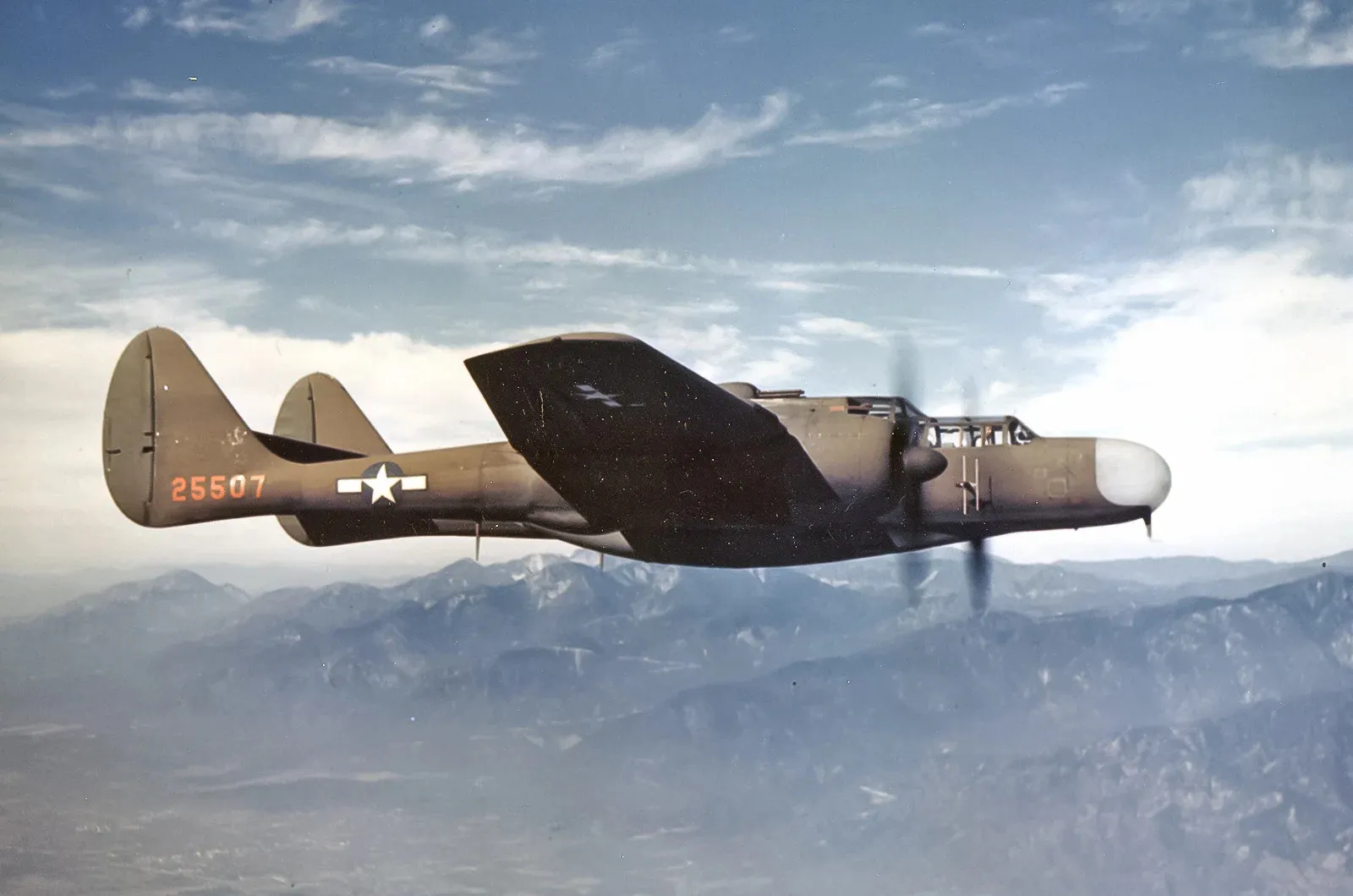
Northrop P-61 Black Widow
The P-61 was the first purpose-built night fighter, designed with radar and twin-boom configuration. It weighed between 10,000 kg and 18,000 kg depending on load. Its offensive armament included four 20-mm cannons in the belly and, on later models, an electric dorsal turret with four heavy machine guns. Concentrating weapons along the centerline improved accuracy and destructive power.
B-25 Mitchell
The B-25 was fitted with a 75-mm cannon for anti-shipping missions and carried twelve to eighteen .50-calibre machine guns. Its versatility allowed it to attack ships effectively, and a single hit could seriously damage a destroyer. The Douglas A-26 Invader also experimented with the 75-mm gun.
Mosquito Mk. XVII 'Tsetse'
The British Mosquito was adapted for anti-shipping using a 57-mm Molins gun. Capable of firing 55 rounds per minute, it replaced the standard four 20-mm cannons. Tsetse Mosquitoes destroyed eight U-boats in 14 months and even downed a Ju 88 with a single round.
Beaufighter
The Beaufighter, a twin-engine British fighter, carried four 20-mm cannons and six machine guns, with up to 367 kg of ammunition. It served as a night fighter, strike aircraft, and torpedo bomber, excelling in both armament and payload. Fully loaded, it weighed more than some medium bombers.
Junkers Ju 88
The versatile Ju 88 served as bomber, night fighter, and reconnaissance aircraft. Some variants were equipped for anti-tank roles with 75-mm, 50-mm, or 37-mm cannons. Though limited in numbers, these variants were capable of destroying tanks and other ground targets.
Hawker Hurricane
The Hurricane Mk.IID carried 40-mm Vickers S cannons for anti-tank operations, earning the nickname "The Can Openers." These aircraft destroyed dozens of enemy tanks in the desert campaigns. Later Mk.IV variants added armor and rocket capabilities, enhancing survivability and firepower.
Yak Fighters
The Soviet Yak series, particularly the Yak-9T with a 37-mm Nudelman-Suranov cannon, performed extensive anti-tank missions. The NS-37 could penetrate up to 40 mm of armor from 500 meters. Approximately 2,748 Yak-9Ts were produced, with further up-gunned variants proving impractical.
Henschel Hs 129
Purpose-built for close air support and anti-tank roles, the Hs 129 featured armored protection and mounted 20-mm or 75-mm cannons. Despite limited production, pilots praised its effectiveness against tanks. The aircraft's role and design were similar to that of the modern A-10.
These aircraft highlight how firepower evolved during World War II, transforming fighters and bombers into heavily armed platforms capable of taking on both air and ground targets.
Author: Sophia Brooks
Share

Migrant staying at hotel accused of sexual assault
1 minutes ago 1 min read WORLD

Britain imposes sanctions on Russia following investigation blaming Putin for fatal 2018 poison attack
5 minutes ago 3 min read WORLD
Elderly person passes away due to hospital's inadequate care.
7 minutes ago 2 min read WORLD

Thailand Cracks Down on $8.6M Bitcoin Mining Operations Financing 'Chinese Scam Networks'
10 minutes ago 3 min read WORLD

Researcher from Ohio collaborates on new study about pterosaurs
13 minutes ago 5 min read WORLD

Survivors of boat collision did not call for help, Bradley informs lawmakers: Report
16 minutes ago 3 min read WORLD

Sub-zero temperatures grip central and northeastern US in Arctic blast
18 minutes ago 2 min read WORLD

Arson group crashes Range Rover into rival's house
22 minutes ago 4 min read WORLD
Man arrested for terrorism charges following synagogue assault
22 minutes ago 1 min read WORLD

Somalis face constant fear and danger as unsettling reality looms over their daily lives
26 minutes ago 5 min read WORLD