

'We are all still traumatized': Syria continues to tremble a year after Assad
- Last update: 42 minutes ago
- 4 min read
- 734 Views
- WORLD
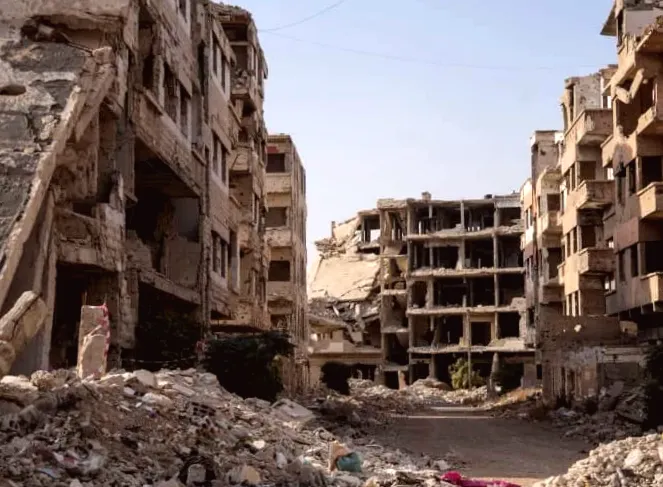
When Mohammed navigates the narrow streets of Harasta, it is not the quiet that strikes him, but the lingering echoes of a past filled with violence. At 25, his movements are deliberate, stepping carefully over shattered stones and twisted metal. "I was just 14 when the war began," he recalls, his gaze fixed on a wall still marked by fire from the first battles in Eastern Ghouta.
During the siege of Harasta, Mohammed witnessed more death than schooling, more blasts than sunsets. "We left only when they allowed us," he says. "Even after escaping, the memories of the siege stayed with us." Now, a year after Bashar al-Assad's removal in December 2024referred to by many locals as "turning the black page"his voice still trembles as he speaks of the past. "You never forget what hunger tastes like, or fear feels like," he murmurs.
Zahra, 70, her back curved from years of struggle, moves through the rubble with a small cloth bag. "We are all traumatized," she says. "Even now, I wake in the night remembering the days without food. We even boiled grass to make water drinkable."
Harasta displays its scars openly: crumbled apartment buildings, stairwells hollowed out by destruction, and streets resembling open graves. Walking through its center is like moving through the aftermath of an earthquake, though the devastation was caused by years of human conflictairstrikes, starvation, and slow decay.
The months following Assad's fall have been far from peaceful. While the regime's collapse brought celebrations in parts of the country, it was quickly followed by instability, retaliatory violence, and ongoing sectarian tensions. The transitional government faces what one official described as "a nation broken in layers." March 2025 saw attacks on Alawite civilians, and July brought violence against Druze communities, underscoring that sectarian divides remain unresolved.
Over 16 million Syrians still need humanitarian aid, and funding shortages continue to hinder rebuilding efforts. In Harasta alone, the damage across Rif Dimashq has been estimated at over $22 billion. Despite this, officials report progress in restoring essential services. At a medical conference in Damascus, Health Minister Musab Nazzal al-Ali highlighted efforts to bring back skilled professionals from abroad. "We are focusing on our scientific and medical talents returning to help rebuild the country," he said.
Al-Ali noted that more than 8,500 surgeries and 30,000 medical consultations have been conducted in the past seven months, largely due to returning medical missions. Rehabilitation is ongoing, but he cautions that the government is still far from its goals. "We have made progress, but we are not yet at the level we aspire to," he said.
Education is another priority. Minister Mohammed Abdulrahman Turko calls it Syria's "true oil," aiming to modernize universities and link education with labor market needs. "Closing the digital gap and investing in human capital are essential steps for our future," he says.
Yet in Harasta, daily life is dominated by memories. Children play in a ruined school courtyard, their laughter a fragile counterpoint to past horrors. "Hope is slow," Zahra admits. "But we carry it, even if just a little."
Mohammed, despite uncertainty, clings to hope. "I want to stay. I want to rebuild Harasta," he says with a weary smile. Walking the streets reminds him of survival and resilience.
Across Syria, preparations are underway to mark the first anniversary of Assad's ousting, with decorations in Damascus and posters declaring "Toward a safe homeland." Public celebrations, including festivals, music, and fairs, are planned, with authorities strictly prohibiting gunfire as a symbolic break from the past violence.
One year after the fall of Assad, Syria remains in a fragile state, balancing between survival and the long, painful task of rebuilding lives. In Harasta, where destruction and memory coexist, survivors face the future with cautious hope, carrying trauma and resilience in equal measure.
Author: Natalie Monroe
Share
'We are all still traumatized': Syria continues to tremble a year after Assad
42 minutes ago 4 min read WORLD

Palestinian-American teenager freed after 9 months in Israeli jail
1 days ago 2 min read WORLD

Insights from Arab Media: The Trump-MBS meeting and Artificial Intelligence
5 days ago 7 min read WORLD