

China's AI-powered censorship and surveillance intensify further
- Last update: 1 days ago
- 3 min read
- 783 Views
- BUSINESS
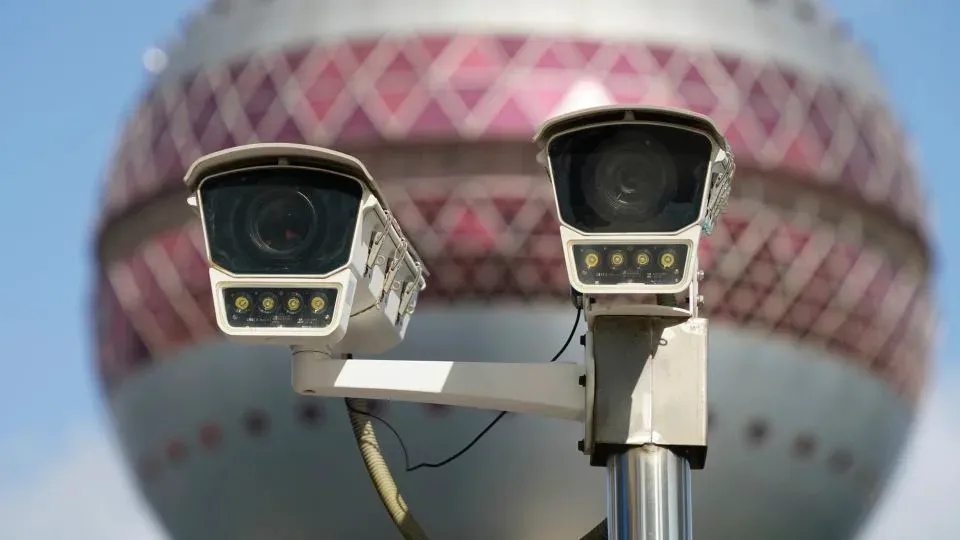
Chinas Communist Party is increasingly leveraging artificial intelligence to amplify its control over its population of 1.4 billion, with AI technologies extending into daily life, predicting public protests, and monitoring prison inmates behaviors, according to a recent report.
While Chinas extensive surveillance infrastructure is well-knownincluding a massive network of online censors and omnipresent street camerasthe Australian Strategic Policy Institute (ASPI) report released Monday outlines how AI tools are now being used to automate censorship, enhance monitoring, and proactively suppress dissent. These capabilities have advanced significantly over the last two years amid escalating US-China tech tensions.
AI allows the CCP to supervise more people more efficiently and in greater detail, explained Nathan Attrill, co-author of the report. It has become the backbone of a predictive and pervasive system of authoritarian control.
The report notes that AI integration is expanding the governments ability to manage information, enforce laws, and project influence abroad as a global supplier of surveillance technologies. China has invested hundreds of billions of dollars into AI research and development, making substantial progress despite US restrictions on high-performance AI chips.
Public sentiment toward AI is overwhelmingly positive. A 2024 IPSOS survey found that Chinese citizens are more enthusiastic about AI than people in 32 other countries. Even President Xi Jinping has emphasized AIs strategic role, describing it as both a challenge and an opportunity for internet governancea reference ASPI interprets as reinforcing the regimes control.
While AI adoption is more advanced in major cities with established digital infrastructure, like Beijing and Shanghai, the report predicts that national implementation is imminent once rural regions develop sufficient capabilities. Xiao Qiang, a researcher on internet freedom at UC Berkeley, stated, Many policies are now being realized. Once infrastructure allows, AI systems are being rolled out nationwide.
AI is already being applied in law enforcement, courts, and prisons. Surveillance camerasestimated at up to 600 million nationwideare increasingly equipped with AI functions such as facial recognition and location tracking. In Shanghai, AI-powered cameras and drones are being developed to detect crowds and alert authorities automatically.
The Supreme Court has directed all courts to implement AI systems by 2025 to assist in trials and administrative procedures. Some AI systems in Shanghai reportedly provide recommendations for arrests or suspended sentences, while smart prisons use facial recognition to monitor inmates emotions and behavior. Drug rehabilitation programs have begun using AI-driven therapy delivered through virtual reality.
According to the report, AI-assisted courts and prisons could integrate into every stage of Chinas criminal justice system. These tools can increase safety, but they also enable political repression, particularly targeting ethnic and religious minorities, dissidents, and other vulnerable groups. Chinese tech firms, backed by the government, are developing AI models for minority languages like Uyghur, Tibetan, Mongolian, and Korean to monitor communications and shape information.
Major Chinese technology companies are critical to the censorship and surveillance ecosystem. ByteDance censors political content on Douyin, Tencent uses AI to assign online risk scores and enforce penalties, and Baidu provides content moderation tools that have assisted in over 100 criminal cases. AI facilitates real-time content filtering, sentiment analysis, and promotion of party-aligned narratives.
ASPI warns that the expansion of Chinas AI surveillance technologies has global consequences. Authoritarian governments, including those in Iran and Saudi Arabia, are adopting similar AI systems. Xiao Qiang noted that many foreign entities may use Chinese AI models because they are accessible, but doing so subjects them to the same platforms of control, censorship, and influence embedded in the technology.
Author: Caleb Jennings
Share

China's AI-powered censorship and surveillance intensify further
1 days ago 3 min read BUSINESS

3 important issues confronting Washington regarding AI
1 days ago 3 min read BUSINESS
New report finds that safety practices of top AI companies are inadequate
1 days ago 3 min read BUSINESS

Chinese authorities clamp down on spreading negative news about the real estate market online.
2 days ago 2 min read BUSINESS

China employs artificial intelligence for censorship and surveillance
3 days ago 1 min read WORLD
UK under surveillance by 'spy in the sky' as hundreds of drones deployed nationwide
3 days ago 2 min read WORLD

Chinese hackers transformed AI tools into an automated weapon
4 days ago 3 min read WORLD

MAGA Slows Down AI Development as Trump Fully Supports It
4 days ago 3 min read POLITICS

Academics bypass DeepSeek to discuss Tiananmen Square openly
5 days ago 2 min read SCIENCE
DeepSeek, Researchers from Alibaba support China's 'misunderstood' AI regulatory framework
5 days ago 3 min read WORLD