

EU takes steps to reduce reliance on Chinese rare earths
- Last update: 1 hours ago
- 3 min read
- 772 Views
- BUSINESS
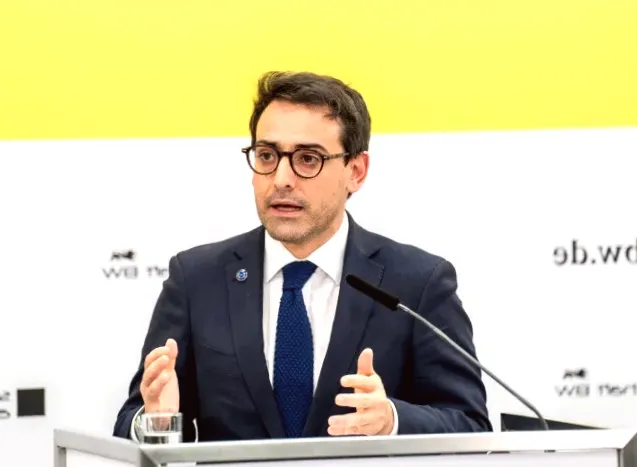
On Wednesday, the European Union unveiled a multi-billion-euro plan designed to lessen the 27-member bloc's dependence on China for rare earth elements, which are crucial for industries such as automotive, electronics, and defense. The move comes as China's dominance over these essential materials has raised concerns about supply security.
China, the leading global producer of rare earths, introduced export controls in October targeting the elements used in critical magnets. This initially disrupted markets and supply chains until Beijing later announced a one-year suspension of the curbs. Earlier in the year, China had also required licenses for certain rare earth exports, affecting international manufacturing.
Europe is adapting to the changing geopolitical landscape, said EU industry chief Stephane Sejourne, referring to measures aimed at countering what he described as a raw earths racket controlled by China. To support this effort, the European Commission plans to allocate nearly 3 billion ($3.5 billion) for strategic projects in mining, refining, and recycling of vital minerals, both domestically and in collaboration with partner nations.
The EU also proposed creating a European Centre for Critical Raw Materials, modeled on Japan's state-run resource agency. According to Sejourne, the centre will focus on three primary tasks: monitoring and assessing needs, coordinating joint purchases for member states, and managing stockpiles and deliveries to companies as necessary.
In addition, Brussels aims to reduce exports of scrap and waste from permanent magnets starting next year to strengthen recycling within Europe. Similar restrictions may be applied to aluminium and potentially copper waste exports.
Two years ago, the EU passed legislation to secure critical raw material supplies. However, the bloc now faces pressure from Chinas export limitations and the United States aggressive bilateral supply agreements. A recent study by the EU Chamber of Commerce in China found that 60% of members anticipate supply chain disruptions due to government restrictions, while 13% fear production slowdowns or interruptions.
Alongside this initiative, the European Commission updated its economic security strategy. Global trade is increasingly being used as leverage, putting supply chains under pressure, said EU trade chief Maros Sefcovic. Strategic choke points transform economic dependence into political pressure, affecting companies every day.
The original strategy, launched in 2023, reflected lessons from the COVID-19 pandemic and the Ukraine war, highlighting vulnerabilities in supply chains. The revised plan emphasizes more assertive and strategic use of existing tools such as foreign investment controls, export restrictions, and supplier diversification, with new measures to be added as necessary.
Europe remains committed to open trade and investment, but this must be balanced with security, Sefcovic said. Expect a stronger, more strategic application of current tools, development of new mechanisms where needed, and improved capacity for economic intelligence gathering and sharing.
Author: Olivia Parker
Share

Union Calls for Pilots to Focus on Basic Skills
2 minutes ago 2 min read BUSINESS

‘Trump’s Mouthpieces’: the rightwing takeover of the Pentagon press corps
9 minutes ago 3 min read BUSINESS

AI Poised to Disrupt the Two-Party System, Political Operatives Claim
15 minutes ago 2 min read BUSINESS

BBC Fact-Checker Exposes Mark Levin's Israeli Strike Clips as 'AI-Generated'
21 minutes ago 2 min read BUSINESS

Investment in German film sector by streaming services and broadcasters
22 minutes ago 1 min read BUSINESS

Train's final tour completely sold out within 15 seconds
27 minutes ago 2 min read BUSINESS

Pete Hegseth's Former Fox News Colleague Criticizes Him for Drug Boat Strikes
32 minutes ago 1 min read BUSINESS

Disneyland Reveals Dates for Their Annual Halloween Party
33 minutes ago 2 min read BUSINESS

Interested in owning a Subway bread oven? Here's how to acquire one
41 minutes ago 2 min read BUSINESS

Questioning a Meteorologist: Can It Be Too Cold for Snow to Fall?
41 minutes ago 2 min read BUSINESS