

Opinion - China's fast construction may impress, but only freedom nurtures genius
- Last update: 1 days ago
- 4 min read
- 949 Views
- BUSINESS
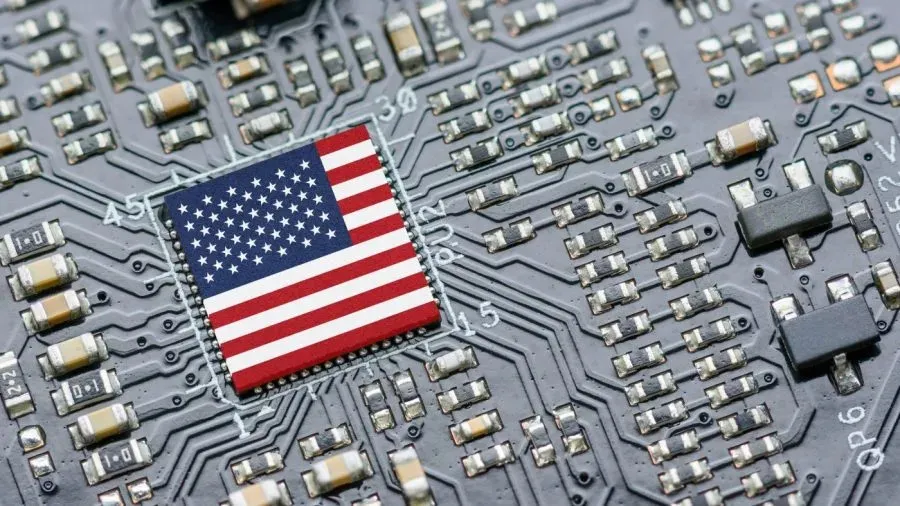
At the Financial Times Future of AI Summit, Nvidia CEO Jensen Huang delivered a stark warning: China is poised to dominate the AI landscape. He attributed this to Beijings subsidies for cheap energy and a more lenient regulatory framework, cautioning that the U.S. could fall behind unless it actively attracts developers worldwide.
Huangs perspective initially appears pragmatic: America must maintain its lead by keeping global developers tied to Nvidias technology. He also highlighted the limitations imposed by U.S. export controls, which have effectively blocked Nvidia from the Chinese market. Our share there has fallen to zero, he acknowledged. Beneath this corporate concern, however, lies a deeper question: Which system truly fosters innovationcontrol or freedom?
Chinas technological growth has deep historical roots. In the 1950s, it relied heavily on Soviet assistance for economic and military modernization. According to Dr. Baichun Zhang of the Chinese Academy of Sciences, Soviet experts provided blueprints and advisers but withheld core expertise. When the Sino-Soviet split occurred in 1962, technical support vanished overnight, halting industrial and aviation programs. The lesson was clear: dependence creates vulnerability.
Mao Zedong promoted self-reliance, while Deng Xiaoping adopted pragmatism: Learn from the West, catch up, compete, and eventually surpass. This philosophy endures. In the 2000s, China collaborated with Japans Kawasaki to build high-speed rail. Once local engineers mastered the technology, the partnership ended, leaving China with the largest high-speed rail network in the world. Similarly, while foreign companies still supply engines for Chinese jets, domestic designs are planned to eventually replace them once performance equals Western standards.
Modern Chinese industrial strategy follows a consistent pattern: absorb foreign knowledge, replicate it, then innovate domestically. As Dan Wang notes in Breakneck, China has become an engineering state, managing massive projects with centralized precision, from skyscrapers to urban zones, ports, and rail networks. Shanghais skyline now rivals Manhattans. China excels at large-scale execution, but authoritarian control has limits. Originality is often suppressed, as obedience is rewarded while deviation is punished. A vast surveillance network and social credit system reinforce conformity, leading individuals to self-censor instinctively.
One of the starkest examples of this tension is Dr. Li Wenliang, the Wuhan ophthalmologist who warned about a SARS-like virus in 2019. For his honesty, he was accused of spreading rumors and forced to retract his statement. Centralized research and political priorities overrode transparency, illustrating that innovation under fear becomes cautious and fragile. Economists and entrepreneurs, including Zhu Hengpeng and Jack Ma, have faced similar consequences for challenging authority. In such an environment, creativity is constrained, curiosity is stifled, and genius often remains hidden.
In contrast, the U.S. environment encourages risk-taking and tolerates failure. Entrepreneurs like Elon Musk and Steve Jobs faced setbacks, yet these challenges became stepping stones to transformative success. Democratic systems reward rebellion and experimentation, creating fertile ground for innovation. Universities, startups, and open forums allow diverse ideas to compete, generating breakthroughs that centralized systems rarely produce.
Huangs concern about losing the AI race overlooks the deeper issue: the race is ultimately about fostering human imagination, not just technological speed. Chinas AI model scales efficiently but within politically safe boundaries. The U.S. system, despite imperfections, thrives on the freedom to challenge norms, producing resilient innovation.
China also invests heavily in global academic exchange. Programs like the China Scholarship Council and the Thousand Talents Plan incentivize students and researchers to study abroad and return to serve national goals. Partnerships with elite universities allow knowledge to flow both ways, creating opportunities and risks alike.
The U.S. response should combine confidence with strategic safeguards. Innovation flourishes when people are free to question, challenge, and explore ideas without fear. Simultaneously, protecting sensitive research, vetting foreign collaborations, enforcing intellectual property rights, and funding AI initiatives are essential to maintain competitive advantage. China may deploy AI rapidly in surveillance, autonomous systems, and cyber applications, but breakthroughs arise from freedom, not obedience. By pairing openness with targeted protections, the U.S. can foster creativity while safeguarding critical knowledge. In AI and beyond, speed is important, but freedom is the engine of true genius.
Author: Ethan Caldwell
Share

3 important issues confronting Washington regarding AI
1 days ago 3 min read BUSINESS

Over 1,000 Amazon workers express concerns about the company's AI impact on democracy, jobs, and the environment
1 days ago 4 min read BUSINESS

New report finds that safety practices of top AI companies are inadequate
1 days ago 3 min read BUSINESS
China's defense sector faces challenges
3 days ago 4 min read WORLD

Kazakhstan's Role in Powering the AI Revolution in the United States
4 days ago 3 min read WORLD
MAGA Slows Down AI Development as Trump Fully Supports It
4 days ago 3 min read POLITICS

Academics bypass DeepSeek to discuss Tiananmen Square openly
5 days ago 2 min read SCIENCE
DeepSeek, Researchers from Alibaba support China's 'misunderstood' AI regulatory framework
5 days ago 3 min read WORLD