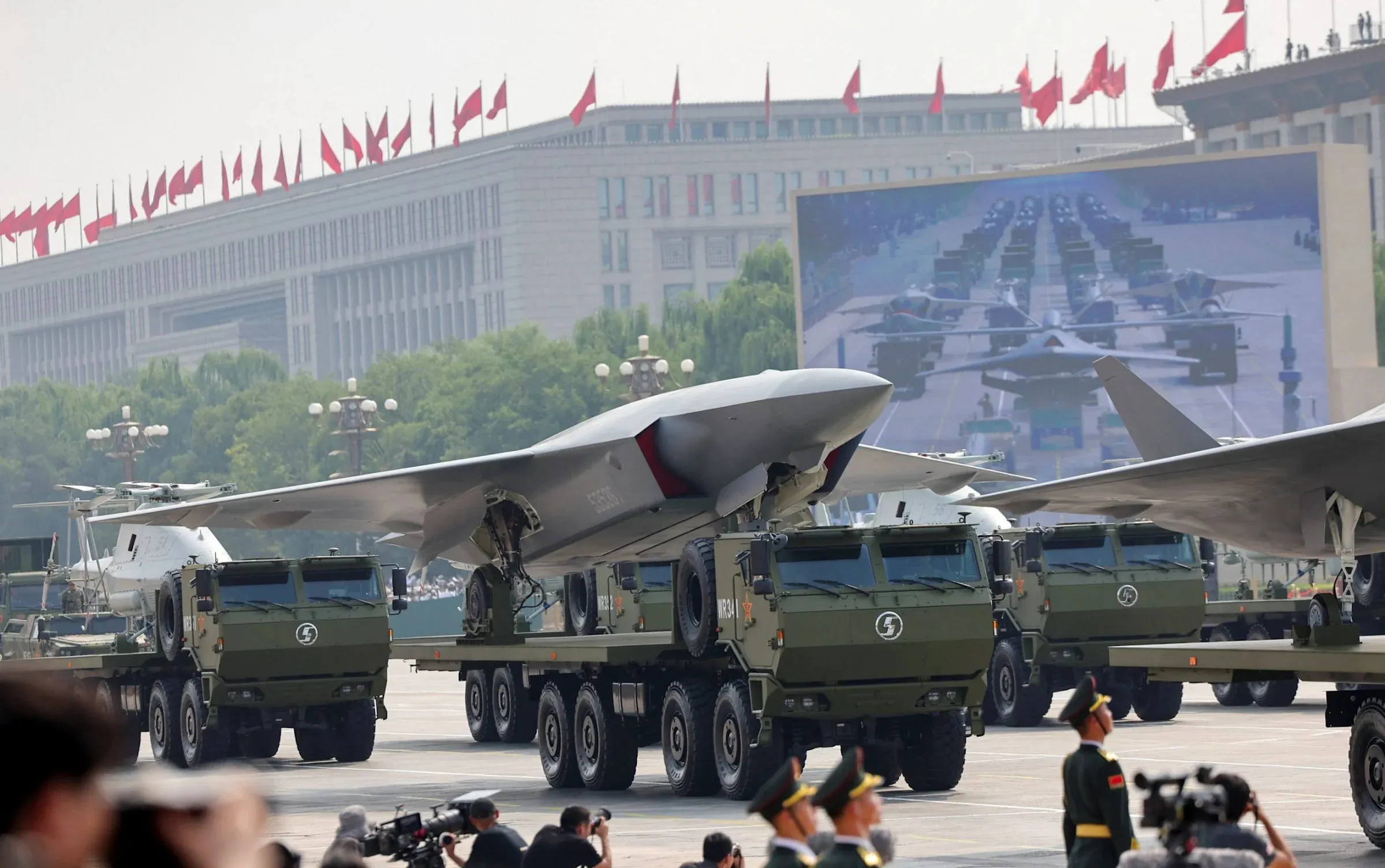
For many years, Western nations have closely monitored the rapid expansion of Chinas military strength. Public displays of advanced weaponry, large-scale military parades, and repeated threats aimed at Taiwan have fueled concerns that President Xi Jinpings ambition to control the South China Sea could lead to a major conflict.
In response, countries such as Japan and the United States have significantly increased their defence budgets and strengthened their domestic arms production in order to counter what they see as a potential challenge coming from Beijing.
However, Chinas own defence sector is now facing serious difficulties, largely as a result of Xis aggressive anti-corruption campaign. According to the Stockholm International Peace Research Institute (SIPRI), Chinas defence industry shrank by 10 percent last year alone.
Over the past decade, numerous officials and business leaders connected to Chinas military-industrial complex including members of Xis inner circle have been removed from their positions. These purges have disrupted key projects and may have weakened Chinas ability to act on its long-stated goal of taking control over Taiwan.
Despite having the worlds largest army and aiming to rival the United States in overall military power, the recent decline in revenue raises questions about whether China can maintain its current pace of modernisation.
In contrast, defence companies in Japan reported revenue growth of 40 percent, while Germany and South Korea saw increases of 36 percent and 31 percent respectively. Meanwhile, the United States and United Kingdom recorded more modest gains of four and seven percent.
Overall, the top 100 arms manufacturers in the world achieved a combined revenue of 679 billion dollars, marking a 5.9 percent increase and a new global record. Yet Chinas downturn caused the Asia-Oceania region to be the only one with a net decline among leading defence firms.
SIPRI analyst Nan Tian explained that widespread allegations of corruption in Chinese military procurement resulted in major contracts being delayed or cancelled in 2024. This, he noted, has created uncertainty around the timeline of Chinas military advancements and the rollout of new technologies.
Chinas anti-corruption drive has severely affected both its political and military leadership. In previous years, multiple high-ranking members of the Central Military Commission were removed from office. More recently, one of its current vice-chairmen, the second most powerful military figure in the country, was dismissed.
These actions extended across all branches of the armed forces, including the navy, air force, rocket force, and ground troops, as well as the state-owned defence companies that supply them.
In 2023, the leaders of three major weapons manufacturers were forced out. Among them was Liu Shiquan, head of Norinco, one of Chinas largest arms companies. In the following year, the company reported a dramatic 31 percent drop in revenue, the steepest decline seen among Chinese military firms.
Other affected companies included the China Aerospace Science and Technology Corporation (CASC), which saw revenues fall by 16 percent, largely due to postponed satellite and rocket projects following the dismissal of its former chairman. The China Electronics Technology Group Corporation experienced a 10 percent decrease, while the Aviation Industry Corporation of China posted a slight dip of just over one percent.
Only two major Chinese defence firms managed to increase their earnings: the China State Shipbuilding Corporation and the Aero Engine Corporation of China.
These developments are likely troubling for President Xi, who has placed military expansion at the heart of his strategy to enforce territorial claims and push for the eventual reunification of Taiwan. Analysts warn that timelines for advanced missile systems, aerospace innovations, and cyber capabilities may now face unexpected delays.
At the same time, Beijing is confronting growing military activity in Japan. Rising tensions have been further aggravated by recent statements from Japanese leadership suggesting that any crisis involving Taiwan could trigger a military response.