

Opinion - No one can save Hegseth now, not even Trump
- Last update: 1 hours ago
- 3 min read
- 487 Views
- BUSINESS
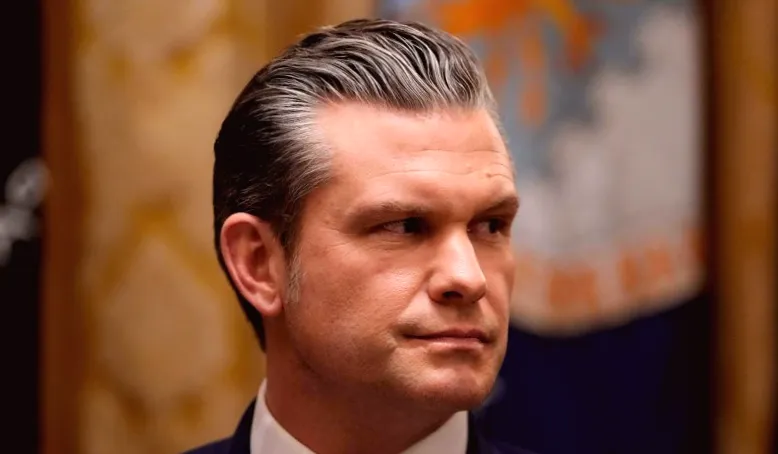
There is ongoing debate over whether the U.S. Navys strike on September 2, which reportedly killed two survivors clinging to the wreckage of a suspected drug vessel, qualifies as a war crime. Another question is whether Secretary of War Pete Hegseth personally directed the Navy to eliminate everyone on board.
Assuming Hegseth did issue such an order, a critical legal issue arises for all members of the U.S. military: Could President Trump pardon him?
Trump has frequently used his pardon power, even for convicted drug offenders, and would likely extend clemency to Hegseth if he believed Hegseth was simply enforcing Trumps policies too aggressively. While the presidents pardon authority covers all offenses against the United States, except in cases of impeachment, war crimes fall into a distinct category.
War crimes are prosecuted under international law rather than U.S. domestic law. The War Crimes Act permits the Department of Justice to pursue anyone who commits a war crime while present in the United States. Penalties can range from fines to the death penalty if the crime results in death.
The War Crimes Act references violations such as grave breaches of the Geneva Convention and the 1907 Hague Convention, including prohibitions on no quarter orders and intentionally killing those who are out of combat due to injury, sickness, or detention. Hegseth is accused of both actions.
Therefore, while Hegseth could be pardoned for murder under U.S. law, he cannot be pardoned for war crimes, as these are offenses under international law. This distinction is similar to the inability of an American president to pardon the defendants of the Nuremberg Trials.
The statute that could be applied against Hegseth, 18 USC 2441, allows U.S. courts to prosecute war crimes even when the United States is not directly involved. Although past presidents, including Trump, have pardoned acts that might constitute war crimes, those instances involved violations of U.S. law or the Uniform Code of Military Justice, not international conventions.
While Trump could temporarily block the Department of Justice from pursuing Hegseth during his presidency, he cannot prevent future administrations or foreign courts from holding him accountable. If Hegseths orders led to the intentional killing of protected individuals, there is no statute of limitations.
This has far-reaching consequences for the military. Ethical, legal, and practical reasons all demand adherence to the laws of war. Any intentional violation can lead to prosecution, and no president can offer permanent immunity.
Senator Mark Kelly and others emphasize that unlawful orders, especially those causing the deaths of noncombatants, must be refused. Accountability extends not only to commanders like Hegseth but also to the soldiers who execute such orders.
Author: Riley Thompson
Share

FBI deputy director denies claims of FBI hiding pipe bomb suspect
3 hours ago 2 min read POLITICS

House Democrat to file articles of impeachment against Hegseth for boat strikes: 'Allegations of war crimes'
8 hours ago 3 min read POLITICS

Trump expands the use of pardon power in unprecedented ways
9 hours ago 3 min read POLITICS

Trump pardons over 1,800 individuals, some of whom have been rearrested
1 days ago 3 min read POLITICS
Pete Hegseth's Affinity for Lethality Led Him to Write a Book.
1 days ago 3 min read ENTERTAINMENT

Democrats accuse Hegseth of hypocrisy for supporting unlawful orders
1 days ago 3 min read POLITICS
'This is a War': Trump Avoids Answering If Hegseth Should Face Punishment for Ordering Survivors Killed
1 days ago 2 min read POLITICS

Hegseth's 2016 remarks on refusing 'unlawful orders' resurface: 'There's a standard'
1 days ago 2 min read POLITICS

Napolitano suggests prosecuting Hegseth for a war crime
2 days ago 2 min read POLITICS
Hegseth's 2016 Warning on Military Nukes in Response to Trump's Attack on Democrats
2 days ago 2 min read POLITICS