

Sundar Pichai announces Google's plan to construct solar-powered data centers in space by 2027
- Last update: 2 days ago
- 2 min read
- 11 Views
- BUSINESS
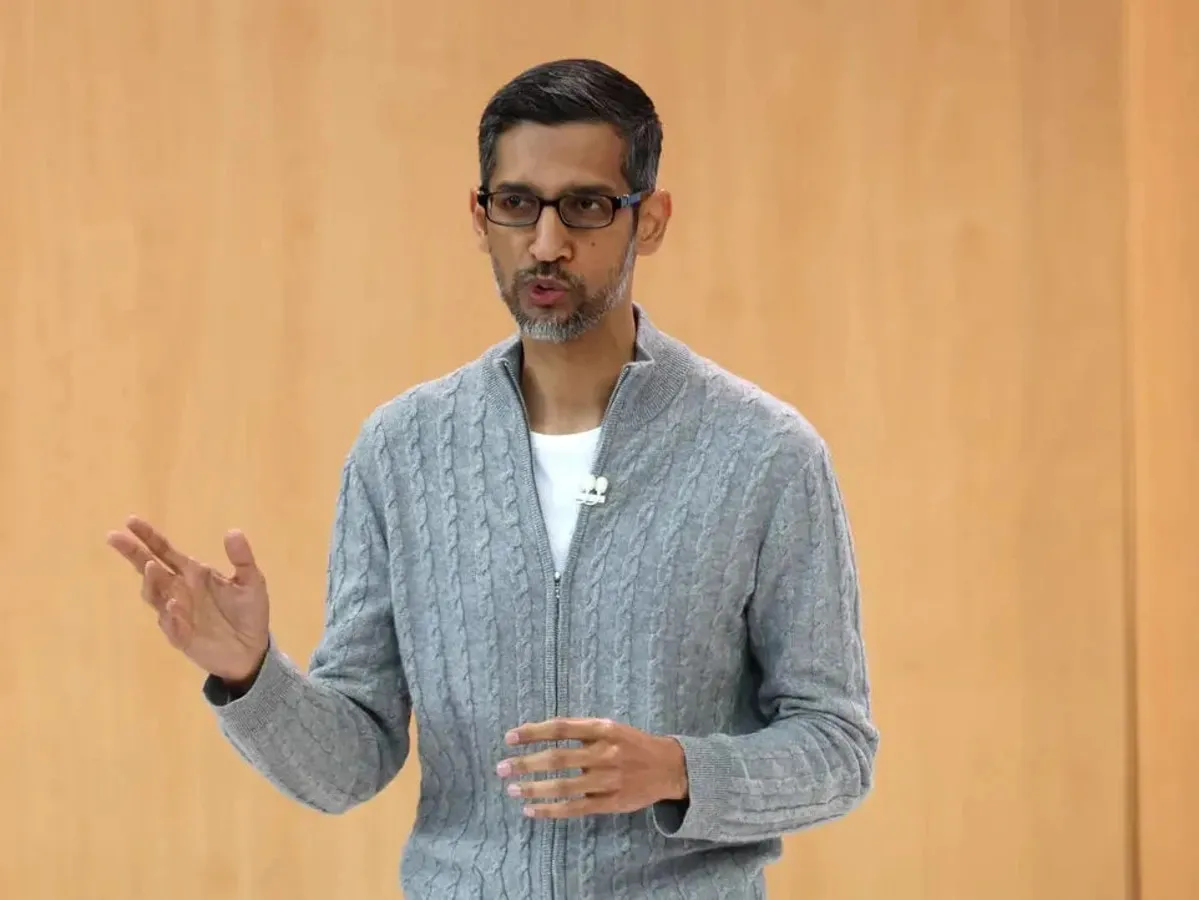
Earlier this month, Google introduced Project Suncatcher, an ambitious initiative designed to lower the environmental footprint of artificial intelligence by relocating data centers into space, where they will be powered by solar energy.
During an interview with Shannon Bream on Fox News Sunday, Google CEO Sundar Pichai revealed that the company intends to start sending "machines" into orbit as early as 2027. "Our first step in 2027 will involve launching small racks of machines into satellites for testing, before gradually scaling up," Pichai explained.
Project Suncatcher represents a long-term research effort to eventually scale machine learning operations in space. Pichai envisions a future where extraterrestrial data centers become commonplace, allowing Google to harness solar energy far more efficiently than on Earth. "The sun provides roughly one hundred trillion times the energy we currently generate on Earth," he noted, describing it as one of the companys moonshot ambitions.
The initiative comes amid increasing global attention on the environmental impact of data centers. According to Sally Radwan, Chief Digital Officer at the United Nations Environment Program, AI's environmental costs include the extraction of rare minerals for technology, production of microchips, electronic waste from data centers, water usage for cooling, and greenhouse gas emissions. Radwan emphasized the importance of ensuring AI has a net positive effect on the planet before widespread deployment.
Google hopes to mitigate some of these impacts by moving parts of its data infrastructure off-planet. On the Google AI: Release Notes podcast, Pichai mentioned that by 2027, the company aims to operate a TPU (Tensor Processing Unit) in space, a custom AI chip designed to accelerate machine learning workloads.
Google has not provided an immediate comment to inquiries from Business Insider regarding the project.
Author: Sophia Brooks
Share

FDA says shredded cheese recalled due to potential presence of metal fragments
1 minutes ago 2 min read BUSINESS

McLaren Bay Region implements MEDI+SIGN digital whiteboards in emergency department
4 minutes ago 2 min read BUSINESS

Introducing new boat licences to enhance water safety
6 minutes ago 2 min read BUSINESS

Minnesota Somalis Fearful Yet Defiant After Trump Insults: 'We Are Not Trash'
7 minutes ago 4 min read BUSINESS

Trump Reveals Strategy to Increase Vehicle Emissions
13 minutes ago 2 min read BUSINESS

"Experts concerned about potential impact of AI on early brain development: a distortion beyond understanding"
14 minutes ago 3 min read BUSINESS

EU regulators impose a 120 million euro fine on Elon Musk's X for violating bloc's social media law
14 minutes ago 1 min read BUSINESS

Cannabis vape pens and a machete discovered during shop raids
17 minutes ago 1 min read BUSINESS

Scotland through your lens: 28 November - 5 December
17 minutes ago 3 min read BUSINESS

Concerns Raised Over Logistics and Ethics of Whalebone Trade
18 minutes ago 2 min read BUSINESS