
Understanding the air traffic control overhaul and the company chosen by the FAA to oversee it
- Last update: 1 hours ago
- 5 min read
- 654 Views
- BUSINESS
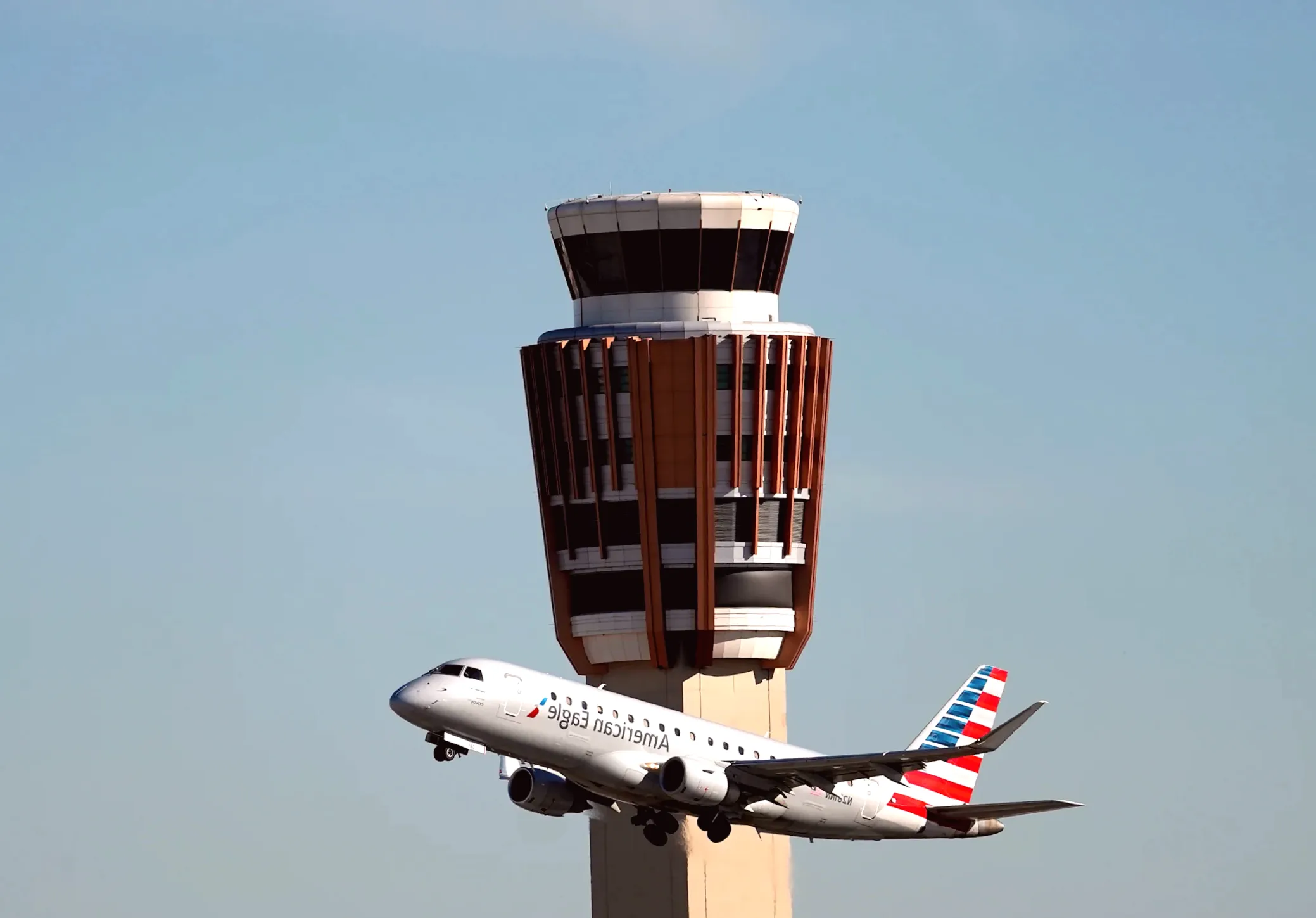
The U.S. government has selected Peraton, a company with limited experience with the Federal Aviation Administration (FAA), to oversee the $31.5 billion project to modernize the nation's aging air traffic control system. Transportation Secretary Sean Duffy announced Thursday that Peraton was chosen due to its innovative approach, which is hoped to enable the completion of upgrades within three years, by the end of President Donald Trumps term. Peraton was preferred over Parsons Corp., a firm with more extensive experience with FAA contracts.
Together, we will build on the tremendous progress weve already made and create a state-of-the-art air traffic control system that both the American public and our dedicated air traffic controllers deserve, Duffy stated.
The $12.5 Billion Initial Investment
Earlier this year, Congress allocated $12.5 billion as an initial investment for the overhaul following two technical failures that disrupted radar operations for air traffic controllers managing flights near Newark Liberty International Airport. These failures came after a significant aviation disaster in Washington D.C. that involved a collision between an airliner and an Army helicopter, resulting in 67 fatalities. Duffy has emphasized that an additional $20 billion will be required to complete the modernization. The new initiative aims for a more rapid upgrade compared to the previous NextGen effort, which started early in the 2000s but failed to fully deliver on its promises despite a $36 billion investment. While the Biden administration had suggested that the upgrade could take over a decade, the new plan targets a much shorter timeframe.
Details on Peraton's Contract and its Performance Incentives
The FAA has not disclosed the exact terms of Peraton's contract, but it has confirmed that the deal includes performance-based incentives and penalties. The modernization is essential to prevent future delays and to prepare for emerging technologies, such as drones and flying taxis.
The Need for Modernization
The technical issues at Newark highlighted the vulnerability of the current air traffic control system, which still relies on outdated technology like copper wires and floppy disks. Duffy has warned that such failures could occur anywhere unless the system is updated. Following radar outages, several controllers at the Philadelphia facility responsible for Newark's airspace were forced to take leave, causing further disruptions. With flight numbers expected to rise in the coming years, the system must be upgraded to manage both conventional flights and the growing number of drones and flying taxis.
A Challenging Timeline for Upgrades
John Rose, chief risk adviser for ALTOUR, a global travel management company, noted that the three-year timeline is ambitious, but achievable. He believes it is realistic for the FAA to lay the groundwork for a modern air traffic control network in that time frame, with additional capabilities being added as technology evolves.
Once the foundation is built, its like an iPhone you can update the software to enhance the system, he explained.
Technology Readiness
Stephen Creamer, President and CEO of the Air Traffic Control Association, representing companies that supply equipment for air traffic control, stated that the technology needed for the upgrades is not new and has already been tested worldwide. This experience will reduce risks compared to starting from scratch.
The Role of Peraton in the Overhaul
According to Duffy, outsourcing the project to a private company will expedite its completion. Peratons experience with complex systems and artificial intelligence is expected to be crucial. Despite not having a long history of working with the FAA, Peratons fresh perspective is seen as a benefit, avoiding the biases tied to the agencies that have worked with the FAA in the past. Creamer added that the FAAs current workforce is insufficient to complete such a large-scale project.
Peraton is expected to quickly award subcontracts to other firms, a process that could be faster than the FAAs bureaucratic procedures. While there are concerns about potential mistakes, Creamer is confident that oversight measures will prevent major issues.
Peraton's Experience in Government Contracts
Peraton has worked on significant technology projects for various government agencies, including the Department of Homeland Security, U.S. Special Operations Command, and the National Park Service. The company, owned by Veritas Capital private equity, does not have shareholders and is guided by a board with former military and intelligence experts. Peratons CEO, Steve Schorer, expressed confidence in his teams ability to successfully manage the air traffic control overhaul.
Our team of engineers, technologists, and mission experts is ready to deliver a system that will be secure, reliable, and serve as a global model, Schorer said.
Progress Already Underway
Improvements have already begun, with over one-third of the outdated copper wiring used by air traffic controllers replaced with fiber-optic cables or modern connections. Some upgrades, such as installing systems to track aircraft on the ground at 44 airports, began under the previous administration. However, substantial work remains, including the installation of over 27,600 new radios and 612 radar systems. Additionally, six new air traffic control centers are planned, and upgrades are necessary at thousands of other facilities.
Author: Caleb Jennings
Share
Federal government selects company for overseeing upgrades to air traffic control system
5 hours ago 2 min read BUSINESS
DOT's New Integrator for ATC System
6 hours ago 4 min read WORLD
US FAA selects Peraton to supervise the effort to reform air traffic control
16 hours ago 1 min read BUSINESS
DOT announces winner in air traffic control system overhaul.
17 hours ago 3 min read BUSINESS