

DOT's New Integrator for ATC System
- Last update: 49 minutes ago
- 4 min read
- 671 Views
- WORLD
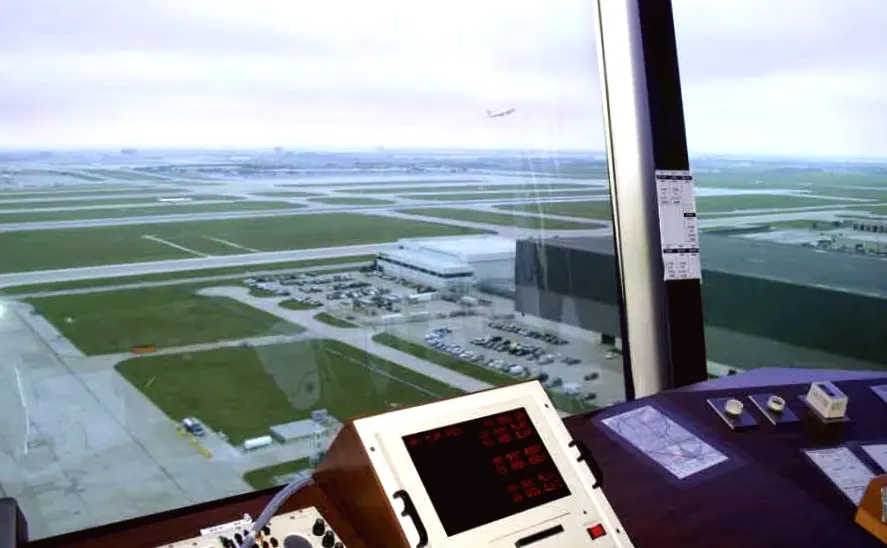
The U.S. Department of Transportation (DOT) and the Federal Aviation Administration (FAA) are moving forward with a comprehensive overhaul of the nations air traffic control systems. Transportation Secretary Sean Duffy has referred to this effort as the "brand new air traffic control system" (BNATCS), aimed at replacing outdated hardware and software with cutting-edge technology.
On Friday, the agencies announced that Peraton, a Virginia-based national security and IT services firm, has been selected as the prime integrator for the initiative. The role, similar to a general contractor, will task Peraton with guiding the modernization process, ensuring timelines are met, and supporting the FAA as new technologies are rolled out across the National Airspace System (NAS).
Peraton's contract is structured to reward timely and high-quality work while penalizing delays or poor performance. The firm is expected to immediately begin addressing early priorities, including the replacement of copper wiring with fiber optics and the construction of a new digital command center. The multibillion-dollar project aims to be completed by 2028.
Chris Sununu, president of Airlines for America, praised the appointment as a "critical step forward." Peraton had been competing with a joint proposal from Parsons Corporation and IBM since the FAA issued a request for solutions (RFS) in August. Steve Schorer, Peraton's CEO, highlighted the company's technical capabilities and mission-focused culture, emphasizing their readiness to deliver a safer and smarter air traffic system.
Modernizing the Nations Air Traffic System
Following a January collision between a U.S. Army Black Hawk helicopter and a commercial jet over the Potomac River, Secretary Duffy signaled a major update to the aging ATC infrastructure. A March Government Accountability Office report found that over one-third of the current system was "unsustainable." In 2025, FAA data revealed flight delays caused by equipment failures tripled compared to the average from 2010 to 2024, including notable radar and communication outages at Newark Liberty International Airport due to faulty wiring.
By 2028, the FAA intends to deploy thousands of radios, fiber, satellite, and wireless networks, hundreds of radars and voice switches, and a unified automation platform to manage more than 74,000 systems and devices. The plan also includes building new control towers, Air Route Traffic Control Centers (ARTCCs), and terminal radar approach control (TRACON) facilities.
The modernization will unfold in two phases. Phase 1 focuses on replacing outdated systems to address safety vulnerabilities. Phase 2 will expand capacity and integrate emerging technologies like electric vertical takeoff and landing (eVTOL) air taxis.
Speaking at Honeywells American Aviation Leadership Summit in Washington, D.C., Secretary Duffy stressed that the integratornot the FAAmust lead the project. The FAA excels at safety, but building infrastructure is a different task, he noted. Peraton will serve as systems architect, overseeing installation, safety, and risk management, initially covering Phase 1, with the possibility of Phase 2 assignments at the FAAs discretion.
Progress and Funding
Work on the modernization has already begun. About one-third of copper wiring has been replaced with fiber, satellite, and wireless connections. Surface awareness systems have been installed in 44 towers, electronic flight strips in 13 towers, and 148 radios deployed nationwide. A next-generation voice switch is operational at Allegheny County Airport in Pennsylvania.
The BNATCS project is currently funded with $12.5 billion from the One Big Beautiful Bill Act. FAA Administrator Bryan Bedford indicated that an additional $20 billion will likely be needed to complete the program, emphasizing that it is a long-term investment in safer, more efficient air travel.
Securing these additional funds requires congressional approval, which may face scrutiny. Representative Troy Nehls, chair of the House Transportation and Infrastructure Committees Aviation Subcommittee, expressed concern over potential cost overruns, citing the FAAs NextGen program, which spent $36 billion but delivered only a fraction of its projected benefits.
Author: Harper Simmons
Share

Federal government selects company for overseeing upgrades to air traffic control system
33 minutes ago 2 min read BUSINESS

Top defense contractors in America are competing for their role in the future of drone warfare
8 hours ago 3 min read BUSINESS

The largest defense contractors in America are competing for their role in the future of drone warfare.
9 hours ago 4 min read BUSINESS
US FAA selects Peraton to supervise the effort to reform air traffic control
11 hours ago 1 min read BUSINESS

DOT announces winner in air traffic control system overhaul.
12 hours ago 3 min read BUSINESS