

What if.... we eliminated billionaires?
- Last update: 2 days ago
- 3 min read
- 318 Views
- BUSINESS
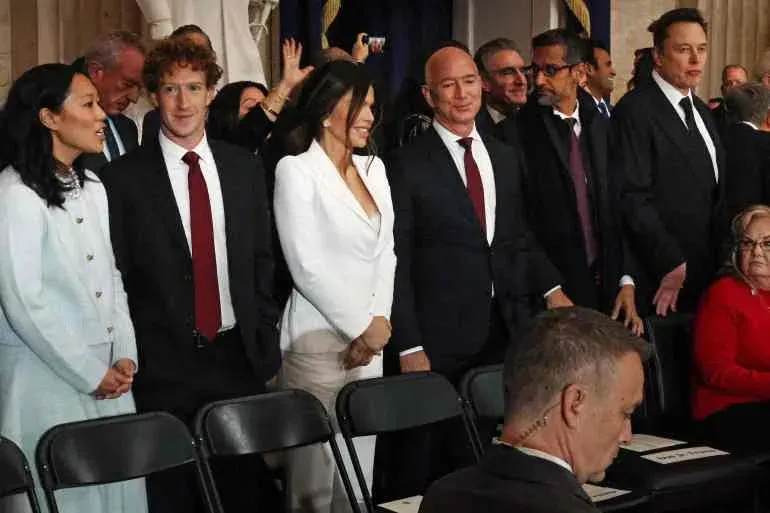
Debates around limiting or eliminating billionaires have gained momentum across Western capitals, where wealth inequality has reached historic heights. Elon Musks potential $1 trillion pay package this past November could make him not only the wealthiest individual today but also the richest in recorded history. Should he receive the full compensation, he would surpass the other 3,028 billionaires worldwide, whose combined wealth Forbes estimates at $16.1 trillion.
The disparity between the rich and the poor today is reminiscent of early 20th-century Western imperialism. Currently, roughly 831 million people live in extreme poverty, defined by the World Bank as under $3 per day, adjusted for cost of living. Hypothetically, if every billionaire kept only $1 billion, the remaining wealth could eradicate extreme poverty for the next 196 years.
Economists and analysts debate the influence of billionaire wealth. Some argue it skews politics, media, and public discourse toward elite interests, while others maintain that such wealth drives innovation, funding breakthroughs in technology and other fields. Eliminating billionaires or capping wealth at $1 billion per individual raises critical questions: would our perspective on the world shift, and would society benefit or lose its major innovators and investors?
Critics of abolishing billionaires warn it could harm developed economies. Many billionaires accumulate wealth by creating products and services that society voluntarily purchases. Their assetsranging from company shares to intellectual propertyare largely theoretical and fluctuate in value. Billionaires pursuit of wealth incentivizes them to build productive, solution-oriented businesses, like Nvidia advancing AI or SpaceX expanding satellite communications.
Others highlight the global dimension of wealth and taxation. Much of billionaire wealth stems from resources and labor in the Global South. Taxing billionaires should therefore consider where wealth originates, not just where it is held. Historical high tax rates on extreme wealth once redirected funds toward welfare, education, and healthcare, but modern austerity often shifts burdens onto the poor and middle class, preserving structures that perpetuate inequality.
Experts note that removing billionaires would not eliminate extreme wealth but would simply create new ones. The existence of billionaires reflects systemic policy failures designed to concentrate wealth, rather than promote equality or sustainability. Progressive taxation alone may not address the root problem; structural reforms and modern regulation are required to create a fairer society.
Ownership of media by billionaires raises additional concerns. Wealthy individuals controlling platforms can influence information and journalism for personal or political gain, as seen with figures like Elon Musk and Jeff Bezos. Controlling media equates to controlling public access to information, a factor rarely scrutinized.
Historical precedent shows that extreme wealth can be curbed. In the early 20th century, the U.S. broke up monopolies like John D. Rockefellers, and Roosevelt imposed top tax rates of 94 percent, funding programs that helped the nation recover from the Great Depression. Today, transparency initiatives such as the Panama Papers and LuxLeaks have renewed pressure on wealth concentration. Proposals to tax billionaires and centi-millionaires now have substantial political support in countries like France, and global leaders, including Brazils President Luiz Inacio Lula da Silva, are advancing super-rich taxation.
Redistributing portions of billionaire wealth could also undermine narratives of scarcity that fuel xenophobic and right-wing movements. Past opposition to wealth taxation has been overcome, and experts suggest that meaningful reform can weaken the political power of extreme wealth while promoting broader societal fairness.
Author: Gavin Porter
Share
Tax filings show Musk Foundation primarily supports charities associated with Elon Musk: 'I keep a low profile despite my large foundation'
1 days ago 2 min read BUSINESS

A viral claim states that $140,000 is now considered the poverty line. Let's break down the numbers.
2 days ago 3 min read WORLD

Key information on Trump accounts as Michael and Susan Dell contribute $6 billion to new early childhood investment program
2 days ago 3 min read BUSINESS
Elon Musk predicts AI will render most skills irrelevant, but assures his children can still pursue higher education if they choose to
3 days ago 2 min read SCIENCE

Effective Strategies to Address Economic Inequality
3 days ago 3 min read ECONOMICS