

Effective Strategies to Address Economic Inequality
- Last update: 3 days ago
- 3 min read
- 27 Views
- ECONOMICS
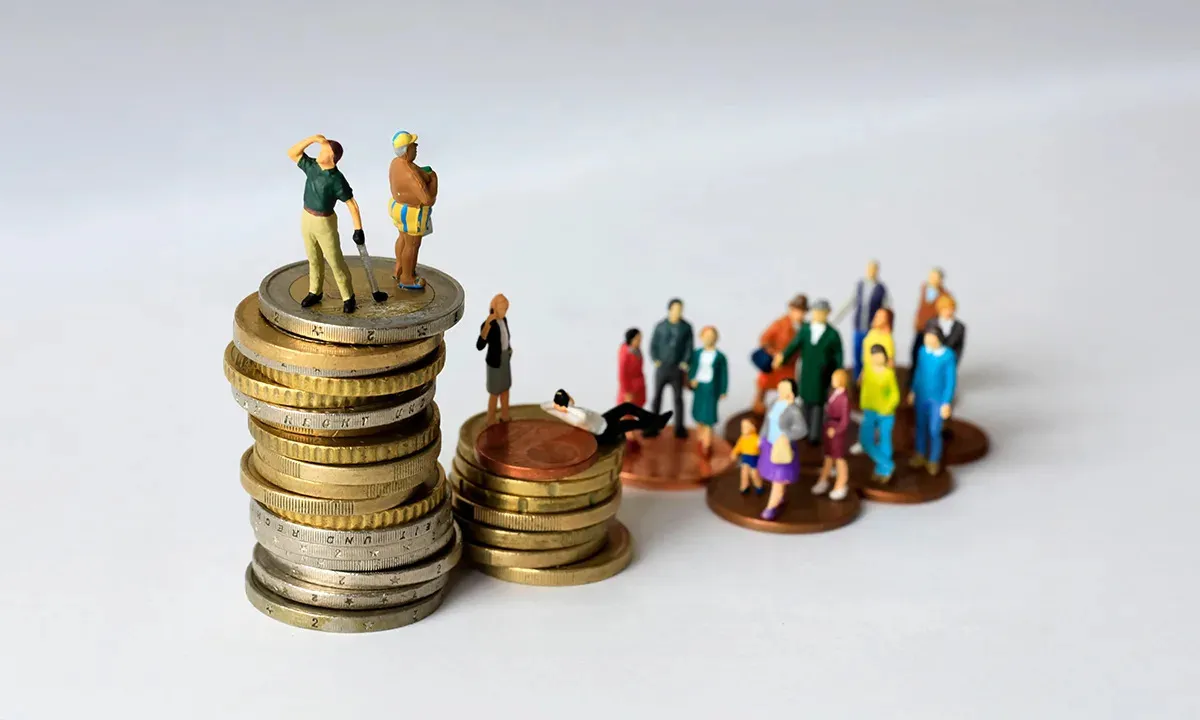
In many affluent countries, the divide between the wealthy and the less well-off has expanded significantly over recent decades. Researchers note that while most individuals theoretically oppose inequality, there is little consensus on how to address it. People's views often depend on how, and if, they perceive inequality in their surroundings.
Observations of economic disparity are frequently shaped by an individuals social environment, which typically consists of people with comparable income levels. These relatively uniform circles can lead individuals to underestimate the broader scale of income inequality. Such personal biases can influence attitudes toward taxation and policies aimed at redistributing wealth.
A recent study published in PNAS Nexus explored how exposure to wealth diversity affects support for redistribution. The research indicates that lower-income individuals who interact with wealthier people are more likely to favor redistribution policies than those whose social circles mostly include peers of similar economic standing. However, this increased awareness of inequality can also heighten the potential for conflict.
Researchers from the Santa Fe Institute and the London School of Economics developed a model simulating how individuals observe inequality within various social networks and make decisions on tax rates. They then validated the model through an online experiment involving 1,440 U.S.-based participants.
Study Design
Participants were assigned roles as poor or rich, each with corresponding income scores. They could view only eight members at a time from their hypothetical social network. In these micro-communities, participants voted on tax rates, with the median vote determining the distribution of wealth among the group. Over three rounds, participants could adjust their votes based on visible results and completed surveys detailing demographics, motivations, and opinions.
The experiment included networks with varying levels of income diversity. Results showed that when participants were exposed primarily to others with similar incomes, redistribution was minimal, satisfaction levels were similar across income groups, and votes were less polarized. Conversely, when poorer participants encountered many wealthier individuals, tax redistribution increased, satisfaction decreased, and voting became more polarized.
Richer participants rarely increased support for redistribution, whereas over multiple rounds, poorer participants grew more supportive as they observed tangible benefits from higher tax rates. The observed outcomes differed from the models predictions, which anticipated that networks dominated by wealthier individuals would reduce polarization. In reality, the poor became more radicalized in demanding higher taxation.
Key Insights
The authors highlighted a tradeoff between the extent of redistribution and agreement on it. Wealth segregation perpetuates inequality by keeping the poor disengaged, said Milena Tsvetkova, computational social scientist at the London School of Economics. Exposure to the wealthy, however, boosts support for redistribution and helps reduce inequality.
Going forward, the researchers suggest that increasing public awareness of extreme wealththrough media, social networks, and political discussionsmay be crucial. Although this could heighten social tensions, Tsvetkova emphasized that dissatisfaction and polarization may be necessary for meaningful change in highly unequal societies.
Author: Sophia Brooks
Share

Michael Dell to donate $250 to 25 million U.S. children for "Trump accounts"
3 days ago 1 min read ECONOMICS

ALDI Brings Back a Popular Product and It's Priced Under $10
3 days ago 2 min read ECONOMICS

No opposition recommended for the sixth energy storage project near the village
3 days ago 2 min read ECONOMICS

'Micro jobs' aiding individuals escape poverty - charitable organization
3 days ago 3 min read ECONOMICS
Homebuyer seeks guidance as unusual trend spreads across US housing market: 'What's going on?'
3 days ago 2 min read ECONOMICS

What comes next in the Amazon-Teamsters showdown?
3 days ago 3 min read ECONOMICS

Utilizing River Energy for Building Heating in New Project
3 days ago 2 min read ECONOMICS
Farmers warn of serious risk as staple crop becomes harder to grow: 'Production is in jeopardy'
3 days ago 3 min read ECONOMICS

From Biker Bars to Schools, Yondr Founder Sees Phone Pouches as 'Disrupting Impulses'
3 days ago 3 min read ECONOMICS

Sophie Rain from OnlyFans Contemplates if She Made More Money than LeBron James in 2025
3 days ago 2 min read ECONOMICS