

Frank Gehry inspired interest in architecture, regardless of opinions on his buildings.
- HOME
- ENTERTAINMENT
- Frank Gehry inspired interest in architecture, regardless of opinions on his buildings.
- Last update: 1 hours ago
- 6 min read
- 984 Views
- ENTERTAINMENT
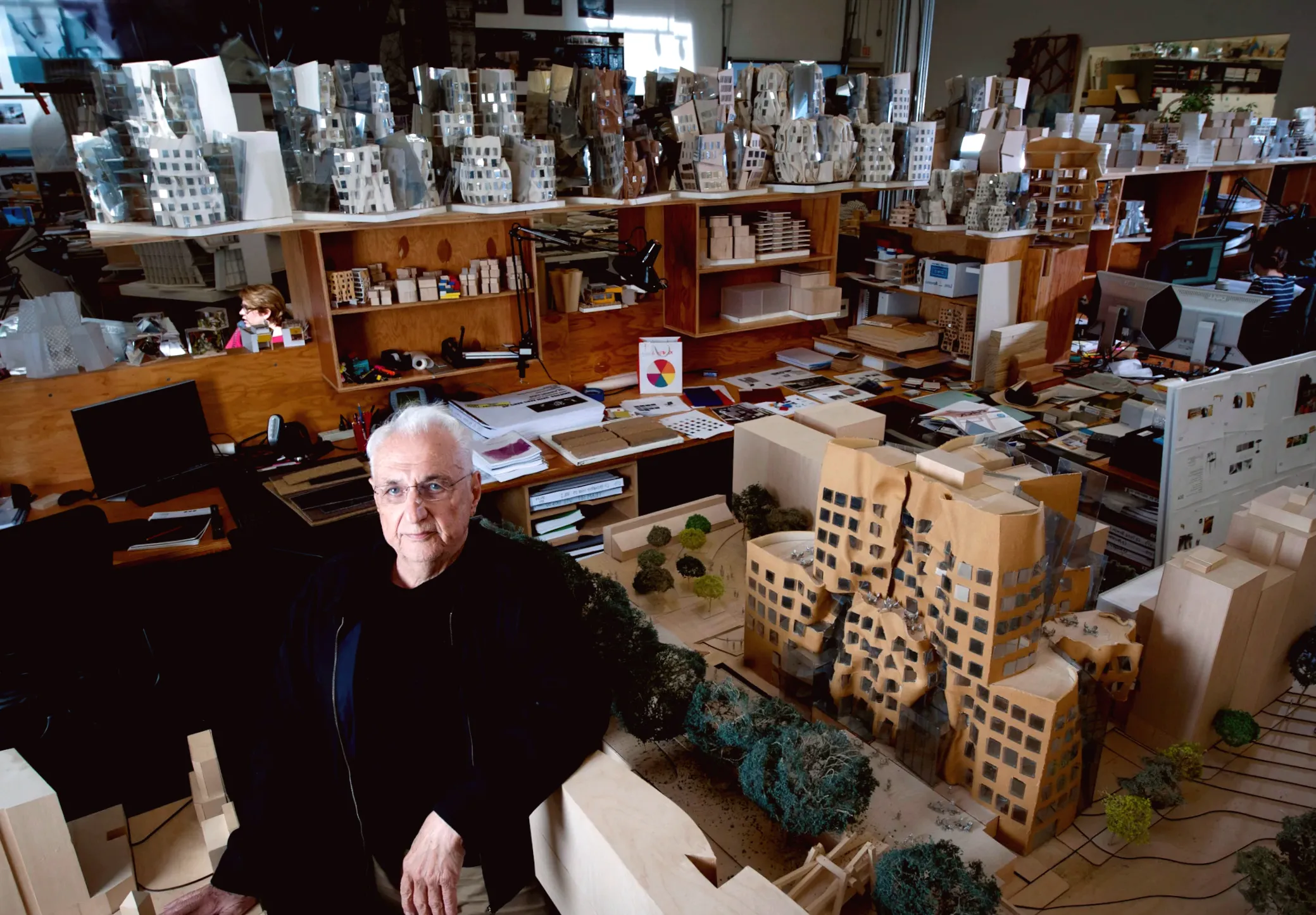
Frank Gehry was not the kind of architect who dominated conversations with high-minded speeches about the history of architecture, despite the fact that his work irrevocably reshaped that history. He wasn't one to boast about his achievements, even though he had a long list of iconic buildings to his name. Gehry was known for his sense of humor, often delivering self-deprecating anecdotes about his career, such as when he humorously campaigned for a second Pritzker Prize, noting how much time had passed since his first in 1989. His witty demeanor and playful nature were evident in conversations, yet there was always a deeper logic underlying his words, a thread that tied his seemingly casual chatter together.
In 2012, during an interview over lunch in Washington D.C., while defending his design for the Dwight D. Eisenhower Memorial, I struggled to find a quotable moment. But when I transcribed the interview, it all clicked. Gehry's rambling speech had a structure that only became clear upon reflection, despite the light-heartedness with which it was delivered. He was engaging and sharp, but there was an edge to him that surfaced during a public conversation. During this event, part of the decade-long controversy surrounding his design, a confrontational question from an audience member turned his affable personality into something unexpectedly intense. His reaction was swift and decisive, as he shut down the young man with an almost Herculean dismissal.
One of the most contentious projects in Gehry's career was the Dwight D. Eisenhower Memorial, which opened in 2020. The memorial, situated on a four-acre urban park near Capitol Hill, sought to encapsulate the legacy of the 34th president through striking architectural elements. These included a stainless steel tapestry depicting the beaches of D-Day and heroic-sized bronze sculptures. Despite its grandeur, the project faced criticism and was the subject of considerable debate throughout its long gestation. Gehrys passing at the age of 96 in 2023 marked the end of a remarkable life that left a permanent imprint on architecture.
Gehry's fame was unparalleled, elevating him to a status akin to that of Frank Lloyd Wright. He became a household name, and even those with little interest in architecture found themselves forming opinions about his work. His distinctive genius was parodied on shows like "The Simpsons" and explored in Sydney Pollacks 2005 documentary, "Sketches of Frank Gehry," which offered a personal glimpse into his life and creative process. This fame provided Gehry with unique opportunities to pursue his own artistic satisfaction, one of which was his design of the Walt Disney Concert Hall in Los Angeles, completed in 2003 after a lengthy and tumultuous process. The hall became one of the worlds most admired venues for classical music, providing an acoustic marvel that also helped elevate the Los Angeles Philharmonic to new heights.
The Eisenhower Memorial also held personal significance for Gehry, whose admiration for Eisenhower as both a man and a politician was evident in his discussions about the project. A Canadian immigrant to the U.S. in 1947, Gehrys view of postwar America was colored by a mix of personal hardship and elation. His memories were filled with affection for the country and the opportunities it offered, which were reflected in the memorials design. The central statue of Eisenhower as a young boy, gazing toward a future he would help shape, became a poignant symbol of Gehrys connection to the nation.
Not every Gehry project was met with universal praise. The Fisher Center at Bard College, a performing arts space, received mixed reactions, with some critics finding the design overly sculptural, detracting from its primary function. Yet, during a recent visit, I found myself appreciating it more as I recognized how it balanced aesthetic flair with functional simplicity, a hallmark of Gehry's ability to merge form with purpose. Similarly, the Eisenhower Memorial didnt quite meet all expectations, largely due to the compromises made during the design review process. Yet, its radical concepttransforming a memorial into a public parkremains striking, especially when viewed at night, when the metal tapestry depicting an abstract landscape transforms into a mesmerizing spectacle.
In Prague, I stumbled upon one of Gehrys most delightful buildings, known as Ginger and Fred or the Dancing House. Designed in collaboration with Czech architect Vlado Milunic, this building stands as a testament to Gehrys creativity. Located on a site that had been destroyed during World War II, the building seems to exist in a state of tension, either on the brink of collapse or re-emergence. It stands in stark contrast to the surrounding architecture, bending and swaying in defiance of Pragues traditional forms. While its design may have been divisive, it fits well within Pragues eclectic architectural landscape, where imaginative, curvaceous designs are commonplace.
Gehrys buildings often provoke strong reactions. Some may scoff at them, while others find joy in their boldness. His works, like the Eisenhower Memorial, reflect not just architectural innovation but the practical realities of making a vision come to life. Throughout the process, Gehrys ability to adapt to criticism and remain steadfast in his vision became increasingly admirable. Critics sometimes oversimplified his genius, using the term as a catch-all to describe his brilliance and quirks, but Gehrys work was always grounded in practicality, making his extraordinary designs possible.
On the flip side, Gehrys influence was not always positive. His pioneering use of software to create complex, non-linear architectural forms inspired many imitators, some of whom failed to grasp the depth of his approach. Gehry was not responsible for the rise of "starchitecture"the trend that elevated a small number of architects to celebrity statusbut he certainly contributed to the increased public interest in architecture. His fame helped make it fashionable to discuss and critique buildings, sparking wider engagement with the built environment. Whether one adored or despised his creations, Gehry made architecture a topic of conversation for the masses.
Gehrys architectural legacy is more than just his stunning designs. His buildings were functional, earning their keep while also embodying beauty. At their best, they were nothing short of transcendent, stirring emotions and challenging perceptions. The experience of walking through one of his buildings often evokes a sense of awe, a reminder that beauty has the power to provoke change. Gehrys legacy calls on us to demand more from the world we build, to create spaces that inspire, engage, and ultimately delight us.
Author: Chloe Ramirez
Share

Renowned emotional architect Frank Gehry passes away at 96
24 minutes ago 2 min read ENTERTAINMENT

Photos of iconic works by architect Frank Gehry
2 hours ago 1 min read STYLE

Famous architect Frank Gehry passes away: Explore his most iconic structures
2 hours ago 3 min read US

Renowned Architect Frank Gehry Has Passed Away—Here Are His Top 10 Iconic Designs
2 hours ago 4 min read ENTERTAINMENT

Renowned Architect Frank Gehry Passes Away at 96
5 hours ago 3 min read ENTERTAINMENT
Renowned architect Frank Gehry passes away at the age of 96
5 hours ago 3 min read STYLE
Renowned Architect Frank Gehry Dies at Age 96, Known for Walt Disney Concert Hall
5 hours ago 2 min read ENTERTAINMENT

Architect Frank Gehry, famous for his distinctive steel design, passes away at age 96
5 hours ago 1 min read ENTERTAINMENT
Renowned architect Frank Gehry passes away at the age of 96
5 hours ago 1 min read ENTERTAINMENT
Frank Gehry: top five architectural masterpieces
5 hours ago 2 min read ENTERTAINMENT