

Is there a full moon tonight? Understanding the significance of the December cold moon and the longest night moon
- HOME
- ENTERTAINMENT
- Is there a full moon tonight? Understanding the significance of the December cold moon and the longest night moon
- Last update: 1 hours ago
- 4 min read
- 558 Views
- ENTERTAINMENT
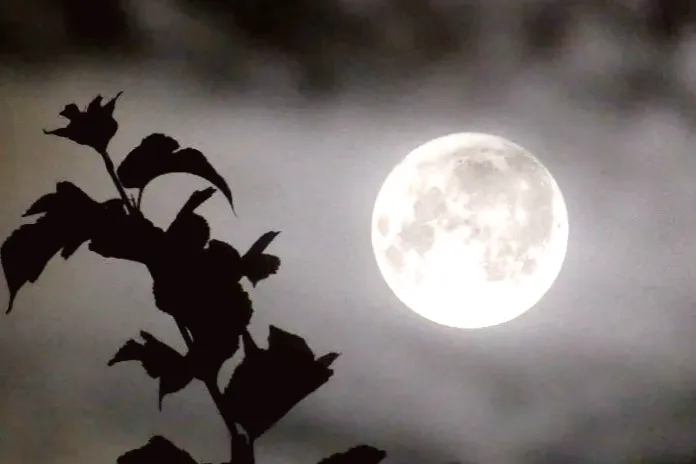
The December Cold Moon 2025 is making its appearance in Gemini as the year's final supermoon. It will light up the sky for several days, beginning tonight, before making way for the stunning Geminid meteor shower. Here's what you need to know about tonight's celestial event and how to best witness it.
This large, bright supermoon will come closer to Earth than usual, reaching its nearest point at 221,965 miles away, according to the Almanac. It marks the third and final supermoon of 2025. Known as the Cold Moon, this full moon is also called the Long Night Moon, as it rises during the longest nights of the year, near the winter solstice in December.
The Cold Supermoon will coincide with the start of the Geminid meteor shower, renowned for producing vivid, colorful meteors traveling at medium-slow speeds from the constellation of Gemini. Here's everything you need to know about the full moon, the Geminid meteor shower, and the December winter solstice.
When Will the Full Moon Rise?
The December Cold Supermoon will rise on the night of Thursday, December 4, 2025, with peak illumination at 6:14 p.m. ET. It will appear low on the horizon, making it seem larger and brighter. Like the November Beaver Moon, it will rise around the same time on consecutive nights, including Wednesday and Friday. You can check the exact moonrise and moonset times for your location on the Old Farmer's Almanac website.
What is the Cold Moon?
The full moon in December is traditionally known as the Cold Moon or the Long Night Moon, due to its timing near the winter solsticethe longest night of the year. As freezing temperatures settle over the Northern Hemisphere, the moon is often associated with the coldest period of the year. Other names for this moon come from Native American, European, and colonial traditions, such as the Drift Clearing Moon and the Little Spirit Moon.
What is a Supermoon?
A supermoon occurs when the moon reaches its closest point to Earth during a full moon. At approximately 226,000 miles from Earth, it appears both brighter and larger than a typical full moon. The term "supermoon" is used to describe this effect, which is caused by the moons proximity to Earth. Supermoons tend to occur in groups of three or four. The current cycle started in September 2025 and will continue until January 2026, with no supermoon occurrences until November 2026.
What Are the Current Moon Phases?
- Full Moon: December 4
- Last Quarter: December 11
- New Moon: December 19
- First Quarter: December 27
What is a Meteor Shower?
A meteor shower occurs when Earth passes through the debris trail left by a comet or asteroid. These meteoroids burn up in Earth's atmosphere, creating bright streaks of light across the sky, known as "shooting stars." The meteoroids vary in size, from dust particles to boulders. Meteor showers are named after the constellation from which they appear to radiate. The best time to view a meteor shower is around midnight in a dark location, allowing your eyes to adjust to the night sky.
When Will the Geminid Meteor Shower Begin?
The Geminid meteor shower will start on the night of the December full moon, running from December 4 through December 17, with the peak occurring on the night of December 13-14. The meteors appear to radiate from near the star Castor in the Gemini constellation. At its peak, viewers in dark locations may witness up to 120 Geminid meteors per hour, which can be visible from any angle in the Northern Hemisphere, including the nights before and after the peak. The Geminids are known for their bright, white meteors and can be seen from early evening until morning, with the most intense activity occurring around 2 a.m.
What is the Geminid Meteor Shower's Origin?
Unlike most meteor showers, which are caused by comets, the Geminids come from an asteroid named 3200 Phaethon. This asteroid follows an unusual orbit, swinging close to the Sunhalf the distance of Mercury's orbitbefore extending past Mars' orbit. Its debris intersects Earth's path every December, creating the Geminid meteor shower.
When is the First Day of Winter?
The winter solstice, marking the first day of winter, will occur on Sunday, December 21, 2025. On this day, the Northern Hemisphere will experience the shortest day of the year, with about 9 hours and 17 minutes of daylight.
When Will the First Full Moon of 2026 Be?
The first full moon of 2026 will be the January Wolf Supermoon, set to rise on Saturday, January 3, 2026. It will be the last of four consecutive supermoons.
Author: Noah Whitman
Share

Michael Douglas was always confident that 'One Flew Over the Cuckoo's Nest' would be a hit
28 seconds ago 4 min read ENTERTAINMENT

Aunjanue Ellis-Taylor and Russell Hornsby are added to the cast of ''Tis So Sweet''
1 minutes ago 1 min read ENTERTAINMENT

Irina Shayk Takes a Bold Pool Photo in Her Bikinis
2 minutes ago 1 min read ENTERTAINMENT

50 All-Time Favorite Christmas Movies to Put You in the Holiday Mood
3 minutes ago 8 min read ENTERTAINMENT

Dwayne Johnson and Brendan Fraser Set to Reunite for This Event After 20 Years
4 minutes ago 2 min read ENTERTAINMENT

Abby Lee Miller clarifies the use of airbrushing on Neil Patrick Harris' face on Instagram
4 minutes ago 2 min read ENTERTAINMENT

Sydney Sweeney's Stunning Neckline Steals the Spotlight from Her Elegant Gown
5 minutes ago 1 min read ENTERTAINMENT

Khloe Kardashian's Little Black Dress Look Is 'Incredible'
7 minutes ago 1 min read ENTERTAINMENT

Eric Best, a Rising Star at the Houston Ballet, Reflects on His Journey to Soloist
7 minutes ago 2 min read ENTERTAINMENT

Max Kellerman finally speaks out about the drama with Stephen A. Smith on 'First Take' and his departure from ESPN
8 minutes ago 3 min read ENTERTAINMENT