

Top 10: The Greatest Vertical Take-off Military Aircraft
- HOME
- ENTERTAINMENT
- Top 10: The Greatest Vertical Take-off Military Aircraft
- Last update: 1 hours ago
- 4 min read
- 918 Views
- ENTERTAINMENT
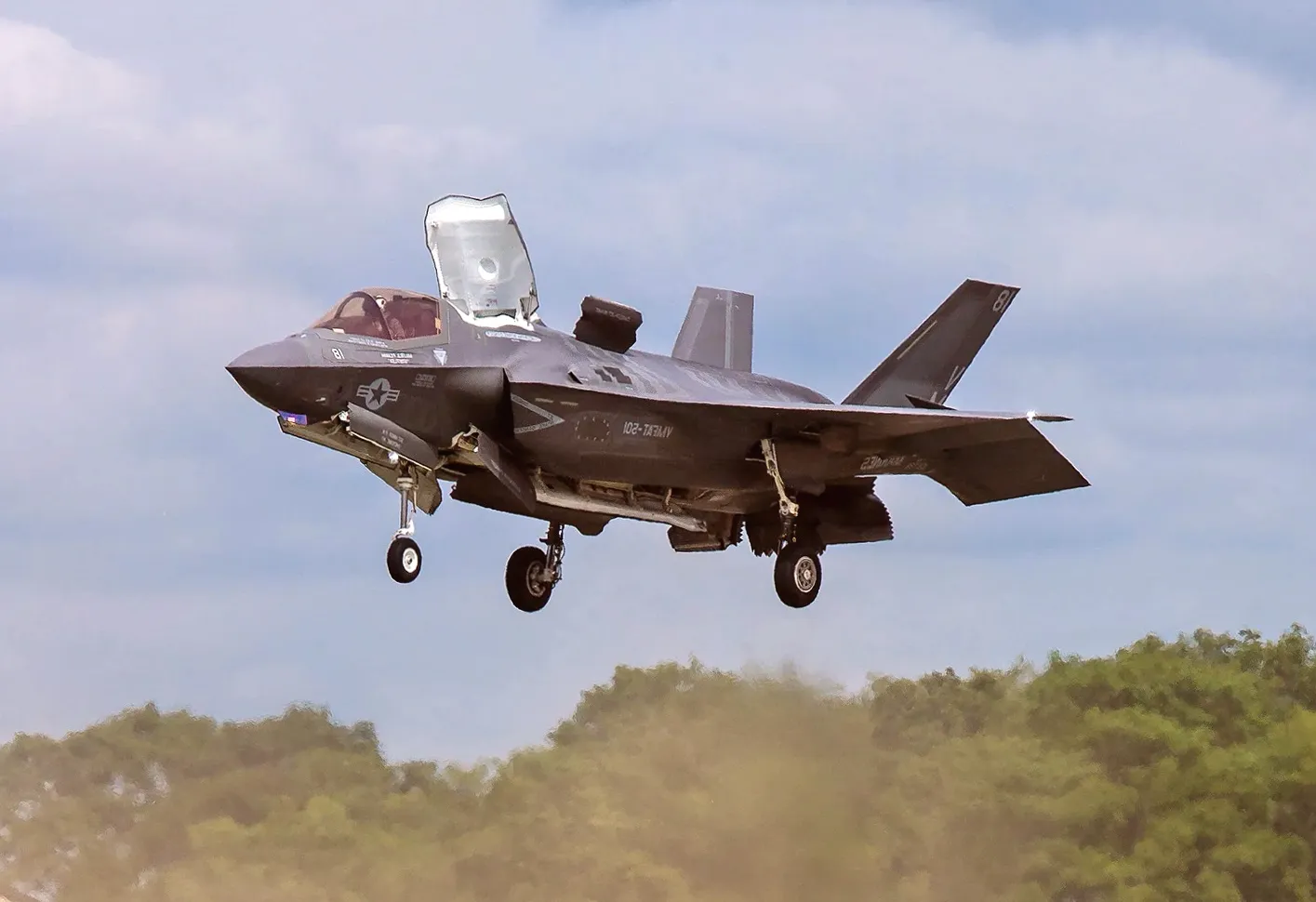
Traditional runways are a vulnerability for military jets, tying them to fixed locations and limiting operational flexibility. Operating aircraft from a moving carrier deck at sea is equally perilous due to the restricted space. This has driven engineers to develop vertical take-off and landing (VTOL) planes capable of helicopter-like operations. However, achieving a functional VTOL aircraft has proven extremely challenging. Of the ten aircraft featured here, only three ever reached active service.
10: VFW VAK 191B
The VFW VAK 191B emerged as part of NATOs competition for a supersonic VTOL strike fighter. Powered by a Rolls-Royce/MAN Turbo RB.193 engine and two lift jets, it also featured an internal weapons bay. When NATO canceled the requirement, the VAK-191 continued as a research project in a USWest German program, but was ultimately terminated in 1972.
The aircrafts main advantage was its simple propulsion system using vectored thrust plus fixed lift engines, allowing a sleeker design than the Harrier. Its drawbacks included a low thrust-to-weight ratio and small wings, limiting maneuverability and making wing-borne landings difficult.
9: Ryan X-13 Vertijet
The tail-sitter Ryan X-13 Vertijet aimed to demonstrate vertical flight using a Rolls-Royce Avon turbojet. It famously once landed at the Pentagon to showcase its capabilities, but the military declined to adopt it. The concept, while innovative, ultimately proved impractical.
8: Lockheed XV-4 Hummingbird
Developed as a target-spotting VTOL aircraft for the US Army, the XV-4 relied on vectored thrust through multiple nozzles, later augmented with lift jets. Although pioneering the ejector-augmentor VTOL system, both prototypes crashed, one fatally. Its low thrust-to-weight ratio and limited fuselage space made it operationally ineffective.
7: Yakovlev Yak-38 Forger
The Soviet Yak-38, comparable to the British Sea Harrier, was designed as an interim VTOL fighter. It entered service with the Soviet Navy from 1976 to 1991 and participated in the SovietAfghan War. Its two lift engines and a vectored-thrust cruise engine made it operationally viable, though it suffered from poor range, payload, and vulnerability during hover, necessitating an automatic ejection system.
6: Ryan XV-5A Vertifan
The Ryan XV-5A experimented with lift-fans embedded in its wings for vertical flight. While this approach showed potential for moving large volumes of air efficiently, it proved extremely difficult to control, especially during transitions. Multiple crashes hampered the project, highlighting the risks of experimental VTOL designs.
5: EWR VJ 101
This six-engine German VTOL fighter combined complex thrust modulation and tip-engine controls to achieve Mach 1.14. Innovative for its time, the aircraft faced challenges with afterburners causing ground erosion and intake issues, preventing its operational adoption. Nonetheless, it demonstrated impressive high-speed VTOL capabilities.
4: Dornier Do 31
The Do 31 was a German VTOL transport aircraft intended to support forward air operations. While technically successful, it was ultimately unnecessary, as simpler short take-off transport aircraft like the Fiat G.222 (now the C-27 Spartan) offered comparable performance at lower cost and risk.
3: Yakovlev Yak-141 Series
The Yak-141 was an advanced Soviet VTOL fighter with a swiveling thrust-vector nozzle, achieving speeds up to Mach 1.4. Although the program ended in 1991, its technology influenced future designs, including studies of a stealthy Yak-201 similar in concept to the F-35B. Its use of afterburners for vertical flight caused noise, ground erosion, and engine intake issues.
2: Lockheed Martin F-35B Lightning II
The F-35B is the first supersonic VTOL fighter to enter active service, using the Rolls-Royce Integrated Lift Fan Propulsion System with a swiveling nozzle and roll posts for vertical thrust. Adopted by the US Marine Corps, the UK, Italy, Japan, Singapore, and South Korea, it offers advanced sensor systems, situational awareness, and radar stealth, though its internal fuel is reduced compared to conventional F-35 variants.
1: Hawker Harrier
The original Harrier was the first operational VTOL strike fighter and the aircraft that coined the nickname jump jet. Its success relied on a simple vectored-thrust engine, eliminating the need for additional lift engines or swiveling wings. The first-generation Harrier entered service in 1969, later replaced by the improved Harrier II, which continues to serve in the UK, US, Italy, Spain, and India.
Author: Natalie Monroe
Share
The Most Frightening Military Vehicles Ever Constructed
1 days ago 4 min read WORLD
Top 10: Most significant airplanes during the Vietnam War
3 days ago 4 min read TRAVEL
Top 10: Key aircraft during the Vietnam War
3 days ago 5 min read TRAVEL
Top 10: The Vietnam War's Most Significant Aircraft
3 days ago 4 min read TRAVEL
Top 10: The most significant planes during the Vietnam War
3 days ago 5 min read TRAVEL
Top 10: Key aircraft during the Vietnam War
3 days ago 4 min read TRAVEL
Top 10: Key airplanes during the Vietnam War
3 days ago 4 min read TRAVEL
Top 10: Key aircraft during the Vietnam War
3 days ago 4 min read TRAVEL
Top 10: Insane World War 2 Altered Warplanes
6 days ago 4 min read WORLD
5 Fighter Jet Engines That Are Among the Most Powerful Ever Created
6 days ago 3 min read SCIENCE