

Top 10: The Vietnam War's Most Significant Aircraft
- Last update: 2 days ago
- 4 min read
- 608 Views
- TRAVEL
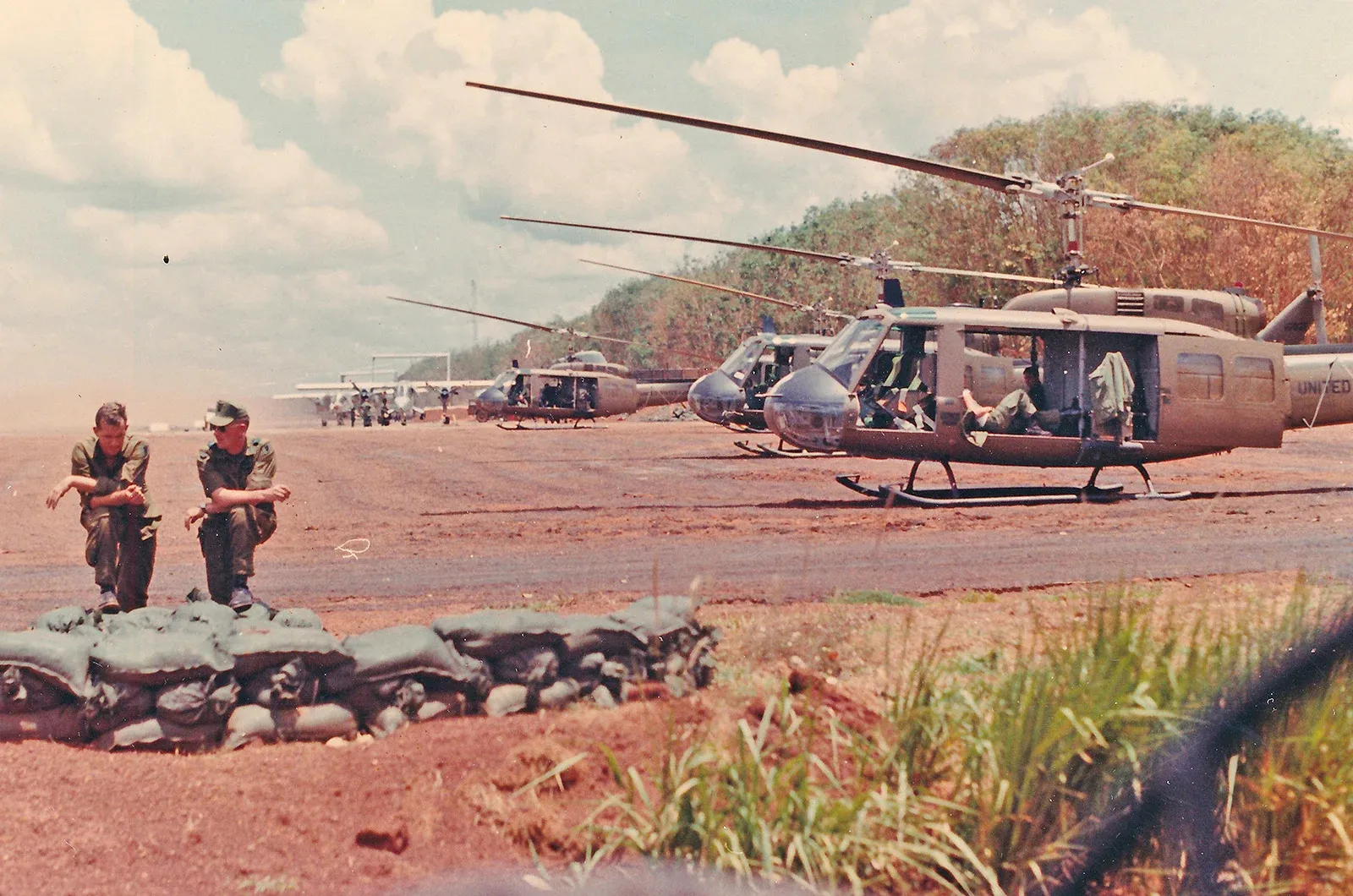
The Vietnam War was a catastrophic conflict that claimed millions of lives. The skies over Southeast Asia were a battleground, with MiGs and Phantom jets clashing for air superiority, while B-52 bombers and other aircraft unleashed devastating bombardmentsdropping more explosives than in all of World War II combined. The dense jungles and rugged mountains made helicopters indispensable, with the UH-1 "Huey" becoming an icon of modern air mobility. Amid napalm and jet roar, new forms of aerial combat emerged.
A-4 Skyhawk
Designed by the legendary Douglas Aircraft engineer Ed Heinemann, the A-4 Skyhawk defied trends toward ever-larger combat jets. This compact carrier-capable attack aircraft carried a significant load of bombs, rockets, and guided missiles. It served in close air support, interdiction, strike missions, and suppression of enemy air defenses, proving its versatility and resilience. Its small size improved survivability and agility, earning it a reputation as a reliable, tough, and highly effective combat aircraft.
A-6 Intruder
The A-6 Intruder was another key carrier-based attack plane, capable of delivering precision strikes under challenging conditions.
B-52 Stratofortress
The Boeing B-52, an eight-engine heavy bomber, conducted massive carpet-bombing campaigns against North Vietnamese positions, supply lines, and troop concentrations. Its long-range and heavy payload capacity made it central to operations like Rolling Thunder. Though heavily defended, 31 B-52s were lost to missiles, fighters, or accidents. The bombings caused extensive destruction, leaving deep physical and psychological scars across Vietnam. Drawing from the experience of WWII bombers like the B-17 and B-29, the B-52 remains in service, with plans to operate until the 2050s.
MiG-17
The Soviet MiG-17 improved upon the MiG-15, adding an afterburner, sleeker aerodynamics, and a more swept wing. Though slower than US jets, its high maneuverability and powerful cannons allowed North Vietnamese pilots to outturn and ambush faster aircraft effectively. The MiG-17's agility and firepower made it a persistent threat, achieving about 87 confirmed kills during the war.
MiG-21
The MiG-21, a supersonic Soviet fighter, reached speeds of Mach 2 and was widely exported. In Vietnam, it served as a fast, agile interceptor for the North Vietnamese Air Force, executing hit-and-run attacks and using terrain and surprise to its advantage. It scored around 103 aerial victories, proving the effectiveness of speed, stealth, and tactical coordination against superior technology.
A-5 Vigilante
Originally a supersonic nuclear bomber, the A-5 Vigilante was converted into the RA-5C reconnaissance platform. Its advanced sensors and cameras allowed for high-speed intelligence gathering deep in enemy territory. With Mach 2+ speeds, high altitude performance, and long range, it played a critical role in planning and evaluating air missions, despite high-risk operations and losses.
AC-130 Spectre
The AC-130 gunship, an evolution of the AC-47 and AC-119, offered superior firepower and precision during night operations. Equipped with side-firing guns and advanced targeting systems, it could orbit targets and deliver sustained, accurate strikes. The AC-130 became vital in supporting troops, disrupting supply lines, and protecting remote outposts. Other transport aircraft like the C-130 Hercules, C-141 Starlifter, and C-123 Provider were essential for logistics and troop movement.
A-1 Skyraider, O-1 Bird Dog, O-2 Skymaster
The piston-engine A-1 Skyraider excelled in close air support and combat search and rescue missions, protecting rescue helicopters while delivering sustained firepower. Its reliability and resilience made it indispensable. The O-1 Bird Dog and O-2 Skymaster were slow, low-flying forward air control planes that directed strikes, marked targets, and saved countless lives by enhancing battlefield awareness.
F-105 Thunderchief
The F-105 "Thud" was a high-speed fighter-bomber that conducted early strike missions over North Vietnam, including defense suppression operations. Powered by a Pratt & Whitney J75 engine, it could exceed Mach 2. Despite significant losses to anti-aircraft fire and missiles, it achieved notable air-to-air victories and earned a reputation as a tough and reliable warhorse.
F-4 Phantom
The F-4 Phantom was a versatile multirole aircraft for the US Air Force, Navy, and Marine Corps. Capable of Mach 2 speeds and carrying a wide variety of weapons, it performed air-to-air combat, ground attack, reconnaissance, and defense suppression. Its radar and missile systems allowed the US to challenge North Vietnamese aircraft effectively. The F-4 shaped modern fighter design and remains a Cold War aviation icon.
UH-1 Iroquois ("Huey")
The UH-1, or "Huey," revolutionized helicopter warfare. Used for troop transport, medevac, supply, command, and close air support, it combined speed, maneuverability, and reliability. Over 7,000 were deployed, with roughly 3,000 lost to enemy action or accidents. The Huey also laid the groundwork for the attack helicopter, including the AH-1 Cobra. Other important helicopters included the CH-47, CH-34, CH-53, OH-6 Cayuse, CH-54, SH-3, HH-3E, and the North Vietnamese Mi-4. The Hiller OH-23 Raven was notable for helping limit civilian casualties during the My Lai Massacre.
Author: Sophia Brooks
Share
Over 100 passengers and crew members fall ill in cruise ship norovirus outbreak
9 minutes ago 2 min read TRAVEL
French Senate approves new €15 per passenger tax for cruise ships
20 minutes ago 2 min read TRAVEL
Edinburgh Airport resumes operations following air traffic disruption that caused flight delays
49 minutes ago 2 min read TRAVEL

How Travelers Can Stay Safe from 'Juice Jacking', According to the TSA
56 minutes ago 2 min read TRAVEL
Delta imposes temporary halt on flights to Detroit Metro Airport
1 hours ago 1 min read TRAVEL

Plans to Expand US Travel Ban to Over 30 Countries Unveiled by Head of Homeland Security
1 hours ago 2 min read TRAVEL
DFW CEO Not Worried About New Airport Development
2 hours ago 2 min read TRAVEL

Detroit Airport in Chaos following Ground Stop for Delta Flights
2 hours ago 1 min read TRAVEL

A cooking teacher and food expert analyzes Michelin's first Philadelphia list − and gives inspectors a rating of zero stars
2 hours ago 4 min read TRAVEL

Penguins line up for bird flu vaccinations at Paris zoo
2 hours ago 2 min read TRAVEL